
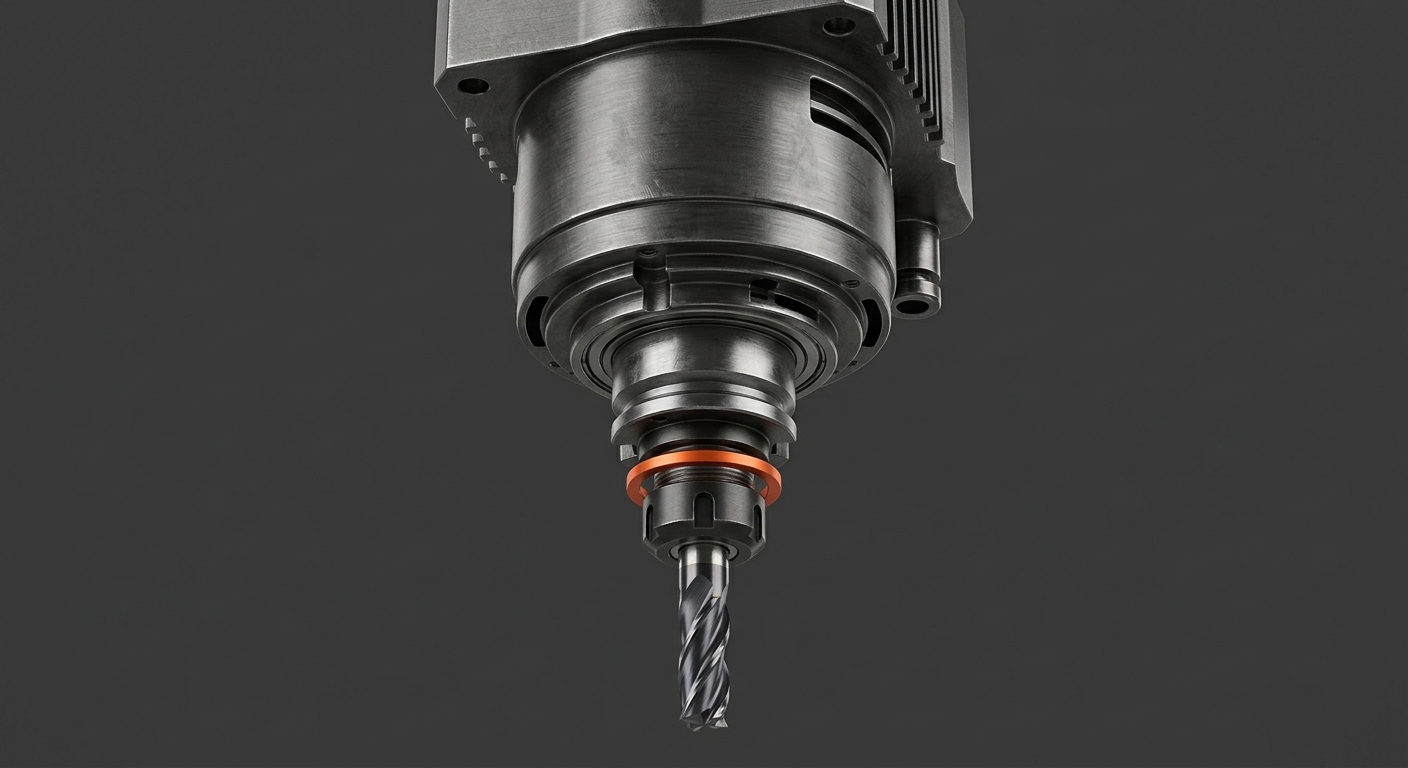
Germany’s Mittelstand companies are responsible for over half the nation’s economic output, 75 percent of all apprenticeships, and nearly 1,600 of the world’s roughly 3,400 hidden champions1. These are businesses that dominate global niche markets with precision, deep domain knowledge, and decades of operational excellence.
And yet, when it comes to AI, most of them are stuck. 36 percent of German companies now use AI in some form2, but fewer than 6 percent see meaningful financial impact9. The rest are caught in what the industry calls “pilot purgatory” - running experiments that never reach production. Meanwhile, the skilled labour shortage is accelerating, the EU AI Act deadline is approaching, and competitors who figure this out first will pull ahead permanently.
This guide is for the operations leader, CTO, or Geschaeftsfuehrer at a German SME who knows AI matters but needs a practical path forward. No hype. No jargon. Just what works, what it costs, and how to get there in 90 days.
TL;DR
AI agents are autonomous systems that connect to your existing tools and execute multi-step workflows - not chatbots, not RPA scripts.
Five use cases deliver proven ROI for the Mittelstand: predictive maintenance, quality control, supply chain, document processing, and customer operations.
90 days is enough to go from assessment to first production deployment with the right partner.
The EU AI Act becomes fully applicable August 2026. Most business AI agents fall into lower-risk categories, and SMEs get special provisions.
The real blocker is not technology - it is change management. Companies that invest in training see 14 hours per week of productivity gains per employee.
The Mittelstand Paradox
The numbers tell a contradictory story. Germany’s SMEs are the backbone of Europe’s largest economy - 3.1 million businesses, 99.4 percent of all German firms, 55 percent of all jobs1. They are world-class at what they do. But the gap between their operational excellence and their AI maturity is widening fast.
- Adoption is growing but shallow - 36 percent of German companies use AI, up from roughly 20 percent the prior year. But 88 percent of that usage is in marketing and customer contact. Only 20 percent use AI in production processes2.
- Pilot purgatory is real - 42 percent of companies abandoned most AI initiatives before production in 2025, up from 17 percent the year before. Nearly half of all projects get scrapped between proof-of-concept and deployment7.
- Over 80 percent of AI projects fail - That is twice the failure rate of non-AI IT projects. The RAND Corporation identified five root causes: misaligned goals, data quality issues, technology-over-problem focus, infrastructure gaps, and underestimating complexity6.
- The talent gap is real - 70 percent of companies need external help to get value from AI. More than a third cite talent shortage as their top barrier3.
- The labour shortage is not slowing down - Germany needs 300,000 skilled foreign workers per year just to maintain current staffing levels. 83 percent of companies expect negative impacts from the shortage3. The OECD projects the working-age population will shrink by 3.9 million by 20304.
Key Data Point
The ifo Institute reports that 28.3 percent of German companies cannot find enough qualified workers, with mechanical engineering at 23 percent and the food industry at 27 percent5. Demographic change means this pressure only increases from here.
This is the paradox: the companies best positioned to benefit from AI - operationally mature, data-rich, process-driven - are the ones struggling most to adopt it. Not because the technology is wrong, but because the approach is.
| Indicator | Current State | Source |
|---|---|---|
| SMEs in Germany | 3.1 million (99.4% of all firms) | deutschland.de1 |
| AI adoption rate | 36% of companies (up from ~20%) | Bitkom 20252 |
| AI in production | Only 20% of AI-using firms | Bitkom 20252 |
| AI projects abandoned | 42% before reaching production | S&P Global 20257 |
| Skilled worker gap | 300,000/year needed from abroad | DIHK 20253 |
| Working-age population loss | -3.9 million by 2030 | OECD 20254 |
What AI Agents Actually Are (and What They Are Not)
The term “AI agent” gets thrown around loosely. Gartner found that roughly 95 percent of products marketed as “AI agents” are actually rebranded chatbots or RPA tools8. So let us be precise about what we mean.
An AI agent is a software system that can reason about a goal, plan a sequence of steps, use tools (your existing systems), and execute actions autonomously - with human oversight for critical decisions. Think of it as a digital colleague that connects to your ERP, CRM, email, databases, and production systems, and can take real actions across all of them.
The difference matters
| Capability | Chatbot | RPA | AI Agent |
|---|---|---|---|
| Understands context | Limited (scripted) | None | Yes (reasons about goals) |
| Handles exceptions | Fails or escalates | Fails | Adapts and finds alternatives |
| Works across systems | Usually one channel | Screen-level only | Any API-connected system |
| Learns from feedback | Manual retraining | No | Continuous improvement |
| Multi-step tasks | No | Fixed sequences only | Dynamic planning |
| Setup time | Days | Weeks | Weeks to months |
What this looks like in practice
- In a manufacturing plant - An AI agent monitors sensor data from your production line, detects patterns that predict equipment failure, automatically creates a maintenance work order in SAP, orders replacement parts from your supplier portal, and notifies the shift supervisor - all before the machine breaks down.
- In logistics - An AI agent reads incoming customer orders from email and your web portal, checks inventory levels in the WMS, optimises delivery routes based on current traffic and truck capacity, generates shipping documents, and updates the customer with a delivery ETA - without a dispatcher touching any of it.
- In finance - An AI agent processes incoming invoices, matches them against purchase orders and delivery confirmations, flags discrepancies for human review, posts approved invoices to the accounting system, and generates a weekly cash flow forecast - tasks that previously took a full-time Sachbearbeiter.
- In HR - An AI agent screens incoming applications against job requirements, schedules interviews by coordinating calendars across departments, generates interview preparation briefs for hiring managers, and sends personalised status updates to candidates - reducing time-to-hire by weeks.
AI Agents vs Traditional Automation (RPA)
Pros of AI Agents
- ✓ Handles exceptions - adapts when workflows deviate from the norm
- ✓ Cross-system orchestration - connects any API-enabled tool
- ✓ Natural language interaction - non-technical staff can direct and query agents
- ✓ Continuous learning - improves from feedback and new data
- ✓ Decision support - provides reasoning, not just execution
Cons of AI Agents
- ✗ Higher initial investment - more setup than simple RPA bots
- ✗ Needs quality data - garbage in, garbage out still applies
- ✗ Requires process clarity - you must understand your workflows first
- ✗ Oversight needed - human-in-the-loop for critical decisions
Gartner projects that 40 percent of enterprise applications will feature task-specific AI agents by the end of 2026, up from less than 5 percent in 20258. McKinsey reports 23 percent of organisations are already scaling AI agents in at least one function, with another 39 percent experimenting9. The shift is happening. The question is not whether AI agents will become standard - it is whether your company adopts them proactively or reactively.
5 Use Cases That Deliver ROI in the Mittelstand
Not all AI use cases are equal. Some deliver measurable returns within months; others take years and may never justify the investment. Here are the five that consistently work for mid-sized German companies, based on industry data and deployment patterns.
1. Predictive Maintenance
Equipment downtime is one of the most expensive problems in manufacturing. Unplanned stops ripple through production schedules, delivery commitments, and customer relationships. AI agents that monitor sensor data and predict failures before they happen are among the highest-ROI deployments available today.
- Downtime reduction - AI predictive maintenance reduces equipment downtime by up to 50 percent10
- Cost savings - Maintenance costs drop by 25 to 40 percent compared to reactive or scheduled maintenance10
- Fast payback - 95 percent of adopters report positive ROI, with 27 percent achieving full amortisation within one year10
- Real-world example - A Fortune 500 manufacturer reduced unplanned downtime by 45 percent and saved $2.8 million annually using AI-driven predictive maintenance10
- How it works - Sensors feed vibration, temperature, and pressure data to an AI agent that detects anomalies, predicts time-to-failure, and automatically creates work orders in your maintenance system
Mittelstand Relevance
Many hidden champions run specialised production equipment that is expensive to replace and has long lead times for spare parts. A single unplanned failure can halt production for days. Predictive maintenance is not a nice-to-have here - it is directly tied to delivery reliability and customer trust.
2. Quality Control and Defect Detection
Manual quality inspection is slow, inconsistent, and increasingly impractical as production volumes grow and quality standards tighten. AI-powered visual inspection and data-driven quality control solve this at scale.
- Detection accuracy - AI quality control achieves 95 to 99 percent defect detection accuracy, compared to roughly 50 percent false positive rates in legacy systems12
- Waste reduction - Manufacturers report up to 40 percent less material waste11
- Speed - Inspection cycles become 25 percent faster11
- Customer impact - Samsung reduced customer returns by 31 percent within 18 months of deploying AI quality control11
- Proven ROI - Industry reports indicate 200 to 300 percent return on investment for AI quality systems12
3. Supply Chain Optimisation
Supply chains in the Mittelstand are often managed through a combination of ERP data, spreadsheets, phone calls, and experience-based intuition. AI agents bring visibility and automation across the entire chain.
- Cost reduction - Early AI adopters improve logistics costs by 15 percent13
- Inventory optimisation - AI-driven systems reduce inventory levels by 35 percent while improving service levels by 65 percent13
- Forecast accuracy - Demand forecasting errors drop by 20 to 50 percent, reducing both stockouts and overstock13
- Automation scope - AI agents handle purchase order creation, supplier communication, delivery tracking, and exception management across multiple systems
- Scale - The global AI-in-supply-chain market is projected at $19.8 billion in 2025 with 45.3 percent annual growth13
4. Document Processing and Administration
Every mid-sized company has processes that revolve around documents - invoices, contracts, compliance filings, delivery notes, insurance claims. AI agents can read, understand, extract data from, and act on these documents faster than any human team.
- Speed - 4 times faster processing compared to manual handling14
- Error reduction - 38 percent fewer manual errors14
- Processing time - 46 percent reduction in end-to-end processing time14
- Strategic priority - 78 percent of enterprise executives list document automation as a top digital transformation priority. 65 percent of companies are accelerating intelligent document processing projects28
- ROI range - 30 to 200 percent return in year one, depending on volume and complexity14
5. Customer Operations
Customer service is often an underinvested area in B2B Mittelstand companies. AI agents change the economics by handling routine inquiries, routing complex issues to the right person, and providing instant responses around the clock.
- Cost per interaction - Drops from $4.60 to $1.45 (68 percent reduction)15
- Response time - From over 6 hours to under 4 minutes15
- Resolution time - From 32 hours to 32 minutes (87 percent improvement)15
- ROI - Companies see $3.50 return for every $1 invested; leaders achieve up to 8x ROI15
- Gartner projection - By 2029, agentic AI will autonomously resolve 80 percent of common customer service issues26
| Use Case | Primary Metric | Typical ROI Timeline | Complexity |
|---|---|---|---|
| Predictive Maintenance | 50% less downtime | 6-12 months | Medium |
| Quality Control | 95-99% detection accuracy | 6-12 months | Medium-High |
| Supply Chain | 15% cost reduction | 3-9 months | Medium |
| Document Processing | 4x faster processing | 3-6 months | Low-Medium |
| Customer Operations | 68% cost reduction | 3-6 months | Low |
“AI offers enormous opportunities for companies, regardless of size or industry. The greatest danger is simply ignoring AI and missing the train.”
- Dr. Ralf Wintergerst, President of Bitkom29
See how AI agents work for your business
Book a 30-minute call. We will map your highest-ROI use case together.

The 90-Day Deployment Playbook
Most failed AI projects share one trait: they tried to do too much at once. A focused 90-day deployment targets a single high-impact use case and takes it from assessment to production. Here is the week-by-week breakdown.
Phase 1: Assessment (Weeks 1-4)
- Week 1: Process mapping - Walk the floor. Talk to the people doing the work. Document every step of the target workflow, including the exceptions and workarounds nobody wrote down. This is where most external consultants fail - they skip the shop floor and work from slides.
- Week 2: Data audit - Identify what data exists, where it lives, how clean it is, and what gaps need filling. Map every system involved (ERP, CRM, MES, spreadsheets, email). Determine API availability and data formats.
- Week 3: ROI modelling - Quantify the current cost of the process (time, errors, delays, opportunity cost). Model the expected improvement. Define KPIs that will be measured before and after deployment. Build the business case your board can approve.
- Week 4: Technical architecture - Design the integration points. Determine where the AI agent sits in your infrastructure. Plan security, access controls, and data flows. Define human-in-the-loop checkpoints for critical decisions.
Phase 2: Build and Test (Weeks 5-8)
- Week 5-6: Agent development - Build the AI agent with connections to your existing systems. No new platforms to learn - the agent works on top of what you already have. Configure the reasoning, tool usage, and decision logic.
- Week 7: Internal testing - Run the agent on historical data and real scenarios in a sandbox environment. Your team tests it alongside their normal workflow. Collect feedback. Adjust.
- Week 8: Refinement - Address edge cases discovered in testing. Fine-tune accuracy and response quality. Finalise the human-in-the-loop checkpoints. Prepare the production environment.
Phase 3: Deploy and Measure (Weeks 9-12)
- Week 9: Soft launch - Deploy to a limited scope (one shift, one product line, one department). Monitor closely. The AI agent runs in parallel with existing processes so nothing breaks.
- Week 10-11: Full rollout - Expand to the full scope of the target use case. Train all affected team members. Establish feedback channels. The agent gets better with every interaction.
- Week 12: Measure and report - Compare KPIs against the baseline established in week 3. Document results. Present to leadership. Plan the next use case based on what you learned.
AI Readiness Checklist
- You can name your top 3 most time-consuming manual processes
- Those processes involve at least 2 different software systems
- You have at least 6 months of historical data for the target process
- Your systems have API access or data export capabilities
- You have a process owner who will champion the pilot
- Leadership supports a 90-day pilot with defined success criteria
- Your IT team can allocate 10-15 hours per week for integration support
- You are willing to start with one use case, not five
Build In-House vs Partner
Build In-House
- ✓ Full control - own the code and IP
- ✓ Deep customisation - build exactly what you need
- ✓ Internal capability - builds long-term AI expertise
- ✗ Talent challenge - AI specialists are scarce and expensive
- ✗ Slow time-to-value - 6-18 months is typical
- ✗ Only 33% success rate for in-house builds24
External Partner
- ✓ Faster deployment - weeks instead of months
- ✓ Proven patterns - partner brings cross-industry experience
- ✓ Lower risk - pay for outcomes, not headcount
- ✓ 76% success rate for purchased AI solutions24
- ✗ Vendor dependency - need to manage the relationship
- ✗ Less control - partner shapes the technical approach
EU AI Act: What It Actually Means for Your Company
The EU AI Act is the world’s first comprehensive AI regulation. It becomes fully applicable on 2 August 202616. For many Mittelstand leaders, it feels like another compliance burden on top of GDPR, supply chain due diligence, and sector-specific regulations. Here is what you actually need to know.
The risk-based approach
The AI Act classifies AI systems into risk categories. Most business process AI agents fall into the lower categories, which means lighter obligations.
| Risk Level | Examples | Obligations | Relevant for Mittelstand? |
|---|---|---|---|
| Prohibited | Social scoring, manipulative AI | Banned entirely | No (not applicable) |
| High-risk | AI in hiring, safety systems, credit scoring | Conformity assessment, documentation, monitoring | Only for specific use cases |
| Limited risk | Chatbots, AI content generation | Transparency (disclose AI usage) | Yes - most customer-facing agents |
| Minimal risk | Process automation, analytics, internal tools | No specific obligations | Yes - most internal agents |
Key deadlines
- February 2025 (already passed) - Prohibited AI practices are enforceable16
- August 2025 (already passed) - General-purpose AI model rules apply16
- August 2026 - Full applicability. AI literacy training (Article 4) mandatory. High-risk AI rules take effect. Every EU member state must have at least one AI regulatory sandbox running16
- August 2027-2028 - Extended deadlines for certain high-risk systems already on the market16
Penalties
- Prohibited AI violations - Up to EUR 35 million or 7 percent of global annual revenue17
- High-risk non-compliance - Up to EUR 15 million or 3 percent of global revenue17
- Misleading information - Up to EUR 7.5 million or 1 percent of global revenue17
- SME provision - For SMEs, the cap is whichever amount is lower (not higher), giving smaller companies proportionate exposure17
SME-specific protections
Good News for SMEs
The EU AI Act includes specific provisions for smaller businesses. SMEs get priority access to regulatory sandboxes (free of charge), simplified application procedures, and good-faith participants in sandboxes are shielded from administrative fines. Successful sandbox testing counts as proof of compliance18.
EU AI Act Compliance Checklist for SMEs
- Inventory all AI systems currently in use or planned
- Classify each system by risk category (most will be minimal or limited)
- For high-risk systems: begin conformity assessment documentation
- Implement AI literacy training for employees who interact with AI (Article 4)
- Add transparency notices where AI interacts with customers
- Document your AI governance processes
- Check if your member state has an AI sandbox you can join
- Review contracts with AI vendors for compliance responsibilities
Getting Your Team On Board
Technology is rarely the reason AI projects fail in the Mittelstand. The real blocker is the human side - resistance from employees who fear replacement, managers who do not understand the tools, and leadership that underinvests in training. The data on this is clear.
- Training gap - Only 12 percent of employees receive sufficient AI training. But employees who get 81 or more hours of annual AI training report 14 hours per week of productivity gains19.
- The silicon ceiling - Only 51 percent of frontline workers regularly use AI, compared to 75 percent of managers and leaders. BCG calls this the “silicon ceiling” - the people closest to the work benefit least20.
- Leadership matters enormously - Employee positivity about AI jumps from 15 percent to 55 percent when strong leadership support is visible20.
- Skills transformation - 39 percent of existing skill sets will be transformed or outdated by 2030. 170 million new roles will be created globally, 92 million displaced, net growth of 78 million21.
- The productivity prize is real - A PwC study found productivity growth nearly quadrupled in AI-exposed industries (from 7 to 27 percent) between 2018 and 2024. AI-skill jobs command a 56 percent wage premium22.
- The 40 percent gap - EY reports that companies are missing up to 40 percent of AI productivity gains due to talent strategy gaps. Only 28 percent of organisations are on track for what EY calls the “Talent Advantage”19.
The Real Cost of Skipping Training
88 percent of employees use AI at work, but only 5 percent use it in advanced ways19. The difference between 5 percent and meaningful adoption is not technology - it is investment in people. Budget 20 percent of your AI project cost for training and adoption. It is the highest-leverage spend in the entire project.
A practical change management approach
- Start with champions, not mandates - Identify 3 to 5 employees who are curious about AI. Give them early access. Let them become internal advocates. Peer influence beats top-down directives in traditional companies.
- Show, do not tell - Run a live demo with real company data within the first two weeks. Abstract presentations about “AI potential” mean nothing. Watching the agent handle a real invoice or a real quality check changes minds instantly.
- Address the fear directly - 37 percent of employees worry AI will erode their skills19. Acknowledge this openly. Frame AI agents as tools that eliminate the boring parts of their job, not the skilled parts. The Sachbearbeiter does not disappear - they become the person who manages a team of AI agents.
- Measure and share wins - Track time saved per person per week. Share the numbers publicly within the department. Nothing builds momentum like colleagues seeing each other save 5 hours a week.
- Iterate with the team - Let the people using the agent shape how it works. Weekly feedback sessions for the first month. Adjust the agent based on what they tell you. This builds ownership and trust simultaneously.
| Change Lever | Impact | Evidence |
|---|---|---|
| Leadership visibility | AI positivity jumps from 15% to 55% | BCG 202520 |
| 5+ hours AI training | 79% become regular AI users (vs 67%) | BCG 202520 |
| 81+ hours annual training | 14 hours/week productivity gain | EY 202519 |
| AI-skilled workforce | 56% wage premium | PwC 202522 |
| 20% budget on adoption | 70% adoption within 90 days | Aisera 202524 |
How Superkind Fits
Superkind builds custom AI agents for SMEs and enterprises. The approach is process-first, not technology-first - meaning the starting point is always your existing workflows, systems, and team, not a generic product you have to adapt to.
- Process-first discovery - We go into your organisation, talk to the people who do the actual work, and map every workflow before writing a single line of code. No templates. No assumptions.
- Sits on top of your stack - AI agents connect to your existing ERP, CRM, MES, WMS, and any API-enabled system. No rip-and-replace. Nothing new to learn.
- Live in weeks - First use cases go into production within 8 to 12 weeks. Your team works with the AI from day one, gives feedback, and the agents get sharper over time.
- Outcomes, not licenses - No large upfront licensing fees or multi-year lock-ins. Pricing is per use case with clear, measurable ROI defined before the build starts.
- Your team stays in the loop - Your people shape the agents through daily use and feedback. We build, they refine. The result is something that genuinely fits how your company works.
- Continuous improvement - We do not deliver and disappear. We iterate, improve, and expand. Use case by use case, until the system runs on its own.
- Enterprise-grade security - Data stays within your infrastructure. Encrypted API connections. No external data transfer. GDPR and industry compliance built in.
- Cross-department scalability - Once the first agent is live, the same integration layer scales to production, finance, HR, customer service, and beyond.
| Approach | Traditional AI Consulting | Superkind |
|---|---|---|
| Discovery | Slide-based workshops | On-site process mapping with your team |
| Delivery model | Large project, 6-12 month timeline | 90-day sprints, one use case at a time |
| Integration | New platform to learn and manage | Connects to your existing systems |
| Pricing | Seat licenses + implementation fees | Per use case, tied to measurable outcomes |
| After launch | Support contract (reactive) | Continuous iteration and expansion |
| Risk | Large upfront commitment | Start small, scale what works |
Superkind
Pros
- ✓ Process-first - agents built around your workflows, not generic templates
- ✓ Fast time-to-value - first results in 8-12 weeks
- ✓ No platform lock-in - works on top of your existing tools
- ✓ Outcome-based pricing - pay for results, not seats
- ✓ Continuous partnership - iteration after launch, not handoff
Cons
- ✗ Not a self-serve platform - requires engagement with our team
- ✗ Capacity-limited - we work with a focused number of clients at a time
- ✗ Not for simple automations - overkill if you just need a Zapier workflow
- ✗ Requires process access - we need to understand your real workflows, not just documentation
Decision Framework: Is Your Company Ready?
Not every company needs AI agents right now. Here is a framework to help you decide.
| Signal | What It Means | Action |
|---|---|---|
| You have 3+ manual processes that span multiple systems | Strong candidate for AI agents | Start a 90-day pilot on the highest-cost process |
| You are losing people to the labour shortage | AI agents can take over tasks your team no longer has capacity for | Prioritise automation of the most repetitive work |
| Your team spends more time on admin than on core work | Document processing and routine coordination are prime automation targets | Map where time goes, target the biggest time sinks |
| You ran an AI pilot that did not scale | Common problem - likely a process or change management issue, not technology | Re-scope with a process-first approach and dedicated champions |
| Your competitors are deploying AI | The efficiency gap compounds over time | Treat this as a strategic priority, not an IT project |
| You have fewer than 20 employees and simple processes | AI agents are likely overkill right now | Start with simpler tools (automation platforms, off-the-shelf AI features) |
Acting Now vs Waiting
Acting Now
- ✓ First-mover advantage - efficiency gains compound quarter over quarter
- ✓ Team readiness - building AI fluency takes time; starting early pays off
- ✓ EU AI Act readiness - deploy before the August 2026 deadline adds pressure
- ✓ Labour shortage buffer - AI handles the growing gap while you still have institutional knowledge to transfer
Waiting
- ✗ Competitor gap widens - each quarter of delay increases the catch-up cost
- ✗ Talent drain - skilled employees prefer companies that invest in modern tools
- ✗ Knowledge loss - retiring workers take institutional knowledge with them
- ✗ Regulation pressure - compliance gets harder under time pressure
“About a quarter of our survey respondents report that they have started scaling at least one agentic AI system, but usually only in one or two business functions.”
- Michael Chui, Senior Fellow at McKinsey Global Institute30
Frequently Asked Questions
AI agents are autonomous software systems that can reason, plan, and execute multi-step tasks across your existing tools. Unlike chatbots, which only respond to questions in a conversation window, AI agents connect to your ERP, CRM, and production systems to take real actions like creating purchase orders, flagging quality issues, or routing customer requests.
A focused deployment typically takes 8 to 12 weeks from initial assessment to production. The first 4 weeks cover process mapping and data readiness. Weeks 5 through 8 focus on building and testing the agent. Weeks 9 through 12 handle production rollout and team training. First measurable results usually appear within 90 days.
ROI varies by use case, but industry data points to strong returns. Predictive maintenance typically saves 25 to 40 percent on maintenance costs. Quality control AI achieves 95 to 99 percent defect detection accuracy. Document processing becomes 4 times faster. Most companies see positive ROI within 6 to 12 months of deployment.
Yes. Modern AI agents connect to existing systems through APIs and data connectors. They sit as a layer on top of your current infrastructure without replacing anything. Whether you run SAP, Oracle, Salesforce, or custom-built systems, AI agents can integrate and coordinate across all of them.
The EU AI Act becomes fully applicable in August 2026. Most business AI agents for process automation fall into the limited-risk or minimal-risk categories, which means lighter obligations like transparency requirements. High-risk systems in areas like employment or safety require conformity assessments. SMEs get priority sandbox access and lower penalty caps.
No. Most mid-sized companies work with an external partner for the initial build and deployment. Your internal team participates in the process mapping and testing phases, but the technical AI expertise comes from the partner. Over time, your team learns to manage and optimise the agents through everyday use and feedback loops.
AI agents can be deployed within your existing infrastructure. Data stays in your systems and is processed through encrypted API connections. No company data needs to leave your servers. Enterprise-grade security standards, access controls, and audit logs ensure compliance with data protection requirements including GDPR.
The primary risk is competitive displacement. Companies that deploy AI agents gain compounding efficiency advantages. A 2025 PwC study found that productivity growth nearly quadrupled in AI-exposed industries. Meanwhile, the skilled labour shortage continues to intensify, with the OECD projecting Germany will lose 3.9 million working-age people by 2030.
Production and quality control typically see the fastest ROI through predictive maintenance and automated inspection. Supply chain and procurement benefit from demand forecasting and automated ordering. Customer service gains from automated ticket routing and response. Finance and administration see gains through document processing and reporting automation.
Success is measured against the specific KPIs defined during the assessment phase. Common metrics include time saved per process, error rate reduction, cost per transaction, employee satisfaction scores, and customer response times. Each use case has its own baseline measurement taken before deployment and tracked monthly afterward.
AI agents are designed to handle repetitive, time-consuming tasks so your skilled employees can focus on higher-value work. With Germany facing a shortage of 300,000 skilled workers per year, AI agents help bridge the gap rather than replace people. The goal is to make your existing team more productive and free them from manual routine.
Well-designed AI agents include human-in-the-loop checkpoints for critical decisions. They flag uncertain situations for human review rather than acting autonomously on low-confidence outputs. Audit logs track every action, making it easy to identify and correct issues. Over time, feedback loops reduce error rates as the agent learns from corrections.
Sources
- deutschland.de - German SMEs: Facts and Figures
- Bitkom - Breakthrough in Artificial Intelligence (2025)
- DIHK - Skilled Labour Report 2025/2026
- OECD Economic Surveys: Germany 2025
- ifo Institute - Economic Slowdown Eases Shortage of Skilled Workers (2025)
- RAND Corporation - Root Causes of AI Project Failure
- S&P Global - AI Experiences Rapid Adoption but Mixed Outcomes (2025)
- Gartner - 40% of Enterprise Apps Will Feature AI Agents by 2026
- McKinsey - The State of AI (2025)
- OxMaint - ROI of AI Predictive Maintenance in Manufacturing
- tech-stack.com - AI Adoption in Manufacturing (2025)
- RevGen Partners - AI-Powered Quality Control in Manufacturing
- McKinsey via Supply Chain Dive - Supply Chain Cost Savings with AI
- SenseTask - Document Processing Statistics 2025
- Freshworks - How AI Is Unlocking ROI in Customer Service
- EU AI Act - Implementation Timeline
- EU AI Act - Article 99: Penalties
- EU AI Act - Small Businesses Guide
- EY - Work Reimagined Survey 2025
- BCG - AI at Work 2025
- World Economic Forum - Future of Jobs Report 2025
- PwC - Global AI Jobs Barometer 2025
- Federal Employment Agency - Skilled Workers Report 2025
- Aisera - Agentic AI Implementation Guide
- Eurostat via Featherflow - Germany AI Adoption 2023-2025
- Gartner - Agentic AI Will Resolve 80% of Customer Service Issues by 2029
- AllAboutAI - AI Customer Service Statistics
- BusinessWire - 65% of Companies Accelerating IDP Projects (2025)
- Bitkom - Durchbruch bei Kuenstlicher Intelligenz (Dr. Ralf Wintergerst)
- McKinsey - The State of AI 2025: Agents, Innovation, and Transformation (Michael Chui)
Ready to deploy your first AI agent?
Book a 30-minute call with Henri. We will identify your highest-ROI use case and outline a 90-day plan - no commitment, no sales pitch.
Book a Demo →