
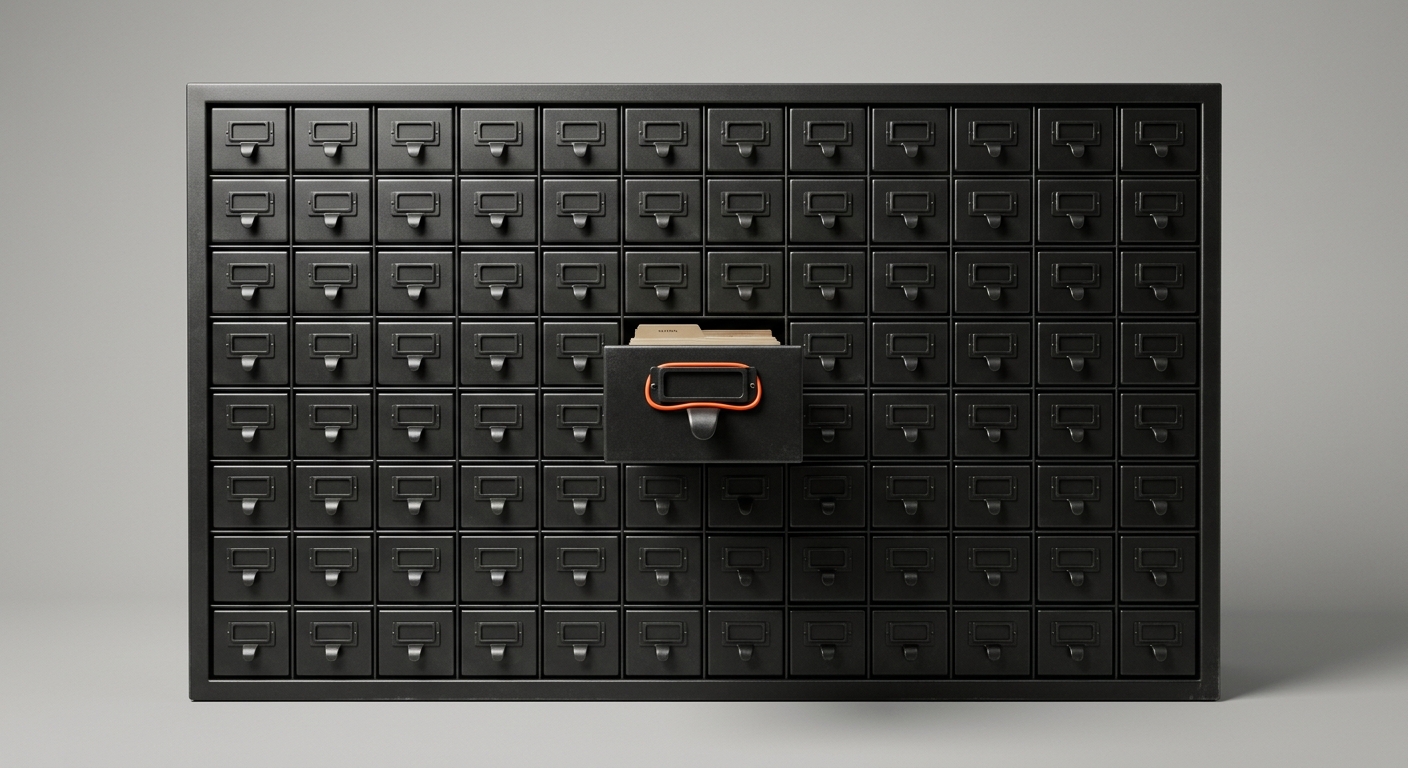
A single major RFP response costs between 15,000 and 50,000 dollars in fully loaded labour by the time your team has hunted down old answers, chased subject-matter experts, drafted, formatted, and submitted it1. The average deal team spends around 25 hours per response2, and roughly one in five RFPs gets abandoned before submission - the average company walks away from about 725,000 dollars in potential revenue every year simply because the bid desk ran out of capacity2.
Meanwhile the work has not changed. Every RFP asks 80 percent of the same questions you answered last quarter. Every tender wants the same capability statements, the same certifications, the same references, reformatted into someone else’s template. Your best bid writer knows exactly where the winning answers are - until they leave, and the knowledge walks out with them.
This guide is for the head of bid management, sales operations lead, or Geschaeftsfuehrer who wants to win more bids without hiring a bigger bid team. The answer is not another content library you still have to drive by hand. It is an AI employee that owns the routine RFP work end to end, grounded in a Company Brain that keeps your best answers inside the company for good.
TL;DR
An AI employee for RFPs owns the routine work end to end - parsing the RFP, matching requirements to past winning answers, drafting compliant responses, and tracking deadlines and evidence - while routing the judgement calls to humans.
The decisive asset is a Company Brain - your best answers, win themes, and pricing rationale stay in the company and survive bid-writer turnover, so output grows without headcount.
The numbers are real - RFP software cuts response time 40 to 60 percent, and 68 percent of proposal teams now use generative AI, doubled from 34 percent in 20232.
It is not generic proposal software - Loopio, Responsive and DealHub give you a library and workflow; an AI employee adds durable memory and end-to-end ownership on top of your real systems.
For German Ausschreibungen, it builds the compliance matrix, tracks mandatory evidence and deadlines, and drafts DSGVO-safe responses - with a human signing every submission.
The Bid Desk Paradox
Bidding is one of the highest-leverage activities in a B2B company - and one of the worst-run. RFP-driven revenue accounts for an average of 39 percent of total company revenue2, yet the process that produces it is stretched thin, under-resourced, and dependent on a handful of people who happen to remember where the good answers live.
- The work is mostly repetition - Proposal teams spend the majority of their time hunting for existing answers, past proposals, and content scattered across email threads, shared drives, and individual laptops18. Bid managers alone spend around 19 percent of their week just looking for information14.
- Teams are shrinking, not growing - Only 43 percent of companies now have a dedicated proposal team, down from 56 percent in 2023. The average RFP still pulls in nine contributors2, and 51 percent of processes are now run by sales rather than a specialist desk2.
- Deadlines force bad choices - The average response takes 25 hours of work against a fixed clock2. When capacity runs out, teams decline bids they could have won. Around 20 percent of RFPs are abandoned before submission2.
- Every abandoned bid is lost revenue - The average company forfeits roughly 725,000 dollars a year in revenue from RFPs it never finished2. That is not lost because the deal was unwinnable. It is lost because nobody had the hours.
- Knowledge leaves with people - When an experienced proposal writer resigns, their mental index of winning answers goes with them. A new hire spends roughly 200 hours trying to reclaim expertise that was never written down15.
- Cost per bid is brutal - Fully loaded, a single major RFP costs 15,000 to 50,000 dollars to produce1. Multiply that across a year of bids and the bid desk is one of the most expensive functions nobody measures properly.
Key Data Point
The average RFP win rate in 2025 was 45 percent, up from 43 percent in 2024. Enterprise teams average 47 percent, mid-market 45 percent, and SMBs 42 percent - but top-performing teams that combine automation, disciplined content reuse and structured insight hit 60 percent or higher1. The gap between a 42 percent and a 60 percent win rate is not talent. It is process and memory.
This is the paradox: the function that drives nearly 40 percent of revenue is run like an afterthought, on borrowed hours, with its most valuable asset - the knowledge of what wins - locked inside a few people’s heads.
| Indicator | Current State | Source |
|---|---|---|
| Revenue from RFPs | 39% of total company revenue | Loopio 20252 |
| Average response time | 25 hours per RFP | Loopio 20252 |
| Cost per major RFP | $15,000-$50,000 fully loaded | Industry benchmark1 |
| RFPs abandoned | ~20% before submission | Loopio 20252 |
| Revenue lost to abandonment | ~$725,000 per company per year | Loopio 20252 |
| Dedicated proposal teams | 43% (down from 56% in 2023) | Loopio 20252 |
What an AI Employee for RFPs Actually Does
An AI employee is not a chatbot bolted onto your inbox and not a smarter search box. It is a system that owns a defined job - responding to RFPs and tenders - and runs the routine parts of it end to end, inside the tools you already use, with humans in the loop for the calls that matter.
Think of it as a digital colleague on the bid desk. It reads the RFP, breaks it into individual requirements, finds your best past answer for each one, drafts a compliant response, tracks what evidence is still missing and when it is due, and hands the judgement work to your experts. It does the volume so your people do the value.
What it takes off the desk
- RFP parsing - It reads the incoming RFP or Vergabeunterlagen, extracts every question and requirement, and builds a structured compliance matrix automatically instead of someone copying it into a spreadsheet by hand.
- Requirement matching - For each requirement it searches the Company Brain and surfaces your strongest approved answer, with the source and the last-updated date, so nothing is reinvented from scratch.
- Compliant drafting - It drafts the routine 60 to 80 percent of the response in your voice and the client’s template - boilerplate, capability statements, repeat questions - and marks the gaps that need an expert.
- Evidence and deadline tracking - It tracks which certificates, references, and mandatory documents are required, what is missing, and every interim deadline, and it chases the owners before things slip.
- Human routing - It routes pricing, win themes, legal terms, and any low-confidence answer to the right person with full context, so the human spends minutes deciding, not hours assembling.
- Consistency enforcement - It keeps answers consistent across every submission and flags where your stored answer has drifted out of date, so two bids never contradict each other.
What it deliberately does not do
- It does not decide price - Pricing strategy stays with humans. The AI surfaces the rationale from past bids; a person makes the call.
- It does not invent answers - When there is no matching past answer, it flags the gap rather than fabricating one. No confident-but-wrong content.
- It does not submit on its own - A responsible person reviews and signs every submission. The AI prepares; the human commits.
- It does not replace the win strategy - Win themes and client-specific positioning are where bids are won or lost. That work stays with your experts, who now have the hours to do it well.
Generic Writing Assistant vs AI Employee for RFPs
Generic AI Writing Tool
- ✗ No company memory - starts blank every time, does not know your win themes
- ✗ Lives outside your systems - copy-paste in and out of CRM, SharePoint, email
- ✗ Invents plausible text - no grounding in approved answers, risk of hallucination
- ✗ No ownership - you still parse, track, chase, and assemble by hand
AI Employee for RFPs
- ✓ Company Brain - grounded in your best past answers and win themes
- ✓ Works in your stack - reads and writes across CRM, DMS, and email
- ✓ Grounded answers - cites the source and flags gaps instead of guessing
- ✓ End-to-end ownership - parse, match, draft, track, route as one job
The shift is happening fast. In 2025, 68 percent of proposal teams reported using generative AI, double the 34 percent of 2023, and 65 percent now use dedicated RFP software, up from 48 percent a year earlier2. The question is no longer whether AI belongs on the bid desk. It is whether yours runs a real AI employee or a disconnected writing gadget.
The Company Brain: Why Your Best Answers Should Not Live in People’s Heads
The single biggest reason bid desks stay stuck is that the knowledge of what wins is not written down anywhere useful. It lives in the head of the senior proposal manager, in an email thread from eighteen months ago, in a winning submission saved on someone’s laptop. A Company Brain fixes this by turning that scattered, decaying knowledge into a living, structured memory the whole team - and the AI employee - can draw on.
What a Company Brain holds
- Winning answers, not just any answers - It stores the responses that actually won, tagged by client type, sector, and question, so the AI reaches for proven content first.
- Win themes and positioning - The recurring arguments that move evaluators - your differentiators, proof points, and the story that lands - captured instead of re-improvised each time.
- Pricing rationale - Not just what you charged, but why: the logic behind past pricing decisions, so the next bid learns from the last one.
- Boilerplate and evidence - Approved capability statements, certifications, references, and compliance answers, versioned and current, ready to slot in.
- Corrections as learning - Every edit an expert makes to a draft feeds back in, so the same mistake is not repeated and the Brain gets sharper with every bid.
Why It Matters
Teams that maintain a content library reuse 66 percent of their content, and the 80 percent of top performers who keep one respond dramatically faster than those who do not - working without a library adds around 40 percent more time to each response2. A Company Brain is a content library that thinks: it does not just store answers, it matches, drafts, and learns.
Surviving turnover
The durable value of a Company Brain shows up the day someone resigns. In a normal bid desk, a departure is a crisis - the person who knew where the good answers were is gone. With a Company Brain, the answers stay.
- Knowledge stays in the company - When a senior bid writer leaves, their best answers, win themes, and pricing logic remain in the Brain, not in a personal folder nobody else can open.
- New hires inherit a memory - Instead of spending 200 hours reconstructing lost expertise15, a new joiner starts with a working, searchable record of how the company wins.
- Consistency across the team - Everyone draws from the same current answers, so quality does not swing with who happens to be staffing the bid.
- Compounding advantage - Every bid makes the next one easier. The Brain grows more valuable the longer it runs, which is the opposite of knowledge that decays in a wiki.
| Knowledge Store | Shared Drive / Wiki | Content Library | Company Brain |
|---|---|---|---|
| Finds the right answer | Manual search | Keyword search | Matches requirement to best answer |
| Knows what won | No | Sometimes tagged | Yes, tracks win outcomes |
| Stays current | Decays fast | Manual review cycles | Learns from every correction |
| Survives turnover | Partially | Yes for stored content | Yes, including win logic |
| Drafts the response | No | Assists copy-paste | Drafts and assembles |
“AI has brought major advancements and introduced additional AI-native vendors to the RFP response management market. Tools can more effectively address longstanding pain points, such as response speed, volume, answer quality and workflow integration.”
- Gartner, Market Guide for RFP Response Management Applications (2025)4
Turn your best bids into a Company Brain
Book a 30-minute call. We will map your highest-volume RFP workflow and where an AI employee fits.

The End-to-End RFP Workflow, Owned
The value of an AI employee is not any single step - it is owning the whole chain so nothing falls between the cracks. Here is what the loop looks like from the moment an RFP lands to the moment a human signs off.
The seven stages
- Intake and triage - The AI ingests the RFP or Ausschreibung from email or the tender portal, summarises scope, value, and deadline, and produces a fast bid-no-bid brief so leadership decides quickly which bids are worth the hours.
- Requirement extraction - It parses the document into a structured compliance matrix: every question, every mandatory requirement, every evaluation criterion, each with its own owner and status.
- Answer matching - For each requirement it pulls the best answer from the Company Brain, ranked by past win outcomes and recency, and flags requirements with no strong match as gaps.
- Compliant drafting - It assembles a first draft in the client’s template and your voice, complete for the routine questions and clearly marked where expert input is needed.
- Evidence assembly - It gathers the required certificates, references, and documents from your systems, lists what is missing, and requests it from the owners.
- Human review and win work - Experts refine win themes, set pricing, and tailor the story to the client. Every edit feeds back into the Brain.
- Deadline management and submission prep - It tracks all interim and final deadlines, formats to the required structure, runs a completeness check against the compliance matrix, and prepares the package for a human to submit.
Real-World Scenario
A mid-sized IT services firm receives a 120-question security questionnaire attached to an RFP on a Friday afternoon, due Wednesday. In the old world, that is a weekend for two engineers. With an AI employee, the questionnaire is parsed and 96 of the 120 questions are drafted from the Company Brain within an hour. The two engineers spend Monday reviewing the 24 flagged items and the answers touching current architecture - not copying boilerplate. The bid goes in Tuesday, a day early, and every approved answer updates the Brain for the next questionnaire.
Where the hours go, before and after
| Stage | Manual Process | With an AI Employee |
|---|---|---|
| Requirement extraction | 2-4 hours copying into a spreadsheet | Minutes, automatic compliance matrix |
| Finding past answers | Hours searching drives and email | Instant match from the Company Brain |
| First draft | Days of writing and formatting | Routine 60-80% drafted in an hour |
| Chasing evidence | Manual reminders, things slip | Automated tracking and nudges |
| Expert time | Spent on copy-paste and formatting | Spent on win themes and pricing |
This is why McKinsey found one client team could cut the time to assess competitors’ capabilities by 60 to 80 percent with a gen AI RFP engine built on more than 10,000 past RFPs - the machine replicated complex analysis in a fraction of the time and learned what drove winning bids5.
“Responding to requests for proposals can be a time sink, but gen AI can improve the efficiency and accuracy of RFP responses, reduce response times, and manage internal tracking.”
- McKinsey & Company, Unlocking Profitable B2B Growth Through Gen AI5
Ausschreibungen and Public Tenders: The German Context
Public procurement in Germany is enormous and highly structured, which makes it both a huge opportunity and a compliance minefield. In 2024, German public bodies awarded 199,334 contracts and concessions worth 135.2 billion euros - a 30 percent jump in volume since 20217. For any company that sells to the public sector, tenders are not a side channel. They are the market.
Why tenders are harder than commercial RFPs
- Formal rules apply - Above the EU thresholds, procurement runs under the VgV and the GWB. Formal requirements around Eignungskriterien, mandatory documents, and deadlines are strict, and a single missing form can disqualify an otherwise winning bid9.
- Compliance is graded - Tenders are scored against explicit award criteria. Missing or vaguely answering a requirement costs points directly, so a complete, traceable compliance matrix is not optional.
- Volume is punishing - Public buyers issue standardised but lengthy Vergabeunterlagen. The repetitive Eignungsnachweise and formal declarations are exactly the routine load an AI employee is built to carry.
- Audit trails matter more - Public bids can be challenged. Being able to show where every answer came from and that a responsible person reviewed it is a real advantage, and a natural byproduct of a Company Brain.
- Deadlines are immovable - Tender deadlines do not flex. Automated deadline and evidence tracking is worth more here than anywhere else because a late submission is simply excluded.
DSGVO and the EU AI Act
For German and EU bidders, data protection is non-negotiable. An AI employee that keeps data inside your infrastructure, processes it through encrypted and permissioned connections, and logs every action supports DSGVO compliance by design. Most bid-drafting use cases sit in the minimal or limited-risk tiers of the EU AI Act, and because a human reviews and signs every submission, the AI supports the decision rather than making it - the position regulators and clients both prefer.
How an AI employee handles a public tender
- Parse the Vergabeunterlagen - Extract every Eignungskriterium, technical requirement, and formal declaration into a structured matrix with owners and due dates.
- Map mandatory evidence - Identify every required certificate, reference, and Nachweis, check what already exists in your systems, and flag what must be requested.
- Draft grounded responses - Pull compliant answers from the Company Brain of past successful tenders, keeping formal language consistent with what has scored well.
- Track every deadline - Monitor submission and clarification-question deadlines and nudge owners well before they hit.
- Prepare for human sign-off - Assemble the complete package, run a completeness check against the formal requirements, and hand it to a responsible person to review and submit.
| German Public Procurement (2024) | Figure | Source |
|---|---|---|
| Contracts and concessions awarded | 199,334 | Destatis / cosinex7 |
| Total award volume | 135.2 billion euros | Destatis / cosinex7 |
| Volume growth since 2021 | +30% | Destatis / cosinex7 |
| Federal above-threshold volume | 45.1 billion euros (+115% since 2021) | Destatis / cosinex7 |
| Construction contracts | 20.9 billion euros | Destatis / cosinex7 |
The 60-Day Rollout Playbook
You do not need a year-long transformation programme to get value. A focused rollout targets one high-volume bid type - usually security questionnaires or a recurring tender format - and takes it from assessment to production in about 60 days. Here is the sequence.
Phase 1: Assess and seed the Brain (Weeks 1-3)
- Week 1: Pick the wedge - Choose the highest-volume, most repetitive bid type you handle. Security questionnaires and standardised tenders are ideal first targets because the answers are highly reusable.
- Week 2: Gather winning material - Collect your best past responses, approved boilerplate, capability statements, and evidence. The winning bids matter most - they seed the Company Brain with proven content.
- Week 3: Connect the systems - Hook the AI employee into where bids live today: SharePoint or your DMS, your CRM, and email. No rip-and-replace, no new platform for the team to learn.
Phase 2: Build and test (Weeks 4-6)
- Week 4: Train on your material - The AI employee ingests and structures your past bids into the Company Brain, learning your voice, win themes, and answer patterns.
- Week 5: Run against live bids in parallel - Point it at real incoming RFPs alongside your normal process. Compare its draft to what your team would have produced. Collect corrections.
- Week 6: Tune and set guardrails - Define confidence thresholds, human-in-the-loop checkpoints, and routing rules. Decide what always goes to a human - pricing, legal terms, low-confidence answers.
Phase 3: Deploy and measure (Weeks 7-9)
- Week 7: Go live on the wedge - Run the target bid type through the AI employee as the primary process, with human review on every submission.
- Week 8: Measure against baseline - Compare turnaround time, expert hours per bid, and completeness against the baseline you set in week 1.
- Week 9: Expand the scope - Add the next bid type. Every bid processed makes the Brain richer and the next rollout faster.
Bid Desk AI Readiness Checklist
- You respond to enough RFPs or tenders that volume is a real constraint
- A meaningful share of each response repeats across bids
- You have a library of past winning submissions to seed the Brain
- Your bids live in systems with API or export access (SharePoint, DMS, CRM)
- You can name the one bid type that eats the most hours
- A bid owner will champion the pilot and review outputs
- Leadership will judge it on turnaround, capacity, and win rate
- You are willing to start with one bid type, not all of them
Hire Another Bid Writer vs Deploy an AI Employee
Hire Another Bid Writer
- ✗ 80,000+ euros fully loaded - plus recruiting time in a scarce talent market
- ✗ Months to ramp - a new writer has to learn where the good answers are
- ✗ Knowledge still walks - when they leave, the memory leaves with them
- ✗ Linear capacity - one more person, one more person’s worth of bids
Deploy an AI Employee
- ✓ Live in ~2 weeks - connects to systems you already run
- ✓ Knowledge compounds - the Company Brain gets richer with every bid
- ✓ Non-linear capacity - respond to more RFPs without more headcount
- ✓ Frees your experts - their hours move to win themes and pricing
The AI RFP Tools Landscape: Loopio, Responsive, DealHub and Where They Stop
Plenty of good software exists for RFP responses. It would be dishonest to pretend otherwise, and the right answer for some teams is a proposal platform, not a custom AI employee. Here is an honest map of the landscape and where each approach fits.
The established platforms
- Loopio - A library-first platform strong on storing approved answers and coordinating contributors. It is the common choice for mid-market teams formalising their RFP process for the first time, praised for ease of use and onboarding13.
- Responsive (formerly RFPIO) - A workflow-first platform built for large enterprises managing high RFP volumes across many document types, with deep analytics and a broad integration ecosystem19.
- DealHub - Strong where the proposal ties directly into CPQ and quoting, so the commercial terms and the document stay in sync.
- AI-native newcomers - A wave of AI-first tools now automate more of the drafting itself, pushing the market toward faster, higher-volume responses13.
These tools are genuinely useful. What they share is a boundary: they give you a content library and a workflow, but you still drive the process, and the knowledge they hold is only as alive as the manual discipline your team applies to keeping it current.
Where the platform approach stops
- You still drive it - The library answers when you search; it does not own the loop from parsing to submission.
- Memory is storage, not learning - Content sits until someone updates it. It does not learn win themes or pricing rationale from outcomes on its own.
- It lives beside your systems - Answers still move between the platform, your CRM, your DMS, and email by hand.
- Generic, not yours - The workflow is designed for everyone, so it fits your specific process approximately, not exactly.
| Capability | Proposal Platform | Generic AI Tool | AI Employee + Company Brain |
|---|---|---|---|
| Content library | Yes | No | Yes, living |
| Parses the RFP for you | Partial | No | Yes |
| Owns end-to-end loop | No | No | Yes |
| Learns win themes | No | No | Yes |
| Runs in your systems | Beside them | Outside them | Inside them |
| Built for your process | Generic | Generic | Custom |
The Honest Take
If you need a shared answer library and a way to coordinate contributors, a platform like Loopio or Responsive is a solid buy, and 61 percent of companies report ROI on RFP software within a year13. If your constraint is capacity and durable memory - you decline bids for lack of hours and your best answers live in people’s heads - a platform alone will not fix it. That is where an AI employee grounded in a Company Brain earns its place.
How Superkind Fits
Superkind builds AI employees for specific companies - custom AI that understands your processes, your data, and your rules, and works as one layer over everything you already use. For bid management, that means an AI employee that owns the routine RFP work and a Company Brain that keeps your best answers inside the company.
- Process-first discovery - We watch how your bid desk actually works - where hours vanish, which questions repeat, how a winning bid comes together - before building anything. No generic template.
- A real Company Brain - We turn your past winning bids, boilerplate, and pricing rationale into a living memory that matches requirements to your best answers and learns from every correction.
- Sits on top of your stack - The AI employee connects to SharePoint or your DMS, your CRM, and email. Nothing to rip out, nothing new for the team to learn.
- Live in about two weeks - The first version launches in weeks, not months, because it works with what you already run. Your team uses it from day one and it sharpens with feedback.
- Human-in-the-loop by design - Pricing, win themes, legal terms, and low-confidence answers always route to a person. The AI prepares; your people decide and sign.
- More output, not more headcount - The point is to respond to more bids and decline fewer without hiring a bigger team. Capacity grows; the payroll does not.
- Outcomes, not licences - Pricing is per use case against measurable results - turnaround, capacity, win rate - not seat licences and multi-year lock-ins.
- Security and compliance built in - Data stays in your infrastructure, connections are encrypted and permissioned, and every action is logged, supporting DSGVO and clean audit trails for public tenders.
| Approach | Proposal Software | Superkind AI Employee |
|---|---|---|
| What it is | Library and workflow you drive | A digital colleague that owns the loop |
| Memory | Stored content | Living Company Brain that learns |
| Integration | A platform beside your systems | A layer inside your systems |
| Fit | Generic, configurable | Built around your process |
| Pricing | Seat licences | Per use case, tied to outcomes |
Superkind
Pros
- ✓ Owns the routine work - parse, match, draft, track as one job
- ✓ Durable company memory - the Brain survives turnover
- ✓ Runs in your systems - no rip-and-replace
- ✓ Outcome-based pricing - pay for results, not seats
- ✓ Human judgement protected - people own win themes and price
Cons
- ✗ Not self-serve - it is a build, not a sign-up-and-go app
- ✗ Needs good material - a strong Brain needs your past winning bids
- ✗ Overkill for low volume - a handful of bids a year does not justify it
- ✗ Requires process access - we need to see how you really bid
Decision Framework: Is Your Bid Desk Ready?
Not every company needs an AI employee for bids. Here is a framework to decide where you sit.
| Signal | What It Means | Action |
|---|---|---|
| You decline bids for lack of capacity | You are leaving winnable revenue on the table | Prime candidate - start with your highest-volume bid type |
| Your best answers live in a few heads | Turnover is a standing risk to your win rate | Build a Company Brain before the knowledge walks out |
| You respond to many similar RFPs or tenders | High reuse means high automation payoff | Seed the Brain from past wins and automate the repeat 70% |
| You have proposal software but still drown | A library alone did not fix the capacity problem | Add an AI employee that owns the loop on top |
| You bid into public tenders | Formal compliance and audit trails are high-stakes | Automate the compliance matrix and evidence tracking |
| You handle a handful of bespoke bids a year | Low volume, low repetition | A shared content library or template is enough for now |
Acting Now vs Waiting
Acting Now
- ✓ Capacity unlocks fast - respond to bids you currently decline
- ✓ The Brain compounds - it grows more valuable every bid cycle
- ✓ Knowledge is captured - before your senior writers move on
- ✓ Win-rate gap closes - process and memory move you toward the 60% band
Waiting
- ✗ Revenue keeps leaking - the abandoned-bid bill runs every year
- ✗ Competitors automate - 68% of teams already use gen AI on bids
- ✗ Turnover risk stays - one resignation still dents your win rate
- ✗ The desk stays a bottleneck - more demand, same hours
Frequently Asked Questions
It is an AI system that owns the routine parts of responding to a request for proposal or a public tender end to end. It parses the RFP, breaks it into individual requirements, matches each one to your best past answers stored in a Company Brain, drafts a compliant first response, tracks deadlines and required evidence, and routes the judgement calls to the right human. Unlike a generic writing assistant, it works inside your real systems - CRM, SharePoint or your DMS, and email - and keeps a durable memory of what wins.
Loopio, Responsive (formerly RFPIO) and DealHub give you a content library and a workflow to manage it. They are strong at storing approved answers and coordinating contributors. An AI employee goes further: it owns the whole loop, from reading the RFP to drafting and chasing evidence, and it builds a living Company Brain that learns your win themes and pricing rationale from every bid. The difference is durable company memory plus end-to-end ownership, not just a searchable answer bank you still have to drive by hand.
No, and it should not. It drafts the routine 60 to 80 percent - compliance answers, boilerplate, capability statements, repeat questions you have answered a hundred times - and assembles a compliant first draft. Your bid manager and subject-matter experts spend their time on the parts that actually win: the win themes, the pricing strategy, and the client-specific story. The AI handles volume so your people handle judgement.
Yes, with human oversight. The AI employee parses the Vergabeunterlagen, extracts every Eignungskriterium and requirement into a compliance matrix, flags mandatory documents and deadlines, and drafts responses grounded in your past submissions. It does not decide legal questions or submit on its own - a responsible person reviews and signs off. For public tenders the audit trail and traceable answer sourcing matter even more, which is exactly what a Company Brain provides.
Because the knowledge lives in the company, not in one person. Every winning answer, every reusable capability statement, every pricing rationale and every correction your experts make is captured in the Company Brain. When a senior bid writer leaves, their best answers stay. A new hire inherits a working memory instead of a shared drive full of outdated documents nobody can find. This is the core reason teams win more bids without hiring a bigger bid team.
A first version typically goes live in about two weeks because it connects to systems you already run rather than replacing them. On response speed, industry data is clear: RFP software cuts response time by 40 to 60 percent, and teams with AI-assisted workflows report completing responses in under five hours versus a 25-hour average. The bigger win is capacity - the same team can respond to more RFPs and decline fewer.
It needs your past proposals and tender responses, your approved boilerplate and capability statements, product and pricing information, and access to where bids live today - usually SharePoint or a DMS, your CRM, and email. It reads what it needs to draft accurately. Access is scoped and permissioned, connections are encrypted, and every action is logged for audit.
It can be. Data stays inside your infrastructure and is processed through encrypted, permissioned connections, which supports DSGVO compliance. Most bid-drafting use cases fall into the minimal or limited-risk categories of the EU AI Act, meaning lighter obligations like transparency. Because a human reviews and signs every submission, the AI supports the decision rather than making it - the safest position for both regulation and reputation.
A senior bid writer or proposal manager is a fully loaded cost of well over 80,000 euros a year plus ramp time. Industry data puts the fully loaded cost of a single major RFP response at 15,000 to 50,000 dollars. An AI employee is priced per use case against measurable outcomes - more responses submitted, faster turnaround, higher win rate - and it scales output without adding headcount. It pays back against the bids you currently decline for lack of capacity.
Yes. Security questionnaires, vendor due-diligence forms, and ESG or compliance questionnaires are structurally identical to RFPs: long lists of repeat questions matched against approved answers. They are among the highest-value first use cases because the answers are highly reusable and the current process is pure manual copy-paste. The Company Brain keeps these answers current and consistent across every submission.
It flags the gap rather than inventing an answer. Low-confidence items, questions with no matching past answer, and anything touching price or legal terms are routed to the right human with the context they need. This human-in-the-loop design is what keeps quality high and prevents the confident-but-wrong answers that erode trust. Every correction the expert makes feeds back into the Company Brain, so the same gap does not reappear.
The opposite, when set up well. Because it drafts the routine content in seconds, your experts get their hours back to sharpen the win themes and tailor the response to the specific client and evaluation criteria - the work that actually differentiates a bid. Generic proposals lose. The AI removes the low-value volume so your people can do the high-value personalisation that wins.
Track four numbers against a baseline: response turnaround time, number of RFPs you can respond to per quarter, your bid-no-bid decline rate, and win rate. Top-performing teams that combine automation, disciplined content reuse and structured insight are far less likely to sit in the low-win band - 16 percent versus 47 percent. Set the baseline before you start, then review monthly. First results usually show within a single bid cycle.
Related Articles
- The AI Employee for Outbound Sales Development - how an AI employee runs the routine sales-development work end to end.
- The AI Employee for Quoting and Pricing - turning quote requests into accurate, on-strategy prices faster.
- Why 400,000 Copilot Agents Still Do Not Know Your Company - why a living Company Brain beats generic copilots.
- The AI Employee for Contract Management - owning the routine contract work across your systems.
- AI Agents for the Mittelstand - the practical guide to deploying AI agents without losing what makes you great.
Sources
- Loopio - RFP Statistics & Win Rates (2025/2026)
- Bidara - RFP Statistics 2026: Average Win Rate Is 45%
- Responsive - RFP Response Trends & Benchmarks
- Gartner Market Guide for RFP Response Management Applications 2025 (via Templafy)
- McKinsey - Unlocking Profitable B2B Growth Through Gen AI
- McKinsey - An Unconstrained Future: How Generative AI Could Reshape B2B Sales
- cosinex - Vergabestatistik 2021-2024 Auswertung
- Statistisches Bundesamt (Destatis) - Vergabestatistik
- BMWE - Oeffentliche Auftraege und Vergabe
- Iris AI - RFP Response Time Benchmarks by Industry
- SiftHub - Essential RFP Metrics: A Practical Guide
- Steerlab - RFP Win Rate Benchmarks by Industry (2025)
- Loopio - The 7 Best AI Tools for RFP Responses (2026)
- Altura - Best Practices in Bid Management
- Allego - Preserving Institutional Knowledge When Employees Leave
- APMP - Association of Proposal Management Professionals
- Loopio - The Bid Management Process
- Arphie - RFP Management by the Numbers
- AutoRFP - Loopio vs Responsive (RFPIO) Review 2026
- LLCBuddy - RFP Software Statistics 2025
Ready to win more bids without a bigger bid team?
Book a 30-minute call with Henri. We will map your highest-volume RFP workflow and outline where an AI employee and a Company Brain fit - no commitment, no sales pitch.
Book a Demo →