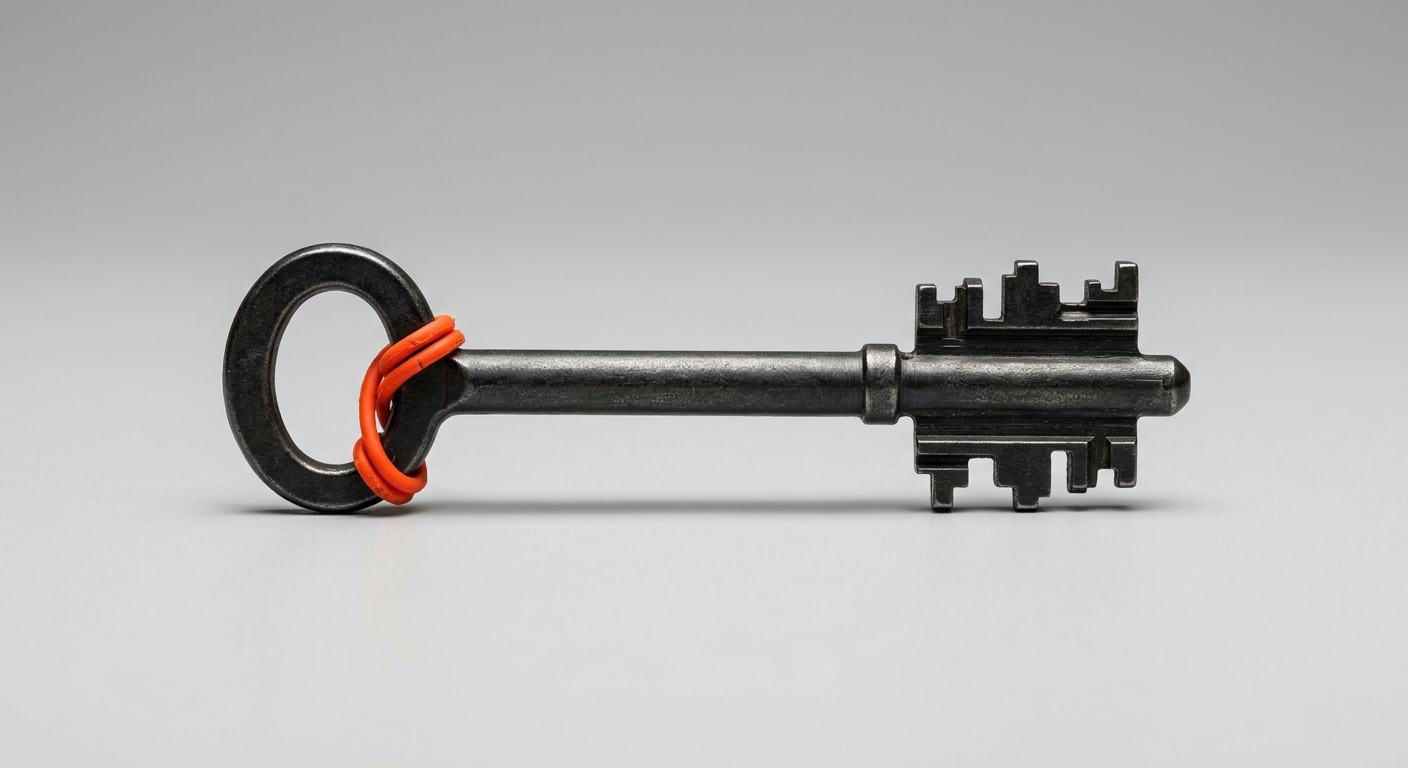
Definition: Knowledge Silo
A knowledge silo is the state in which critical operational knowledge, such as how a process runs or how to resolve a recurring fault, exists only in one person’s head or inside one team and never reaches the colleagues who need it.
Core characteristics of a knowledge silo
Knowledge silos form quietly, not through any decision to hide information. The people closest to a process simply never have a reason to write down what they know, until someone outside the circle needs it.
- Knowledge lives in a person’s head, not a searchable system
- Other departments discover it only once they urgently need it
- Rarely written down because the holder sees it as routine
- Crosses lines: sales, support, and production each guard a piece
Knowledge Silo vs. Data Silo
A data silo is a technical barrier: information sits in a system, a CRM, an ERP, a shared drive, but another system cannot reach it without integration. A knowledge silo is a human barrier: the knowledge was never captured in any system, so there is nothing to integrate with. Closing a data silo with an API does not free knowledge that only ever lived in memory. The bus factor measures something related but different: how many departures a process could survive, not the current state of isolation itself.
Importance of knowledge silos in enterprise AI
Knowledge silos cap what an organization and its AI can do, since an AI agent can only reason over knowledge it can reach. McKinsey finds knowledge workers spend close to 20 percent of their week searching for information or the colleague who holds it, time largely spent working around silos. Left unaddressed, a silo becomes an AI grounding problem too: an agent trained only on documentation inherits the same blind spots.
Methods and procedures for breaking down knowledge silos
Breaking open a silo means making hidden knowledge visible to people outside it.
Knowledge mapping and silo identification
Locating silos rarely matches the org chart. Asking teams who they call when the standard process breaks surfaces concentrated expertise faster than any diagram.
- Ask each team who they go to when things go wrong
- Flag answers naming only one person or small group
- Rank findings by how often the knowledge is needed elsewhere
Structured capture and documentation
Once found, the knowledge has to be pulled out deliberately, since holders rarely volunteer it. Guided interviews through real past cases, not job descriptions, surface the exceptions that make tacit knowledge valuable. The result needs to be searchable, not buried in an unread document.
AI-based continuous capture
AI systems can observe work across email, CRM, tickets, and chat, continuously building a shared record instead of waiting for a scheduled audit. This turns knowledge transfer from an event tied to a departure into a byproduct of daily work, the architecture behind a Company Brain that keeps growing.
Important KPIs for knowledge silos
Measuring silo reduction means tracking whether knowledge becomes reachable, not just whether a project ran.
Visibility and reach metrics
- Critical processes with zero documented backup: below 10 percent
- Time for an outside colleague to find an answer: under 1 day
- Queries resolved without contacting the original holder: tracked weekly
- Identified silos with an assigned capture owner: 100 percent
Strategic exposure
Leadership increasingly tracks how many functions depend on a single undocumented expert. Deloitte reports 85 percent of C-suite leaders see the coming departures as a serious threat, yet 92 percent admit they still do not capture that knowledge consistently.
Usage and trust
A silo is not fixed just because something got written down. The real signal is whether outside colleagues actually use the captured knowledge alone, and whether new hires reach competence faster once it opens.
Risk factors and controls for knowledge silos
A knowledge silo carries risks that stay invisible until the person holding it becomes unavailable.
Single-person dependency
When one employee is the only route to a piece of knowledge, their absence stalls whatever depends on it and drains institutional memory. The risk rarely shows in advance, since the process runs fine for years, until it cannot.
- Sudden illness, resignation, or accident with no overlap
- Retirement announced too late for a real handover
- One contact point for a key customer relationship
Territorial knowledge hoarding
Not every silo is accidental. Some employees guard knowledge deliberately because being the only one who knows something makes them harder to replace, so a documentation mandate alone will not move it. Breaking this needs a changed incentive, rewarding sharing as part of how performance is measured.
Overreliance on informal documentation
Teams often assume a wiki page already solved the problem, when such pages record what was decided, not the reasoning behind it. A silo that looks closed on paper remains functionally closed, because the part that matters was never captured.
Practical example
A 160-employee commercial laundry equipment supplier in Lower Saxony depended almost entirely on one field service technician for diagnosing a class of recurring faults, know-how built over 22 years that never reached the service manual. When he cut his hours ahead of retirement, two newer technicians could not resolve the same faults without calling him. The company recorded him walking through 30 past repairs and turned the reasoning into a searchable troubleshooting log. Within three months, the junior technicians resolved most faults independently.
- Troubleshooting log indexed by symptom, model, and part
- Weekly case reviews against the captured reasoning
- Escalation reserved for genuinely new fault patterns
- Same method reused for two roles nearing retirement
Current developments and effects
Two forces push knowledge silos higher up the Mittelstand risk agenda.
Demographic pressure on specialist roles
Retirement waves concentrate departures in the same narrow window, and the specialists leaving are often the ones who never documented anything because they were simply always there. Replacements are frequently hired too late to overlap meaningfully.
- More specialist roles reaching retirement age at once
- Fewer experienced successors available internally
- Shorter handover windows as replacements start late
AI systems as both a trigger and a remedy
Deploying AI agents without opening existing silos tends to expose the gap rather than close it, since an agent grounded only in documentation repeats the organization’s blind spots. The same technology, pointed at daily work, increasingly captures reasoning continuously instead of on a schedule.
From static documentation to continuous capture
Mittelstand companies are shifting from one-time documentation sprints toward systems that keep updating as work happens, since a wiki page written once drifts out of date within a year. This treats silo reduction as ongoing infrastructure, not a one-time project.
Conclusion
A knowledge silo turns an organization’s most valuable expertise into its most fragile asset, reachable only through one person who may not always be available. Mapping where silos sit, capturing reasoning rather than outcomes, and giving that knowledge somewhere searchable to live move an organization from hoping nobody leaves to being ready regardless. This hits smaller companies hardest, since a Mittelstand firm with a handful of irreplaceable specialists carries the same exposure concentrated in far fewer people. As AI agents take on more operational work, every unopened silo becomes a blind spot they cannot reason around.
Frequently Asked Questions
What is a knowledge silo in simple terms?
Knowledge about a process, a customer, or a recurring problem that exists only in one person’s head or one team, and never reaches anyone else who needs it.
How is a knowledge silo different from a data silo?
A data silo is a technical barrier between systems: the information exists, but another tool cannot reach it without integration. A knowledge silo is a human barrier: the knowledge was never written down, so there is no system to integrate with.
Is breaking down knowledge silos worth it for a company with under 100 employees?
Often more urgently than for larger companies. Critical knowledge is frequently concentrated in one or two specialists, so a focused effort covering the five or six most critical roles typically takes just a few weeks.
What does it cost to capture knowledge trapped in a silo?
A structured, interview-based programme for a handful of roles can run largely on internal staff time plus modest external facilitation, usually far less than what an unplanned departure costs in lost productivity.
How does GDPR affect capturing knowledge from employees?
Recording employee work to extract knowledge touches personal data, so capture should follow GDPR data minimization and purpose limitation principles, focusing on process reasoning rather than individual performance.
How does Superkind help with knowledge silos?
Superkind connects AI agents to a company’s existing systems and the knowledge inside them, so expertise that would otherwise sit with one person becomes something colleagues and agents can draw on instead of waiting for that person.