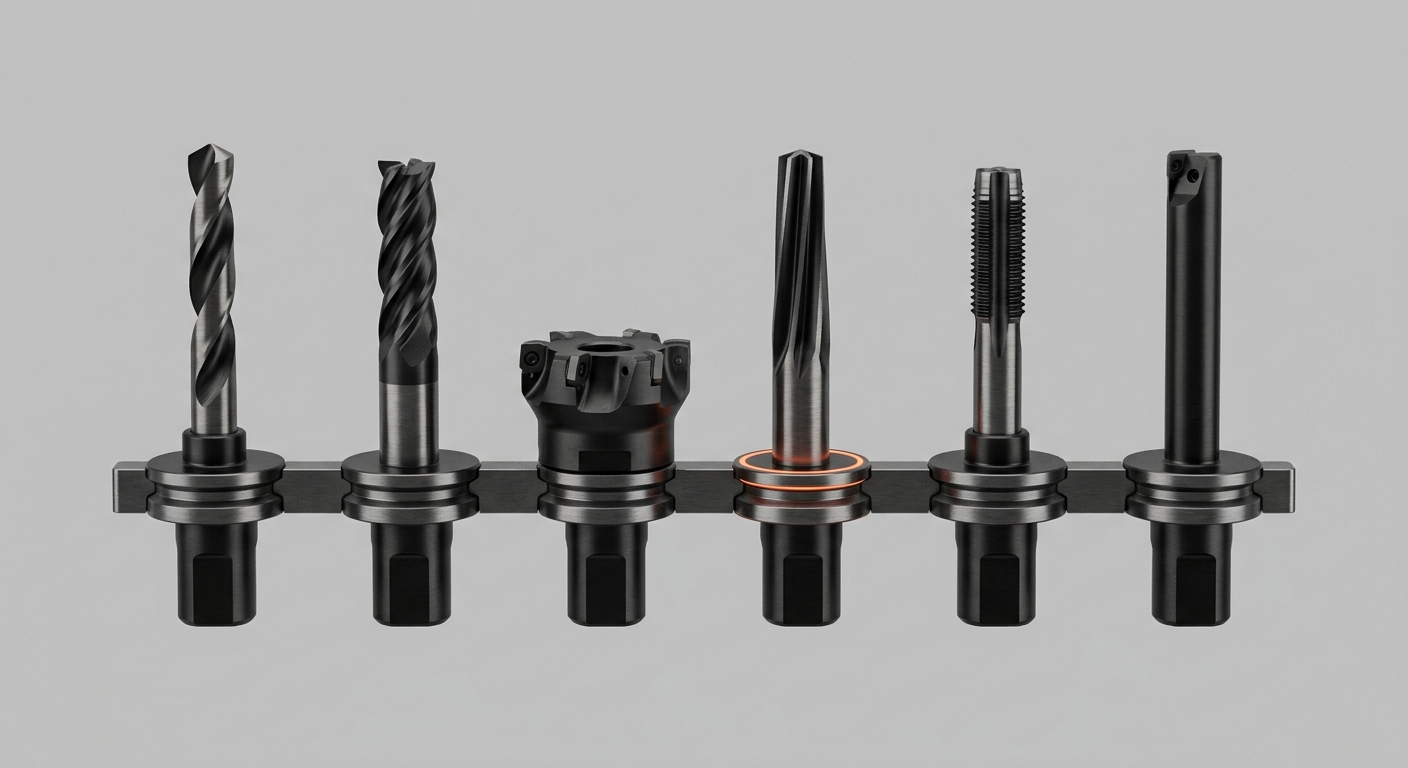
Definition: Mixture of Experts (MoE)
Mixture of Experts (MoE) is a neural network architecture where a layer splits into specialized sub-networks, called experts, with a router that activates only a small subset of them per input, so the model holds far more total parameters than it computes per token.
Core characteristics of Mixture of Experts (MoE)
MoE trades one dense computation path for many narrow, specialized ones, scaling capacity without scaling per-token compute by the same factor.
- A router, or gating network, scores each token and picks the top-k experts
- Only selected experts run; the rest stay idle, which is what “sparse” means
- Experts are usually feed-forward blocks inside a transformer layer, not full models
- Total parameters can be 5 to 20 times the number active per token
Mixture of Experts (MoE) vs. dense models
A dense model activates every parameter for every token, so doubling its size roughly doubles compute cost. MoE decouples the two: it can hold ten times the parameters of a dense model while activating only two or three times the compute, since each token visits just a handful of experts. That is why MoE is now the default for labs chasing capability without a proportional inference bill.
Importance of Mixture of Experts (MoE) in enterprise AI
MoE efficiency is a main reason API prices for top-tier models fell sharply between 2023 and 2026 even as capability rose. Google’s Switch Transformer research (Fedus, Zoph and Shazeer, 2021) showed MoE sparsity delivers up to 7x faster pretraining at equal compute budget, scaling to 1.6 trillion parameters. For Mittelstand buyers who pay per token, MoE is why a frontier answer costs less than it did two years ago.
Methods and procedures for Mixture of Experts (MoE)
Implementing or evaluating MoE involves three recurring mechanisms.
Token routing
The router assigns each token to a fixed number of experts, commonly the top 1 or top 2 by score, from a pool of 8 to over 250 experts depending on the model.
- Router scores are computed cheaply before any expert runs
- Top-k selection keeps compute bounded regardless of pool size
- Tokens in the same sentence can route to entirely different experts
Load balancing
Unchecked, routers favor a handful of popular experts, leaving others undertrained. Builders add an auxiliary loss during training that penalizes uneven usage and pushes tokens toward a more even spread.
Expert specialization and fine-tuning
Specialization emerges from training, not manual assignment; some experts end up handling syntax while others focus on code or multilingual content. When enterprises apply fine-tuning to an MoE foundation model, only the touched experts and router weights change, often making adaptation cheaper than for an equivalent dense model.
Important KPIs for Mixture of Experts (MoE)
Buyers evaluating MoE-based models track different numbers than buyers of dense models.
Capacity and efficiency metrics
- Total parameters: overall model size
- Active parameters per token: what drives cost and latency
- Number of experts and top-k value: how sparse the routing is
- Sparsity ratio: total parameters divided by active parameters
Cost and throughput metrics
The gap between total and active parameters is the business case: Mixtral 8x7B activates roughly 12.9 billion of its 46.7 billion parameters, and DeepSeek-V3 activates about 37 billion of its 671 billion, which is why both price well below dense models of comparable listed size. Tracking cost per output token against the active-parameter figure is the honest comparison.
Quality and stability metrics
Expert utilization balance, routing consistency, and benchmark scores at matched active-parameter budgets complete a fair evaluation, since a skewed router quietly wastes the capacity the architecture promises.
Risk factors and controls for Mixture of Experts (MoE)
Routing instability
Poorly balanced routers can collapse onto a small set of experts during training or fine-tuning, degrading quality in ways hard to diagnose from outside.
- Uneven expert load reduces effective model capacity
- Fine-tuning on narrow company data can worsen imbalance if unmonitored
- Output quality can vary by topic in ways dense models do not show
Infrastructure and memory overhead
All experts must sit in memory even though only a few run per token, so MoE models need more memory than their active-parameter count suggests. A dense small language model stays a more predictable choice where footprint matters more than frontier capability.
Vendor opacity on routing behavior
Most providers do not publish router decisions, making inconsistent answers on edge cases hard to audit. Worth raising during procurement, alongside standard EU AI Act and GDPR data-handling questions.
Practical example
A 160-employee industrial wholesale distributor in North Rhine-Westphalia handles several thousand multilingual quote requests a month through a chatbot built on an MoE-based large language model accessed via API. Its previous dense model handled German and English well but needed human escalation for French and Polish supplier queries. Switching to an MoE model with broader multilingual coverage at similar active-parameter cost closed that gap without a renegotiated contract.
- Multilingual quote handling across four languages from one deployment
- Comparable per-query cost to the previous dense model despite higher capability
- No separate fine-tuning run needed for each added language
- Escalation to a human agent only for pricing exceptions
Current developments and effects
Frontier labs standardizing on MoE
By 2026, MoE is the default architecture for frontier models, proprietary and open-weight alike, including OpenAI’s GPT-5 class and GPT-OSS line, Moonshot AI’s Kimi K2, and DeepSeek’s V3 family.
- Expert counts have grown from single digits to several hundred in the largest releases
- Open-weight MoE models now compete with proprietary dense models on many benchmarks
- Falling active-parameter costs drove the token-price declines enterprises saw since 2023
Hardware and serving innovation
Inference providers now run MoE-aware serving stacks that place popular experts on faster hardware and batch requests by routing pattern, narrowing the early latency gap with dense models.
Pressure on enterprise procurement
As more vendors ship MoE models, procurement teams can no longer compare offerings by parameter count alone. A platform like Superkind, which connects enterprise systems to whichever model fits a workflow, spares Mittelstand buyers from tracking this shift themselves.
Conclusion
Mixture of Experts is why frontier AI capability keeps getting cheaper per token even as models grow larger on paper. For a Mittelstand buyer who never trains a model, the takeaway is simple: total parameter counts in marketing material say little about cost or quality, while active parameters, expert count, and routing stability say much more. As labs keep standardizing on sparse designs, MoE will keep shaping token prices long after buyers stop noticing the term on a spec sheet.
Frequently Asked Questions
What is the difference between Mixture of Experts and a dense model?
A dense model activates every parameter for every token, so cost scales directly with size. An MoE model activates only a small subset of parameters per token through a router, holding far more capacity without a proportional rise in inference cost.
Does Mixture of Experts affect which AI model a Mittelstand company should buy?
Indirectly, yes. MoE is a main reason frontier-capability models got cheaper per token since 2023, so compare active-parameter cost and benchmark performance at that cost, not the headline parameter count on the spec sheet.
Do we need our own IT infrastructure to use an MoE-based model?
No, for most Mittelstand cases. MoE models are almost always consumed through a provider’s API or a cloud platform such as AWS Bedrock, which manages the memory and serving complexity MoE needs. Self-hosting only suits larger enterprises with strict data-residency needs.
How does GDPR apply when using an MoE-based model through an API?
The questions are the same as for any foundation model: where inference runs, whether prompts are retained for training, and whether a Data Processing Agreement is in place. MoE is an internal efficiency mechanism, not a data-handling difference.
Why did our token costs change even though we did not switch providers?
Providers regularly swap the model behind an API endpoint, and a shift to a more efficient MoE design is a common reason a subscription gets cheaper or faster with no visible contract change. Bitkom’s 2025/2026 AI survey found a third of German companies were surprised by AI costs moving against budget.
Can Mixture of Experts models be fine-tuned like other models?
Yes, though it typically updates only the experts and router weights the training data activates, not the whole network. That can make targeted adaptation for company terminology cheaper than fine-tuning an equally capable dense model, but it needs monitoring against load imbalance.