

A facility manager running fifty sites does not lack software. There is a CMMS for work orders, an IWMS or spreadsheet for space, a building management system pushing sensor data, a finance system for invoices, and a flood of email and Teams messages from tenants and contractors. The problem in 2026 is not too little technology. It is that each system knows only its own slice, and the person in the middle stitches them together by hand.
This is exactly the gap the new wave of AI facility management tools promises to close. In February 2026 Facilio launched Atom, a suite of autonomous AI agents that execute back-office work1. In April 2026 Fexa launched FexaAI, billed as the first multi-agent platform built for facilities management4. The incumbents - Planon, IBM Maximo, Corrigo, ServiceChannel, Eptura, Nuvolo, MRI - have all bolted AI onto their platforms. The market is real, growing fast, and noisier than ever.
This is an honest 2026 comparison of the tools that actually exist. Real vendors, real pricing where it is knowable, and honest limits. It is written for the facility director, operations lead, or Geschaeftsfuehrer who has to pick something that works with the systems they already run. We will also be clear about where a Company Brain plus AI employees fit underneath the whole stack, and where they do not.
TL;DR
There is no single best tool. Facilio and Fexa lead the AI-native shift, Planon and Nuvolo own enterprise IWMS, Maximo owns asset-heavy maintenance, and Corrigo and ServiceChannel own outsourced multi-site FM. The right pick depends on your sites, your technicians, and your systems.
Most tools are CMMS or IWMS point tools with AI added. They analyse, route, and dispatch work orders inside their own platform. That is genuinely useful, and it is also where most of them stop.
Pricing is mostly quote-based. IBM Maximo Essentials starts near 3,150 dollars per month for 25 users12; Corrigo runs around 60 dollars per user per month14; Nuvolo 35 to 70 dollars17. Facilio, Fexa, Planon, and ServiceChannel publish no list prices.
The shared limit is the silo. Facilio Atom acts inside Facilio, FexaAI inside Fexa. Real facility teams work across a CMMS, a building management system, sensor data, finance, and Teams. AI that sees only one silo cannot run the whole process.
A Company Brain sits underneath the stack. It connects AI employees to the real systems facility teams already use, so the routine work gets done across the whole operation, not just measured inside one tool.
AI Facility Management in 2026: A Crowded Market of Point Tools
Facility management software has grown from a maintenance ledger into a multi-billion-dollar category, and 2026 is the year AI stopped being a slide and started shipping as a product. Every serious vendor now has an AI story. The question for a buyer is which of those stories is a workflow feature, and which is a genuine change in how the work gets done.
- The market is large and growing - The facility management software market is estimated at roughly 2.66 billion dollars in 2025, growing to 4.97 billion by 2030 at a 13.3 percent compound annual rate7. Wider estimates put it near 3.79 billion in 2024 rising to 9.6 billion by 20338.
- IWMS is the biggest tier - The integrated workplace management system market alone is valued around 7.1 billion dollars in 2026 and forecast to reach 17.8 billion by 2033 at about 14 percent a year9.
- AI-native platforms have arrived - Facilio launched its Atom autonomous agent suite in February 20261, and Fexa launched its FexaAI multi-agent platform in April 20264. Both frame AI as the operating layer, not a bolt-on.
- Agentic AI is the direction of travel - Gartner predicts that a third of enterprise software will include agentic AI by 2028, up from less than one percent in 202410. Facility software is following that curve.
- A talent shortage is driving adoption - Skilled trades face roughly twenty job openings for every new hire expected over the next decade, pushing FM leaders to automate the work they cannot staff6.
- The future is framed as blended - Industry leaders describe FM's future not as human versus AI but as humans, augmented workers, and AI agents sharing the work11.
- Price transparency is poor - Most enterprise platforms publish no pricing and sell through negotiation shaped by site count, modules, and scope14.
Key Data Point
Gartner predicts a third of enterprise software will embed agentic AI by 2028, up from under one percent in 202410. In facility management the shift is already visible: within three months in early 2026, two vendors launched autonomous and multi-agent platforms14. The category is moving from software you operate to software that operates alongside you.
The through-line for a buyer is this: you are entering a mature, competitive market where every vendor can show you an AI demo. The differences that matter are how many sites you run, whether your technicians are in-house or outsourced, which systems your work lives in, and what happens after the AI does its narrow job.
| Indicator | State in 2026 | Source |
|---|---|---|
| FM software market (2025) | ~$2.66 billion, 13.3% CAGR to 2030 | Mordor Intelligence7 |
| IWMS market (2026) | ~$7.1 billion, ~14% CAGR to 2033 | Verified Market Reports9 |
| Agentic AI in enterprise software | 33% by 2028, up from <1% in 2024 | Gartner10 |
| AI-native FM launches | Facilio Atom (Feb), FexaAI (Apr) | Facilio, Fexa14 |
| Public pricing | Rare among enterprise platforms | Facilio pricing analysis14 |
What These Tools Actually Do (and Where They Stop)
Before comparing vendors, it helps to be precise about the jobs facility management software does. Most tools sit in one of three overlapping categories, and the AI layered on top follows the same shape as the platform beneath it.
The three categories
- CMMS - A computerised maintenance management system runs work orders, assets, preventive maintenance schedules, and technician dispatch. This is the operational core for most maintenance teams.
- CAFM - Computer-aided facility management adds space and move management, floor plans, and occupancy on top of maintenance.
- IWMS - An integrated workplace management system is the broadest tier, bundling maintenance, space, real estate, lease administration, and sustainability into a single platform for large estates.
What the AI layer typically does
- Work order intake and triage - AI turns a messy tenant message or photo into a clean, categorised work order with the right priority and asset, reducing bad tickets at the source6.
- Dispatch and scheduling - Agents assign the right technician or contractor based on skill, location, and availability, and check quotes against not-to-exceed limits15.
- Predictive maintenance - Models read sensor and IoT data to flag assets likely to fail before they break, so a repair becomes planned rather than emergency21.
- Invoice and compliance checks - Agents validate contractor invoices, catch duplicates, and monitor regulatory or warranty conditions automatically1.
- Space and energy optimisation - Analytics recommend how to use floor space and cut energy consumption based on occupancy and usage data19.
- Natural-language answers - Chat and voice interfaces let a store manager ask a question and get an answer from FM data without learning the software6.
Where It Stops
Almost every capability above happens inside one platform. The AI reads the data that platform holds and acts on the workflows that platform owns. It does not reach across your building management system, your finance tool, and your inbox to run a process end to end. The moment the work spans systems, or needs a judgement call the vendor did not script, it lands back on a person.
The honest reframe
The industry knows the ceiling exists. That is why vendors talk about moving from screen-based software to AI-native operations. It is a real step. But in practice, most AI in FM today still means a smarter intake form, a better dispatch suggestion, or a predictive alert that a human then acts on. Useful, and still a long way from software that runs the operation.
What AI FM Tools Are Great At vs Where They Leave You
Great At
- ✓ Cleaning up intake - turning messy requests into structured work orders
- ✓ Faster dispatch - matching the right technician or contractor quickly
- ✓ Predictive alerts - flagging failing assets before they break
- ✓ Invoice validation - catching duplicate and out-of-scope charges
- ✓ Reporting - compliance and performance dashboards on demand
Where It Leaves You
- ✗ Locked to one platform - the AI sees only the data its own tool holds
- ✗ Blind to other systems - your BMS, finance, and inbox stay disconnected
- ✗ Exceptions bounce to people - the non-standard cases are exactly what it hands back
- ✗ Knowledge stays tacit - how your team really works still lives in heads
“We still need to be the adults in the room all the time. We don’t want buildings making these decisions by themselves.”
- Brian Haines, Senior Director of Strategy and Business Development at Johnson Controls6
The Best AI Facility Management Tools, by Job to Be Done
"Best" only means something once you name the job. A platform built for an SAP-connected corporate campus is the wrong choice for a restaurant chain dispatching outsourced plumbers. Here are the eight jobs facility teams actually hire software to do, and the tools that fit each one.
Job 1: Add autonomous AI to an existing FM stack
- Best fit: Facilio Atom - Its agents deploy on top of an existing CMMS, ERP, or finance system to automate helpdesk dispatch, compliance, and finance work without a rip-and-replace project13.
- Strong alternative: a Company Brain - Where Atom automates back-office workflows inside a defined scope, a Company Brain connects AI employees across every system, not just the ones Facilio reads.
- Watch-out - The agents still work within the areas Facilio defines; the more your process spans other systems, the more you need broader connectivity.
Job 2: Improve work orders across many retail sites
- Best fit: FexaAI - Multi-agent platform built for retail, grocery, and restaurant chains, guiding store teams through work-order creation by chat and voice, with reported 25 percent faster resolution and a 71 percent lift in first-time fix rates45.
- Strong alternative: ServiceChannel - Deep multi-site vendor management for brands running hundreds or thousands of locations16.
- Watch-out - FexaAI is focused on the work-order lifecycle inside Fexa, not your full system landscape.
Job 3: Manage a large corporate real estate estate
- Best fit: Planon - Cloud-native IWMS covering real estate, facility operations, space, and sustainability in one platform for large, complex estates20.
- Strong alternative: Eptura - The largest IWMS by market share after consolidating Condeco, SpaceIQ, iOFFICE, and Archibus, strong on workplace experience19.
- Watch-out - Full IWMS deployments run 12 to 24 months and six or seven figures a year.
Job 4: Run asset-intensive maintenance
- Best fit: IBM Maximo - Enterprise asset management and CMMS for asset-heavy industries, with AI-assisted maintenance and strong reliability tooling1213.
- Strong alternative: MRI Angus - Building operations with predictive analytics and IoT integration through MRI Agora Insights21.
- Watch-out - Maximo is powerful and priced and configured for large, technical maintenance organisations.
Job 5: Manage outsourced contractors at scale
- Best fit: Corrigo - JLL-owned platform deployed across 1.1 million facilities in 140 countries, processing 18.5 million work orders and 6 billion dollars of spend a year, with AI-driven scheduling and quote checks15.
- Strong alternative: ServiceChannel - Corrigo's closest competitor, focused on the vendor marketplace and spend management16.
- Watch-out - Both are enterprise tools sold by negotiation, best for organisations with a real outsourced contractor network.
Job 6: Run FM on a ServiceNow foundation
- Best fit: Nuvolo - Connected Workplace built natively on ServiceNow, merging asset management, CMMS, space, and real estate, with AI for predictive maintenance and dispatch1718.
- Strong alternative: IBM Maximo - When the estate is more asset-intensive than workplace-focused.
- Watch-out - Nuvolo's value concentrates when you already run ServiceNow.
Job 7: Optimise space and the hybrid workplace
- Best fit: Eptura - Workplace experience plus asset management, with AI analytics for occupancy and space19.
- Strong alternative: Planon - When space sits inside a broader real estate and operations remit.
- Watch-out - Workplace tools are strongest on space and desks, lighter on heavy maintenance.
Job 8: Connect AI to every system a facility team uses
- Best fit: a Company Brain - None of the tools above is built for this. A Company Brain captures how your facility operation actually works and connects AI employees to the CMMS or IWMS, the building management system, sensor data, finance, and Teams or email.
- How it pairs - The point tools manage their slice; the Company Brain runs the routine work across the whole stack and escalates the genuine exceptions with context.
- Watch-out - This is a different job from buying a CMMS. If all you need is a maintenance ledger, start there.
| Job to Be Done | Best Fit | Strong Alternative |
|---|---|---|
| AI on an existing stack | Facilio Atom | Company Brain |
| Multi-site retail work orders | FexaAI | ServiceChannel |
| Large real estate estate | Planon | Eptura |
| Asset-intensive maintenance | IBM Maximo | MRI Angus |
| Outsourced contractors | Corrigo | ServiceChannel |
| ServiceNow foundation | Nuvolo | IBM Maximo |
| Space and hybrid workplace | Eptura | Planon |
| Connect AI to every system | Company Brain | - |
Have the tools but the systems still do not talk?
Book a 30-minute call. We will show you how AI employees run the work across your existing FM stack.
The Nine Tools, Head to Head
This is the honest, one-by-one view. Each entry names the real strength, the real limit, and who it is for. No tool wins every row, and any comparison sheet that claims one does is selling something.
1. Facilio
- What it is - A connected CMMS repositioning itself as AI-native, with the Atom autonomous agent suite launched in February 20261.
- Strength - Agents for helpdesk dispatch, compliance, and finance that automate up to 40 percent of repetitive back-office work and can layer on an existing CMMS, ERP, or finance system23.
- Limit - The agents act within Facilio's defined scope; the broader your process spreads across other systems, the more you feel the platform boundary.
- Best for - Mid-market and enterprise FM teams that want autonomous AI without ripping out their current system.
2. Fexa (FexaAI)
- What it is - A facilities management platform whose FexaAI multi-agent layer launched in April 2026, after a first Work Order Agent in October 202545.
- Strength - Chat and voice agents that replace forms and guide store teams through complete tasks, with reported 25 percent faster resolution and 71 percent better first-time fix rates4.
- Limit - Purpose-built for multi-site retail, grocery, and restaurant work orders; the AI lives inside the Fexa work-order world.
- Best for - Retail and restaurant chains that want AI at the point of work-order intake.
3. Planon
- What it is - A cloud-native IWMS covering real estate, facility operations, space, and sustainability in one platform20.
- Strength - Broad, integrated coverage for large estates, with strong sustainability and space capabilities and an open platform approach.
- Limit - Enterprise scope means enterprise implementation: long projects and significant cost before value lands.
- Best for - Large corporate and public real estate portfolios that need one integrated system.
4. IBM Maximo
- What it is - Enterprise asset management and CMMS within the Maximo Application Suite, licensed via AppPoints1213.
- Strength - Deep reliability, asset performance, and maintenance capabilities with AI assistance, built for asset-heavy operations.
- Limit - Complexity and cost; Maximo is configured and priced for large technical maintenance organisations, not lean teams.
- Best for - Manufacturing, utilities, transport, and other asset-intensive industries.
5. Corrigo (JLL Technologies)
- What it is - JLL-owned enterprise FM platform for multi-site organisations using outsourced contractors, deployed across 1.1 million facilities in 140 countries15.
- Strength - Massive scale in vendor-managed FM, processing 18.5 million work orders and 6 billion dollars of spend a year, with AI-driven scheduling and quote or warranty checks15.
- Limit - Enterprise software sold by negotiation, with a base licence floor and a real minimum team size before it makes sense14.
- Best for - Large multi-site estates that run maintenance through outsourced service contractors.
6. ServiceChannel
- What it is - One of the most widely deployed multi-site FM platforms, focused on the vendor marketplace and spend management16.
- Strength - Deep contractor network, service verification, and spend visibility for brands across hundreds or thousands of locations.
- Limit - Strongest as a vendor and spend platform; quote-based pricing and enterprise focus.
- Best for - Retail and restaurant brands managing a large external vendor network.
7. Eptura
- What it is - The largest IWMS by market share, formed by consolidating Condeco, SpaceIQ, iOFFICE, and Archibus into a workplace and asset platform19.
- Strength - Strong workplace experience, space and desk management, and asset capabilities, with AI analytics for occupancy.
- Limit - Breadth from acquisitions can mean integration seams; pricing is quote-based with annual billing.
- Best for - Organisations focused on the hybrid workplace and space optimisation.
8. Nuvolo
- What it is - Connected Workplace built natively on ServiceNow, merging asset management, CMMS, space, and real estate18.
- Strength - A single unified environment on ServiceNow, with Nuvolo AI for predictive maintenance, dispatch, and space utilisation17.
- Limit - Value concentrates when you already run ServiceNow; implementation adds meaningful cost17.
- Best for - Enterprises standardised on ServiceNow that want FM in the same platform.
9. MRI Angus
- What it is - Part of MRI Software's FM suite alongside MRI Evolution and NETfacilities, focused on building operations21.
- Strength - Building operations and tenant service with predictive analytics and IoT integration through MRI Agora Insights.
- Limit - Sits within the broader MRI ecosystem; strongest when paired with other MRI real estate products.
- Best for - Commercial real estate operators already in the MRI world.
| Tool | Core Strength | Main Limit | Best For |
|---|---|---|---|
| Facilio | Autonomous agents on existing stack | Acts within Facilio scope | AI-native mid-market and enterprise |
| Fexa | Multi-agent work-order intake | Retail work-order focus | Multi-site retail and restaurants |
| Planon | Broad cloud-native IWMS | Long, costly implementation | Large real estate estates |
| IBM Maximo | Deep asset and reliability | Complexity and cost | Asset-intensive industries |
| Corrigo | Outsourced FM at massive scale | Enterprise, negotiated pricing | Multi-site with contractors |
| ServiceChannel | Vendor marketplace and spend | Vendor-platform focus | Brands with large vendor networks |
| Eptura | Workplace and space | Integration seams, lighter maintenance | Hybrid workplace teams |
| Nuvolo | Native ServiceNow FM | Best inside ServiceNow | ServiceNow enterprises |
| MRI Angus | Building operations and analytics | Best inside MRI ecosystem | Commercial real estate operators |
What AI Facility Management Software Really Costs in 2026
Pricing is the least transparent part of this market. Most vendors publish nothing, and real costs depend on site count, users, modules, and how hard you negotiate. The figures below come from vendor tiers and third-party benchmark data, not universal list prices, so treat them as ranges, not quotes.
- IBM Maximo - The Maximo Application Suite uses AppPoints licensing. Reported SaaS entry is around 3,150 dollars per month for an Essentials tier of up to 25 users, with named users near 250 dollars per user per month and administrative roles higher. Annual support adds roughly 20 percent of licence value, and implementation often doubles first-year spend12.
- Corrigo - No public pricing. Corrigo Enterprise is estimated around 60 dollars per user per month with a base licence floor near 1,000 dollars per month, implying a minimum team of roughly 15 to 20 users before per-user rates apply. Final cost is shaped by site count and modules14.
- Nuvolo - Estimated around 35 dollars per user per month for standard and up to 70 dollars for enterprise, plus 5,000 to 10,000 dollars implementation for small rollouts and 20,000 to 50,000 for enterprise ones. ServiceNow licensing may sit underneath17.
- Facilio - No public list price; sold by quote, positioned for mid-market and enterprise, with the Atom agent suite as an add-on layer3.
- Fexa - No public pricing; quote-based, aimed at multi-site retail and restaurant operators4.
- Planon and Eptura - Enterprise IWMS, quote-based, typically six or seven figures a year with 12 to 24 month implementations. Eptura offers Advanced and Power plans with annual billing19.
- ServiceChannel and MRI - Custom enterprise quotes shaped by site count, vendor network, and module selection16.
The Hidden Cost
The licence is only the visible line item. The real spend is implementation, integration with your other systems, data cleanup, and the change programme to make people use the tool. An enterprise IWMS bought without a plan to connect it to your building data and your inbox becomes another silo your team logs into, not a system that runs the work.
| Tool | Indicative Cost | Pricing Basis |
|---|---|---|
| IBM Maximo | ~$3,150/mo entry, ~$250/user/mo | AppPoints, tiered12 |
| Corrigo | ~$60/user/mo, ~$1,000/mo floor | Per user, negotiated14 |
| Nuvolo | ~$35-$70/user/mo plus implementation | Per user on ServiceNow17 |
| Facilio / Fexa | Quote-based | Site count and scope3 |
| Planon / Eptura | Six to seven figures a year | Enterprise IWMS, by scope19 |
| ServiceChannel / MRI | Custom quote | Sites, vendors, modules16 |
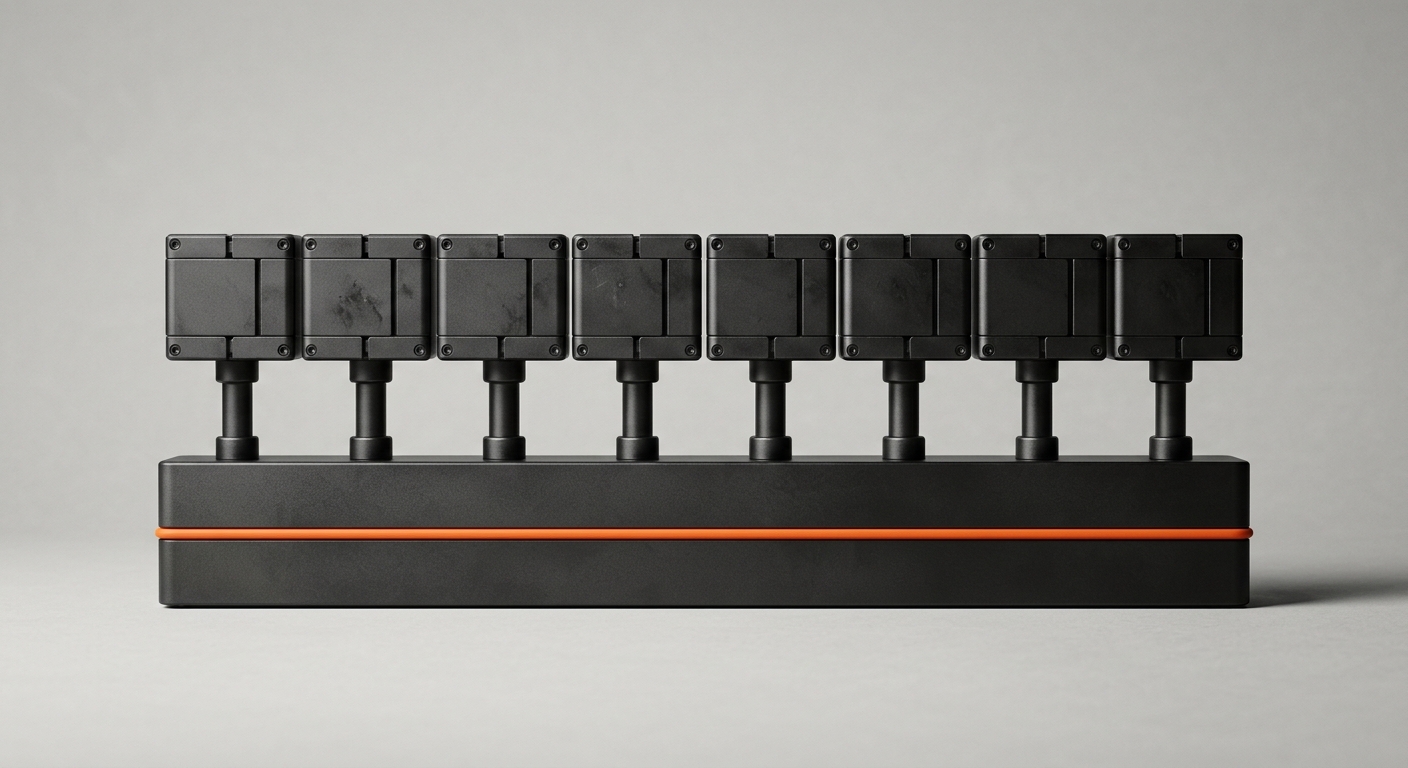
The Gap Every Tool Shares: AI Locked Inside One Platform
Strip away the branding and almost every tool in this comparison shares the same shape: excellent AI, confined to its own platform. That is fine when all your work lives in one place. Most facility operations do not.
Why the silo is the real limit
- Facility work spans systems - A single leak might start as a tenant email, become a work order in the CMMS, trigger a sensor alert in the building management system, and end as a contractor invoice in finance. No single platform holds all four.
- Each AI sees one slice - Facilio Atom reasons over Facilio's data, FexaAI over Fexa's, Maximo Assist over Maximo's. Each is blind to what happens in the other systems your team uses every day.
- The interesting cases are exceptions - AI handles the common path well. The cases that cost money are the exceptions, and exceptions are exactly what a point tool flags for a human rather than resolving.
- Rip-and-replace is the usual ask - Getting more AI value often means moving more of your work onto the vendor's platform, which is slow, costly, and rarely complete.
- Knowledge stays tacit - How your team actually decides which contractor to trust, which invoice to question, or which alert to ignore lives in people's heads, not in any one tool.
- Communication is left out - Most FM work is coordinated over email and Teams, and most point tools do not read or act there at all.
The Core Problem
AI facility management tools answer "how do I run this workflow better inside my platform?" They do not answer "who or what will run the whole operation across all my systems, every day, without a person copying data between them?" That second question is a different category of tool. The point tools manage their slice. Something else has to connect and run across the stack.
“The tools built 25 or 30 years ago weren’t made for this new world - full stop.”
- Kurt Smith, CEO of Fexa6
A vendor CEO saying the old tools are outdated is self-interested, but he is also right about the direction. The open question is what actually runs the work across systems. Bolting an agent onto one platform is a start. Connecting AI to every system a facility team already uses is the harder, more valuable job.
Where a Company Brain Fits Underneath the Stack
This is the honest positioning: a Company Brain is not a CMMS and does not replace one. It sits underneath the stack, and it is one option for the job the point tools leave undone - connecting AI to the real systems facility teams already use, so the routine work gets done across the whole operation. Superkind builds exactly this.
Where a point tool automates a workflow inside its own platform, a Company Brain captures how your facility operation actually works as durable memory: the processes, the exceptions, the contractor rules, the tacit judgement that only lives in people's heads. Then it connects AI employees to the same systems your team uses - CMMS or IWMS, building management and sensor data, finance, Teams, and email - so the routine work the point tools only touch in part actually gets done end to end.
What Superkind does
- Company Brain - A durable memory of how your facility operation works: people-knowledge, processes, and data that normally walks out the door when a veteran facility manager leaves.
- AI employees - KI-Mitarbeiter that take over routine work end to end, not just measure or triage it. They handle the common path and escalate the genuine exceptions with context.
- Connected to real systems - Agents read and write across your CMMS or IWMS, building management and sensor feeds, finance, Teams, and email through secure connections, not just one platform.
- No rip-and-replace - The Brain connects to the tools you already run, so you keep Facilio, Maximo, Corrigo, or Planon and add AI that works across all of them.
- Handles the full loop - From tenant email to work order to sensor check to contractor invoice, the AI employee follows the process across systems rather than stopping at a platform boundary.
- Learns via daily feedback - The Brain improves as your team corrects and guides it, so the memory of how you work gets sharper over time instead of fading.
- Survives turnover - When the veteran facility manager or the long-serving dispatcher leaves, the understanding stays in the Company Brain rather than leaving with them.
- Model-agnostic and secure - Built on your infrastructure with enterprise-grade security, so data stays where it belongs and the Brain is not locked to one AI vendor.
| Dimension | AI FM Point Tool | Company Brain (Superkind) |
|---|---|---|
| Core question | How do I run this workflow inside my platform? | How does the whole operation run across every system? |
| Scope of AI | One platform's data | Every connected system |
| Systems reached | Its own CMMS or IWMS | CMMS, BMS, sensors, finance, Teams, email |
| Handles exceptions | Flags them for a human | Acts, or escalates with context |
| When the expert leaves | Knowledge fades | Memory stays and keeps acting |
| Relationship | Manages its slice | Connects and runs across the stack |
Superkind Company Brain: An Honest View
Where It Fits
- ✓ Connects the stack - AI works across CMMS, BMS, finance, and inbox
- ✓ Runs the routine work - AI employees do it, not just triage it
- ✓ No rip-and-replace - keeps the tools you already run
- ✓ Durable memory - process knowledge survives staff turnover
- ✓ Handles exceptions - acts on the cases point tools only flag
Where It Is Not the Answer
- ✗ Not a CMMS - if you just need a maintenance ledger, buy one
- ✗ Not self-serve - it needs a discovery phase with your team
- ✗ Not instant - durable memory is built, not switched on
- ✗ Not for a single site - a one-location team may not need it yet
If you already run Planon or Maximo and it works, keep it. The Company Brain is what you point at the work once you are tired of your systems not talking to each other.
How to Choose: A Decision Framework
The right choice starts with two questions: how does your facility operation actually run, and what will the AI need to touch to help? Work through the signals below before you take a single vendor demo.
- Name your operating model first - How many sites, in-house or outsourced technicians, and how much is planned maintenance versus reactive requests. This decides whether you need a CMMS, an IWMS, or a vendor-management platform.
- Map the systems the work touches - List every system a typical request passes through: inbox, CMMS, building management system, finance. If the work spans several, a single-platform AI will only ever help with part of it.
- Match the tool to the estate - Asset-heavy points to Maximo or MRI. Outsourced multi-site points to Corrigo or ServiceChannel. Large real estate points to Planon or Eptura. ServiceNow shops point to Nuvolo.
- Decide AI-native or AI-added - If you want autonomous agents on your current stack, look at Facilio Atom or a Company Brain. If you want AI inside a specific platform, weigh the platform first and the AI second.
- Check whether the AI crosses systems - Ask each vendor directly: does your AI act only inside your platform, or can it read and write across our other systems? The answer changes what the tool can actually run.
- Price the real total - Add implementation, integration, modules, and support to the licence. The sticker is rarely the spend.
- Run a proof of value - Pick one workflow, such as work-order intake or invoice validation, deploy it, and measure the result before signing a multi-year deal.
AI Facility Management Buyer Checklist
- You have named your operating model: sites, technicians, planned versus reactive
- You have mapped every system a typical request passes through
- You know whether you need a CMMS, an IWMS, or a vendor platform
- You have asked each vendor whether their AI crosses systems or stays inside their platform
- You have a realistic total cost including implementation and integration
- You know who owns the change once the tool is live
- You have a plan to keep process knowledge as durable memory, not tribal knowledge
- You will run a proof of value before a multi-year commitment
Buy a Bigger Platform vs Connect What You Have
Buy a Bigger Platform
- ✓ One system of record - fewer tools to log into
- ✓ Vendor support - mature roadmap and services
- ✗ Migration cost - 12 to 24 months and heavy spend
- ✗ Still a silo - the AI stays inside the new platform
Connect What You Have
- ✓ No rip-and-replace - keep the tools your team already knows
- ✓ AI across systems - work runs from inbox to CMMS to finance
- ✓ Faster start - connect one workflow and prove value
- ✗ Needs discovery - the process has to be captured first
Frequently Asked Questions
The strongest options in 2026 are Facilio with its Atom autonomous agents for AI-native CMMS, FexaAI for multi-site retail and restaurant work orders, Planon for enterprise IWMS, IBM Maximo for asset-intensive maintenance, Corrigo for outsourced multi-site FM, ServiceChannel for vendor networks, Eptura for workplace and asset management, Nuvolo for ServiceNow-based estates, and MRI Angus for building operations. There is no single winner. The right tool depends on how many sites you run, whether your technicians are in-house or contracted, and which systems your work already lives in.
A CMMS (computerised maintenance management system) manages work orders, assets, and preventive maintenance. A CAFM (computer-aided facility management) adds space and move management. An IWMS (integrated workplace management system) is the broadest tier, bundling maintenance, space, real estate, lease, and sustainability into one platform. Most AI facility management tools sit in one of these three categories and add AI to the workflows they already run, rather than reasoning across your whole operation.
Facilio launched its Atom autonomous AI agent suite on 11 February 2026. The agents execute manual back-office workflows in three areas: helpdesk dispatch, compliance automation, and finance and control. Facilio says they automate up to 40 percent of repetitive work like service intake, approvals, and invoice validation. Crucially, the agents can layer on top of an existing CMMS, ERP, or finance system, so teams do not have to rip out what they run today to use them.
Pricing spans a wide range and is mostly quote-based. IBM Maximo Essentials starts around 3,150 dollars per month for up to 25 users, with named users reported near 250 dollars per user per month. Corrigo Enterprise is estimated around 60 dollars per user per month with a base floor near 1,000 dollars per month. Nuvolo runs roughly 35 to 70 dollars per user per month plus implementation. Facilio, Fexa, Planon, ServiceChannel, and Eptura publish no list prices and sell through negotiation shaped by site count, modules, and scope.
FexaAI is a multi-agent layer built on top of Fexa's facilities management platform, launched as a full multi-agent platform on 2 April 2026 after an initial Work Order Agent in October 2025. Instead of forms, it guides store teams through complete tasks by chat and voice, from creating a clean work order to answering questions across FM data. Fexa reports early customers resolving issues more than 25 percent faster with a 71 percent improvement in first-time fix rates. It is still focused on the work order lifecycle inside Fexa, not your whole system landscape.
For retail, grocery, and restaurant chains running hundreds or thousands of locations with outsourced contractors, the three natural shortlisters are Corrigo, ServiceChannel, and Fexa. Corrigo and ServiceChannel dominate vendor-managed multi-site FM, while FexaAI is the newest AI-forward option built specifically for that world. The deciding factors are how your contractor network is managed, how much of the work is dispatch versus in-house, and whether you want AI at the point of work-order intake.
No. Every tool in this comparison automates or assists specific workflows: intake, dispatch, invoice checks, predictive alerts, space planning. They do not run a building on their own, and the vendors themselves say so. Johnson Controls strategy lead Brian Haines put it plainly: teams still need to be the adults in the room and not let buildings make decisions by themselves. The realistic 2026 model is blended, with humans, augmented workers, and AI agents sharing the work.
Yes, within limits. Predictive maintenance is one of the more mature AI use cases in FM. Platforms like Nuvolo, MRI Agora Insights, and IBM Maximo correlate sensor and IoT data to flag assets likely to fail before they do. The catch is data quality: predictions are only as good as the sensor coverage and the maintenance history feeding them. Predictive alerts also still hand the decision to a human or a work order, so the value depends on someone acting on the warning.
Almost every tool keeps its AI locked inside its own platform. Facilio Atom acts inside Facilio, FexaAI inside Fexa, Maximo Assist inside Maximo. That is fine if all your work lives in one system, but real facility teams work across a CMMS or IWMS, a building management system, sensor feeds, finance, and Teams or email. AI that only sees one of those silos cannot run the end-to-end process. Connecting AI to all the real systems a team already uses is where most tools stop.
Not necessarily. Some AI layers are designed to sit on top of what you already run. Facilio Atom explicitly deploys over existing CMMS, ERP, and finance systems without a rip-and-replace project. A Company Brain takes the same approach at a broader level, connecting AI employees to your CMMS or IWMS, your building data, and your communication tools rather than forcing you onto a new platform. The question to ask any vendor is whether their AI works with your current stack or requires you to move onto theirs.
An AI facility management tool answers "how do I manage this workflow inside my platform?" A Company Brain answers "how does my whole facility operation actually work, and how do AI employees run the routine parts of it across every system?" It captures how your team handles work orders, exceptions, contractors, and compliance as durable memory, then connects AI employees to your CMMS or IWMS, sensor and BMS data, and Teams or email. They are complementary: the point tools manage their slice, the Company Brain connects and runs across the whole stack.
Both, but differently. Large estates justify enterprise IWMS platforms like Planon, Maximo, or Nuvolo. Smaller and mid-sized teams often get more from AI layered onto the tools they already have, because a full IWMS is a 12 to 24 month project they do not need. For a lean team the better question is not which enterprise platform to buy, but whether AI can take over the repetitive work order, scheduling, and invoice steps across their existing systems without a huge migration.
Start with your operating model: how many sites, in-house or outsourced technicians, and which systems the work runs in today. Then check whether the AI works across your systems or only inside the vendor's platform, what the real total cost is once implementation and modules are added, and who owns the change once the tool is live. Run a proof of value on one workflow, such as work order intake or invoice validation, and measure the result before signing a multi-year deal.
Sources
- Facilio - Facilio Launches Autonomous AI Agents to Automate Facilities Management
- PR Newswire - Facilio Launches Autonomous AI Agents to Automate Manual Back-Office Work in Facilities Management
- Facilio - Atom: Agentic AI for Facility Operations
- Fexa - Fexa Launches FexaAI: The First Multi-Agent AI Platform Built for Facilities Management
- PR Newswire - Fexa Launches FexaAI: The First Multi-Agent AI Platform Built for Facilities Management
- Fexa - The State of AI in Facilities Management: Trends and Predictions for 2026 and Beyond
- Mordor Intelligence - Facility Management Software Market Size and Share Analysis
- Grand View Research - Facility Management Software Market Report
- Verified Market Reports - IWMS Software Market Size, Growth Analysis and Forecast
- Gartner - Predicts 2026: AI Agents Will Transform IT Infrastructure and Operations
- IFMA - AI in Facility Management: What Executive Leaders in North America and Europe Are Seeing
- Facilio - IBM Maximo Pricing 2026: AppPoints, Tiers and True Cost
- IBM - Maximo Application Suite
- Facilio - Corrigo CMMS Pricing: What Does It Actually Cost in 2026?
- Facilio - Corrigo Review 2026: Features, Pricing, Pros and Cons
- Facilio - ServiceChannel Review 2026: Features, Pricing and Limitations
- Facilio - Nuvolo + ServiceNow + Modules: What Is the Real Pricing?
- Nuvolo - Connected Workplace
- SelectHub - Eptura Asset Reviews 2026: Pricing, Features and More
- Planon - Integrated Workplace Management System (IWMS)
- MRI Software - Facilities Management Software
- IFMA - What the 2026 Global Salary Report Reveals About the Future of Facility Management
- Facilities Dive - 5 Facilities Management Trends That Will Shape 2026
- Skedda - 5 Facilities Management Predictions for 2026: The FM Analyst Era
Ready to make your facility systems work together?
Book a 30-minute call with Henri. We will show you how AI employees run the routine work across your existing FM stack - no rip-and-replace, no commitment, no sales pitch.
Book a Demo →