

Your best people have not resigned. They just stopped going the extra mile. The improvement they used to suggest, the awkward customer they used to chase down, the report they used to polish - all of it has quietly slipped to the minimum. Nobody handed in notice, so nothing shows up in the turnover report. But the team is doing less, more slowly, with less care.
This is quiet quitting, and in 2026 it is not a fringe problem. Gallup measured global employee engagement at 20 percent in 2025, the lowest level since 2020, and put the cost of that disengagement at around 10 trillion US dollars a year1. In Germany, only 10 percent of employees feel a strong emotional bond with their employer, one of the weakest readings since the survey began in 20014.
Most companies respond with another engagement survey, a new perk, or a pay review. This piece argues those miss the mechanism. In 2026, disengagement is driven less by pay than by routine overload - people buried in low-meaning, repetitive work. The fix is to take that work off them. That is exactly what AI employees do.
TL;DR
Engagement is at a record low - only 20 percent of employees worldwide are engaged, costing an estimated 10 trillion US dollars a year in lost productivity1.
The driver is routine load, not just pay - knowledge workers lose the majority of their day to low-value busywork and coordination, not the skilled work they were hired for10.
Surveys do not fix it - measuring disengagement again does not remove the work that causes it.
AI employees remove the routine load - they take over the repetitive tasks that span email, Teams, SharePoint, CRM, and ERP, so people spend their hours on judgement and relationships.
Engagement returns as a byproduct of leverage - the company gets more output without more headcount, and the drudgery stops sitting on your people.
The Engagement Recession Nobody Budgeted For
The numbers describe a slow, expensive decline rather than a sudden crisis. Engagement has fallen two years running, and the sharpest drops are among managers and workers under 35 - the people who set the tone and the people who represent the future of the workforce.
- Global engagement hit 20 percent - down from a peak of 23 percent in 2022, the lowest since 2020. Each percentage point represents roughly 21 million workers1.
- 80 percent are not engaged - four in five employees worldwide are either not engaged or actively disengaged, showing up to do the minimum1.
- Managers are cracking first - manager engagement fell from 31 percent in 2022 to 22 percent in 2025, and manager disengagement pulls whole teams down with it3.
- Germany sits near the bottom - only 10 percent of German employees are highly engaged, 77 percent do just enough to get by, and 13 percent have mentally resigned4.
- The cost is measurable - low engagement costs the world economy around 10 trillion US dollars a year, about 9 percent of global GDP2. In Germany, inner resignation and lost productivity cost between 119 and 142 billion euros a year4.
Key Data Point
Gallup’s CEO frames the scale bluntly: worker disengagement now costs the global economy roughly 10 trillion US dollars a year, and he argues we are “closer to colonizing Mars than we are to fixing the world’s broken workplace”2. The problem is structural, not seasonal.
| Indicator | Current State | Source |
|---|---|---|
| Global engagement | 20% (down from 23% in 2022) | Gallup 20261 |
| Not engaged worldwide | 80% of employees | Gallup 20261 |
| Manager engagement | 22% (down from 31% in 2022) | HR Dive / Gallup3 |
| Highly engaged in Germany | 10% (near a 24-year low) | Gallup Deutschland4 |
| Cost of disengagement (global) | ~$10 trillion/year (9% of GDP) | Gallup / Fortune2 |
| Cost in Germany | 119-142 billion euros/year | Gallup Deutschland4 |
These are not soft, feel-good metrics. They translate directly into slower output, higher error rates, and the quiet loss of your most capable people. To fix it, you first have to name what it actually is.
What Quiet Quitting Really Is in 2026
“Quiet quitting” started as a viral label, but the underlying behaviour is old and expensive. In 2026 it has split into distinct patterns that need different responses, and confusing them leads managers to treat the wrong problem.
- Quiet quitting - a deliberate choice to do exactly what the job requires and no more. The person has decided the extra effort is not worth it7.
- Quiet cracking - the person still wants to perform but cannot, because months of overload have worn down their morale and capacity. It hits conscientious people first and stays hidden until they break6.
- Quiet burnout - sustained exhaustion masked by continued output. The work still gets done, which is exactly why leaders miss it until the person leaves8.
- Loss of control - employees are more likely to quiet quit when they feel they have little control over their circumstances, a 2025 study found9.
- The hidden scale - half of employees say they have gone through periods of meeting only the minimum, and more than half report feeling unhappy at work8.
| Pattern | What the person feels | How it shows up | Why leaders miss it |
|---|---|---|---|
| Quiet quitting | “This is not worth the extra effort” | Minimum output, no initiative | No drop in attendance |
| Quiet cracking | “I want to, but I cannot keep up” | Rising errors, missed detail | The person keeps trying |
| Quiet burnout | “I am running on empty” | Output holds, energy gone | The numbers still look fine |
| Loss of control | “Nothing I do changes anything” | Withdrawal, disengagement | Mistaken for attitude |
Why This Matters
The common thread is not laziness. It is that capable people are spending their energy on work that does not use their capability. Quiet cracking in particular targets your best performers, because they are the ones who absorb the overflow until they cannot6.
“The problem, therefore, is not work. The problem is the workplace.”
- Jon Clifton, CEO of Gallup12
Why Routine Load, Not Pay, Drives Disengagement
The instinctive fix is money. But the data keeps pointing at the shape of the work, not the size of the paycheck. People disengage when their days fill up with low-meaning, repetitive tasks that never touch what they are good at.
- Most of the day is busywork - knowledge workers spend around 60 percent of their time on “work about work”: chasing updates, hunting for documents, and switching between tools. Only about a quarter goes to skilled work10.
- Email and search eat the week - the average interaction worker spends 28 percent of the week on email and 20 percent searching for internal information or the right colleague10.
- AI raised the bar without lifting the load - through 2026, AI tools pushed up productivity expectations while staffing and pay stayed flat, adding pressure rather than relief7.
- Lean teams made it permanent - many organisations entered 2026 with leaner teams and broader roles, and “temporary” workload increases quietly became the new baseline7.
- Meaning is the real currency - engagement tracks whether people can see their work matter. Buried in routine, they cannot, no matter what the salary line says1.
The Mechanism
A pay rise lands once and fades. The routine load returns every single morning. If someone spends half their day on data entry and status chasing, no bonus makes that half of the job feel meaningful. Remove the routine, and the meaningful part of the role grows back on its own.
| Common “fix” | What it addresses | Why it falls short |
|---|---|---|
| Another engagement survey | Measurement | Names the problem again without removing its cause |
| Pay rise or bonus | Compensation | Fades fast; the routine load returns every morning |
| New perks or offsites | Sentiment | Does not change what the daily work feels like |
| Take the routine work off | The work itself | Directly removes the cause of disengagement |
Find the routine load draining your team
Book a 30-minute call. We will map the repetitive work an AI employee could take over first.
The Real Fix: Take the Work Off, Do Not Run Another Survey
If routine load is the cause, then the fix is subtraction, not addition. You do not need your people to work differently or care harder. You need the drudgery to stop sitting on them, so each person keeps working as usual while the repetitive load moves elsewhere.
- Stop measuring, start removing - the survey tells you people are drowning. The next step is to take work off the pile, not to run the survey again next quarter.
- Target the tasks, not the people - identify the repetitive, cross-system tasks that hang on individuals and drain the day without using their skills.
- Give the hours back to human work - route recovered time to judgement, relationships, and the exceptions only a person can handle.
- Grow output without growing headcount - the same team produces more because the leverage is higher, not because anyone is squeezed harder.
- Let engagement follow - when work starts to feel meaningful again, discretionary effort returns as a byproduct, without a single new poster on the wall.
Survey-and-Perk Approach vs Remove-the-Load Approach
Survey and Perks
- ✗ Treats the symptom - measures morale without changing the work
- ✗ Fades quickly - the effect of a perk wears off in weeks
- ✗ Adds survey fatigue - asking again without acting erodes trust
- ✗ Load stays - the routine work is untouched the next morning
Remove the Load
- ✓ Treats the cause - takes the repetitive work off people
- ✓ Compounds - recovered time grows as more tasks move over
- ✓ Builds trust - people see the company act, not just ask
- ✓ Raises output - more work gets done with the same team
“Amid the rise of artificial intelligence and automation, the most valuable professional capabilities are not technical - but human. Once dismissed as ‘soft’ attributes, human-centric skills - creativity, innovation and adaptability - have become the hard currency of the labour market.”
- Saadia Zahidi, Managing Director, World Economic Forum13
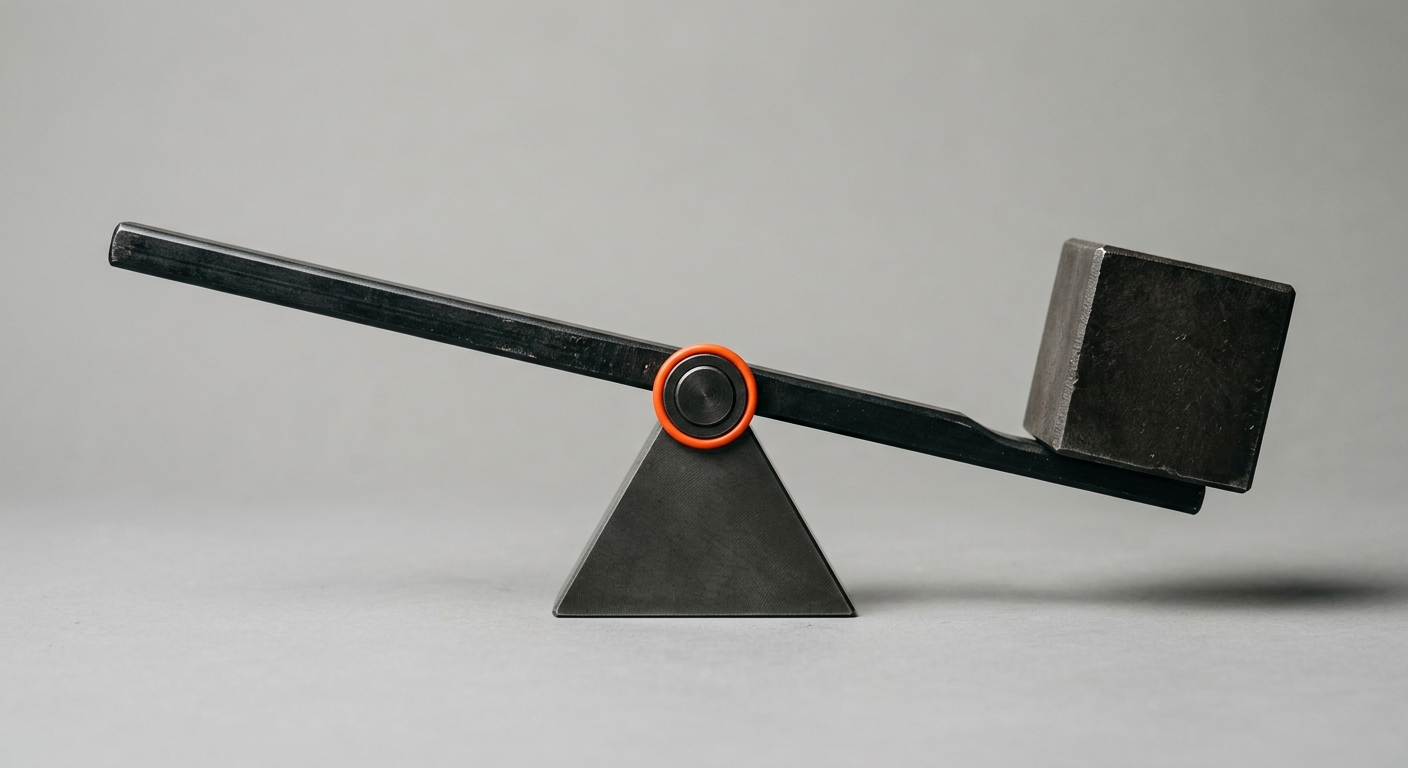
How AI Employees Take the Routine Load Off Your Team
An AI employee is not a chatbot and not another dashboard. It connects to the systems your company already runs - email, Teams, SharePoint, CRM, ERP - and does the repetitive work itself, then hands the result to a person. Built on a company brain that holds your people-knowledge, processes, and data, it learns how your business actually works and gets sharper through daily feedback. Here is where it lifts the load.
1. Inbox and request triage
- The routine - sorting incoming email and messages, drafting standard replies, routing the rest to the right person
- The lift - the 28 percent of the week lost to email shrinks, and people open the day on real work instead of a full inbox10
- The human part left - the sensitive replies, the judgement calls, the relationships
2. Data entry and system-to-system work
- The routine - copying data between CRM and ERP, updating records after a call, keeping systems in sync
- The lift - the copy-paste work that spans tools disappears, along with the errors it creates
- The human part left - deciding what the data means and what to do next
3. Status chasing and coordination
- The routine - chasing approvals, following up on open items, assembling status updates
- The lift - the coordination overhead that fragments the day gets handled in the background
- The human part left - the actual decision that the coordination was waiting on
4. Reporting and document assembly
- The routine - pulling numbers together, compiling weekly reports, drafting recurring documents
- The lift - reports arrive assembled, so people review and decide instead of building slides from scratch
- The human part left - the interpretation, the recommendation, the narrative
5. Answering the same internal questions
- The routine - the repeated “where is this / how do we do that” questions that interrupt experts all day
- The lift - the company brain answers from your own processes and documents, so experts stop being a human help desk
- The human part left - the genuinely new problems that need an expert
| Routine task | Who it drains today | What the person does instead |
|---|---|---|
| Inbox triage | Everyone with a customer or internal inbox | Handles the replies that need a human |
| Data entry | Sales, service, back office | Acts on what the data shows |
| Status chasing | Project leads, managers | Makes the decision, not the follow-up |
| Report assembly | Finance, ops, team leads | Interprets and recommends |
| Repeated questions | Senior experts, specialists | Solves the genuinely hard cases |
The Shift, Not the Swap
No one on the team changes what they are responsible for. The Sachbearbeiter still owns their cases; they just stop doing the data entry. The expert still owns the hard problems; they just stop being interrupted for the easy ones. That is why this raises engagement instead of threatening it.
A 90-Day Playbook to Cut the Routine Load
You do not fix engagement with a big-bang programme. You take one heavy, repetitive task off one team, prove the hours come back, and expand. Here is a focused sequence that works.
- Weeks 1-2: Find the load - ask each team what eats their day and does not use their skills. Look for repetitive, cross-system tasks. The team knows exactly where the drudgery is.
- Weeks 3-4: Pick one task and baseline it - choose the single highest-load task, then measure it: hours spent per week, error rate, how long work takes to move through.
- Weeks 5-7: Connect and build - connect the AI employee to the systems the task touches, and build it on a company brain that holds the relevant processes and knowledge.
- Weeks 8-9: Run in parallel - the AI employee works alongside the team on real cases. People check its output and give daily feedback, so it learns your standard.
- Weeks 10-11: Hand the task over - once accuracy holds, the AI employee owns the routine task and people move to the human part of the role.
- Week 12: Measure and expand - compare against the baseline, share the hours recovered with the team, and pick the next task.
Routine-Load Readiness Checklist
- You can name the three tasks your team complains about most
- At least one of those tasks spans two or more systems
- The task is repetitive and rule-based, not a one-off
- You know roughly how many hours a week it consumes
- The systems involved (email, CRM, ERP) can be connected
- A team lead is willing to give daily feedback for a few weeks
- Leadership agrees the recovered hours go to better work, not just more targets
- You are ready to start with one task, not ten
The One Rule That Protects Engagement
Decide up front where the recovered time goes. If it silently becomes capacity for more of the same routine, you rebuild the trap. If it goes to judgement, customers, and the work people find meaningful, engagement climbs. This decision, not the technology, determines the outcome.
How Superkind Fits
Superkind builds AI employees that take over routine work and a company brain that remembers how your business runs. The starting point is always your real processes and systems, not a generic product you have to bend your team around.
- Company brain - a living memory of your people-knowledge, processes, and data that survives staff turnover, so expertise does not walk out the door when someone leaves.
- AI employees, not chatbots - they take over whole routine tasks end to end, then hand results to a person, rather than answering questions in a window.
- Connected to your real systems - email, Teams, SharePoint, CRM, and ERP, so the work happens where it already lives.
- Learns your company - daily feedback from your team teaches the AI employee your standards and edge cases, so it gets sharper over time.
- More output without more headcount - the same team produces more because the routine load moves off people and onto the AI employee.
- Process-first onboarding - we map how the work actually happens before building anything, including the exceptions nobody wrote down.
- Humans stay in the loop - people keep ownership of judgement and relationships, with checkpoints on anything that matters.
- Start small, expand - one high-load task first, proven against a baseline, then the next, so risk stays low and value shows early.
| Approach | Generic AI Tool | Superkind AI Employee |
|---|---|---|
| What it does | Answers prompts in a window | Takes over the routine task itself |
| Effect on load | Adds another tool to operate | Removes work from people |
| Company context | Generic, starts from zero | Company brain holds your knowledge |
| Systems | Separate, copy-paste in and out | Connected to email, CRM, ERP |
| Over time | Static unless retrained | Learns from daily feedback |
Superkind
Pros
- ✓ Removes the load - takes routine tasks off people, not adds a tool
- ✓ Keeps knowledge in-house - the company brain outlasts turnover
- ✓ Fits your stack - works inside the systems you already run
- ✓ Learns continuously - daily feedback sharpens it over time
- ✓ Scales output - more done without more headcount
Cons
- ✗ Not self-serve - it needs engagement with our team to set up
- ✗ Needs process access - we have to understand how the work really happens
- ✗ Not for one-offs - overkill for a task you do twice a year
- ✗ Feedback in the first weeks - a team lead has to coach it early on
Decision Framework: Is Routine Load Draining Your Team?
Not every morale dip is a routine-load problem. Use these signals to decide whether taking work off your team is the right first move.
| Signal | What it means | Action |
|---|---|---|
| People do the minimum but still show up | Classic quiet quitting, often load-driven | Map the routine work before touching pay |
| Your best people are making more errors | Quiet cracking under overload | Take the highest-load task off them first |
| Experts spend the day answering easy questions | Skilled time lost to a human help desk | Put the company brain on repeated questions |
| Output holds but energy is gone | Quiet burnout hiding behind results | Reduce load now, before people leave |
| Morale dip but the work is already engaging | Likely a management or culture issue | Address leadership first, not automation |
Acting Now vs Waiting
Acting Now
- ✓ Keep your best people - relief reaches them before they crack
- ✓ Compounding leverage - each task removed frees more time
- ✓ Capture knowledge - the company brain forms while experts are still here
- ✓ Output grows - more gets done without new hires
Waiting
- ✗ Quiet attrition - disengaged people leave without warning
- ✗ Errors accumulate - overloaded teams make costly mistakes
- ✗ Knowledge walks out - expertise leaves with the people
- ✗ The load stays - next quarter looks exactly like this one
Frequently Asked Questions
Quiet quitting describes employees who stay in the job but pull back to the minimum the role requires. They stop volunteering for extra work, stop suggesting improvements, and stop going beyond their job description. Nobody resigns, so it rarely shows up in turnover reports. It shows up instead as slower work, more errors, and a team that has quietly stopped caring.
Quiet quitting is a deliberate choice to do the bare minimum. Quiet cracking is different: the person still wants to perform well but cannot, because their morale and capacity have eroded over months of overload. Quiet cracking is more dangerous for employers because it hits your most conscientious people first, and they hide it until they break or leave.
Pay matters, but the 2025 and 2026 research points elsewhere. Gallup found only 20 percent of employees worldwide are engaged, and its CEO argues the problem is the workplace, not the work itself. Studies link disengagement to loss of control, purpose, and being buried in low-meaning routine tasks. A raise does not fix a job that is 60 percent administrative busywork.
Gallup estimates low engagement costs the global economy around 10 trillion US dollars a year, roughly 9 percent of global GDP. In Germany alone, the Gallup Engagement Index puts the annual cost of inner resignation and lost productivity at between 119 and 142 billion euros. At the company level it shows up as slower output, higher error rates, and quiet attrition of your best people.
AI employees do not fix engagement directly. They remove the repetitive, low-meaning work that causes disengagement in the first place. When an AI employee handles the inbox triage, the data entry, the status chasing, and the report assembly, your people spend their hours on judgement and relationships. Engagement tends to return as a byproduct of that shift, not as the result of another survey.
It can, if you use the freed capacity only to pile on more targets. The point of AI employees is leverage, not squeezing. The healthiest deployments give people back time for the higher-value parts of their role, and let the company grow output without adding headcount. How you use the recovered hours decides whether engagement rises or the cycle repeats.
The best candidates are repetitive, rule-based tasks that span several systems: sorting and drafting email replies, pulling data between the CRM and ERP, chasing approvals, compiling weekly reports, updating records after a call, and answering the same internal questions. These are the tasks that hang on people and drain their day without using their skills.
No. A productivity tool gives your team another interface to operate, which often adds to the load. An AI employee works inside your existing systems and does the task itself, then hands the result to a person. The goal is fewer tabs and less busywork, not one more login your team has to learn and maintain.
Track hours returned per person per week on the target tasks, error rates before and after, and how quickly work moves through the process. Pair that with a simple engagement pulse and voluntary attrition on the affected team. If people are spending more time on skilled work and less on routine, and the pulse improves, the mechanism is working.
No. Most routine work already lives in the systems you use every day: email, Teams, SharePoint, the CRM, the ERP. An AI employee connects to those and learns your company from how the work actually happens, refined through daily feedback. You start with one high-load task, prove it, and expand from there.
They keep their jobs and do the parts that need a human. The Sachbearbeiter who spent half the day on data entry becomes the person who handles the exceptions, the difficult customers, and the judgement calls. The WEF and Gallup both point to human skills, creativity, and relationships as the work that rises in value as routine tasks fall away.
The operational effect is fast. Once an AI employee is live on a task, the hours come back within the first weeks. The engagement effect is slower and compounds: as people feel the routine load lift and see their time go to work that matters, morale and discretionary effort recover over the following months rather than overnight.
Related Articles
- The Routine Work Tax: What Repetitive Tasks Really Cost Your Team
- AI Agents and the Labour Shortage: Doing More With the Team You Have
- The Always-On AI Employee: What It Takes Over and What It Does Not
- The Interruption Tax: How Constant Context-Switching Drains Output
Sources
- Gallup - State of the Global Workplace 2026
- Fortune - Gallup CEO Jon Clifton on the broken workplace and the $10 trillion cost (2026)
- HR Dive - Manager engagement is slipping and affecting AI use, Gallup finds
- Gallup Engagement Index Deutschland 2025 (persoblogger.de)
- Gallup - Bericht zum Engagement Index Deutschland
- Perceptyx - Employees Are Quiet Cracking: What the Data Is Trying to Tell You
- Eastern Connecticut State University - Quiet Quitting Is Over. What Replaced It in 2026?
- ZenHR - From Quiet Quitting to Quiet Burnout: The 2026 Trend
- Phys.org - Employees more likely to quiet quit when feeling less control (2025 study)
- Asana - How Work About Work Gets in the Way of Real Work
- Asana - The Way We Work Isn’t Working
- Marketplace - Work is a big part of what’s making us unhappy, Gallup CEO says (Jon Clifton)
- World Economic Forum - New Economy Skills: Unlocking the Human Advantage (Saadia Zahidi)
- World Economic Forum - Future of Jobs Report 2025
- McKinsey - AI in the workplace: A report for 2025
- McKinsey - Agents, robots, and us: skill partnerships in the age of AI
- Haiilo - 5 Key Insights From the 2026 Gallup State of the Global Workplace Report
- UNLEASH - Gallup’s State of the Global Workplace 2026: Three Essential Actions
- IW Köln - Arbeitsmotivation und Arbeitgeberbindung in Deutschland (2025)
- Institute for Public Relations - The State of the Global Workplace (2026)
- October Health - The $10 Trillion Wake-Up Call: What Gallup’s 2026 Report Means
Ready to take the routine load off your team?
Book a 30-minute call with Henri. We will find the repetitive work an AI employee can take over first - no commitment, no sales pitch.
Book a Demo →