
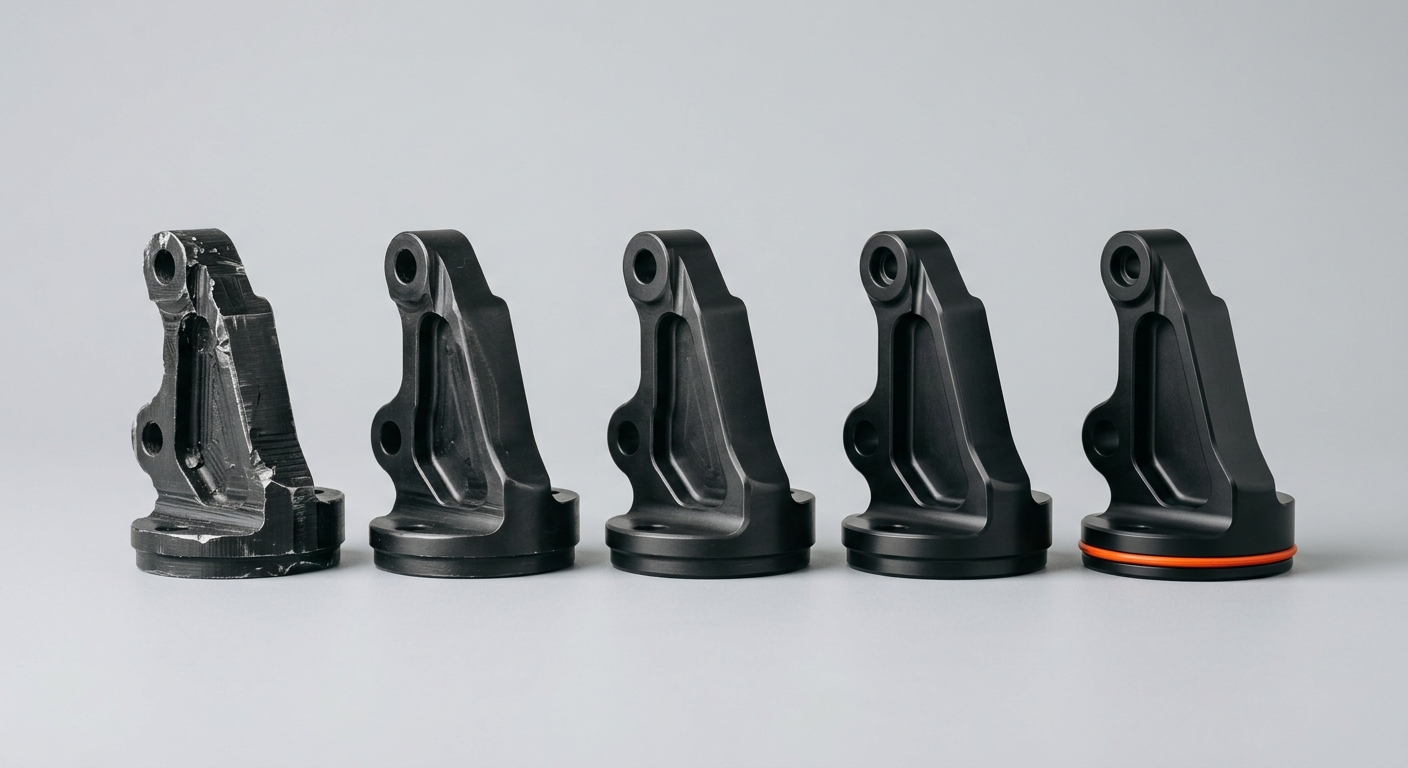
An engineer starts a new bracket on Monday. In 2026, a good toolchain clears most of the grunt work before lunch: a generative design tool proposes a dozen geometries that hit the load and weight targets, a PLM copilot answers “which of our existing parts is closest to this” in plain English, a simulation runs in the cloud without touching the laptop, and an AI assistant drafts the requirement spec from a two-line brief. Siemens Teamcenter, PTC Windchill, Aras, Dassault, Autodesk Fusion, Makersite, and Leo AI all do a version of this, and they do the mechanical part genuinely well.
Then the design review happens, and the real work shows up. Why this geometry over that one? Because it fits a manufacturing constraint the AI never saw. Why was a similar part scrapped in 2023? Because of a field failure that lives in nobody’s tool. The AI produced beautiful artefacts and holds none of the reasoning that makes them defensible. And when the engineer who knows why retires next year, the drawings stay in the PLM while the judgement behind them walks out the door.
This is an honest buyer comparison for the R&D leader, CTO, or Geschaeftsfuehrer choosing AI tooling for product development in 2026. It names the real tools, their real capabilities, and their real prices. Then it explains the gap they all share, and what closes it: a Company Brain that keeps how your engineers actually decide, plus an AI employee that connects that memory to the systems where the work already lives.
TL;DR
No single tool wins. The category is four different jobs: managing product data (Teamcenter, Windchill, Aras, Dassault), generating and optimising design (Autodesk Fusion, Siemens NX), retrieving engineering knowledge (Leo AI, PLM copilots), and enriching data on cost and sustainability (Makersite).
Pricing spans two orders of magnitude - from around 20 euros per month for a general AI assistant to seven-figure enterprise PLM programmes once seats, implementation, and integration are counted.
They all draft, none decides. AI generates geometry, clusters test data, and drafts specs, but the trade-off between cost, weight, manufacturability, and risk still needs an engineer who holds your context.
The shared gap: they keep the artefacts (models, BOMs, change records) and not the reasoning (why you chose a material, why a prototype failed, why a supplier was dropped). That reasoning leaves when the engineer leaves.
The durable win: a Company Brain that keeps your engineering decisions through turnover, plus an AI employee that acts across PLM, CAD data, SharePoint, email, and ERP - not just another tool your team maintains by hand.
The R&D AI Boom
Product development went from AI-curious to AI-saturated in about two years. Every PLM platform now ships a copilot, every CAD suite has a generative layer, and engineers use general assistants daily for research and drafting. The prize is real: McKinsey puts R&D among the four areas that together hold roughly 75 percent of generative AI’s potential value, part of a 2.6 to 4.4 trillion dollar opportunity across the economy17.
- R&D is the underrated frontier - McKinsey names customer operations, marketing and sales, software engineering, and R&D as the value centres of generative AI, and singles out R&D as the least appreciated and most compelling of the four17.
- Adoption in product development is still early - In McKinsey’s 2025 State of AI survey, 73 percent of respondents were not using AI agents in product development at all, leaving most of the value on the table18,26.
- The returns gap is stark - Only about 5.5 percent of organisations report significant financial returns from AI, and high performers are nearly three times more likely to have fundamentally redesigned workflows rather than bolting AI onto old ones18,26.
- Search is the hidden tax - Engineers spend up to 30 percent of their time searching for information, and it takes around six hours on average to find and enter each new part into a data system15,21.
- Reuse is the fast win - When an engineer finds and reuses a validated part instead of designing a new one, time savings run 60 to 90 percent, which is why part-reuse AI now sits at the centre of the category15.
- The digital thread is the platform play - Gartner calls digital threads urgent, not optional, for AI-ready engineering, because AI is only as good as the connected, high-quality product data underneath it19.
Why This Comparison Is Different
Most 2026 round-ups rank the platforms and stop there. This one ranks them honestly, then makes the point every vendor sheet avoids: they all manage data, generate geometry, and answer questions, and none of them keeps how your company actually decides what to build. The tool you pick matters less than whether the reasoning behind your engineering decisions ever becomes an asset your company owns, or leaves with the next engineer.
Before comparing the tools, it helps to be precise about the four distinct jobs AI does in R&D, because the marketing blurs them into a single “AI-powered” claim.
The Four Layers of AI in R&D
“AI for product development” is not one capability. It is four distinct layers, and every tool is strong at some and weak at others. Judging a tool means knowing which layer you are actually buying it for.
The four layers, defined
- Design generation and optimisation - Producing and optimising geometry from constraints, loads, and materials. This is generative design and topology optimisation, where Autodesk Fusion, Siemens NX, and Dassault focus11,12.
- Product data and the digital thread - Managing the model, BOM, revisions, change, and configuration as a single connected source of truth. This is PLM, where Teamcenter, Windchill, Aras, and Dassault 3DEXPERIENCE live1,19.
- Engineering knowledge and reuse - Finding parts, documents, standards, and answers, and stopping the same part being drawn twice. Leo AI, Windchill Part Intelligence, and the PLM copilots compete here14,15.
- Research and specification - Reviewing literature and patents, drafting requirements and reports, and reasoning through trade-offs. General assistants (ChatGPT, Claude, Gemini) and deep-research tools are strongest here21,24.
| Layer | What the AI does | What it still cannot do |
|---|---|---|
| Design generation | Generates and optimises geometry from constraints | Judge manufacturability, supplier reality, and field history |
| Product data / PLM | Manages models, BOMs, change, and the digital thread | Explain why a decision was made, only that it was |
| Knowledge and reuse | Finds parts, documents, and answers across systems | Apply your company’s judgement on what should be reused |
| Research and spec | Reviews sources, drafts specs, reasons on trade-offs | Read your PLM, run your simulations, enforce change control |
What these tools are genuinely good at
- Killing the search tax - Turning hours of hunting through folder trees and PLM vaults into a plain-language answer in seconds is a real, repeatable win15,16.
- Exploring the design space - Generating dozens of valid geometries that a human would not draw by hand, then comparing mass, stiffness, and manufacturability side by side12.
- First-draft everything - A first-cut requirement spec, a first-cut FMEA, a first-cut test report. The draft is rarely final, but starting from something beats starting from blank.
- Catching duplicate parts - Spotting that a “new” part is nearly identical to three existing ones, so the catalogue does not bloat and inventory cost does not creep15.
- Enriching thin data - Filling gaps in material, cost, and supplier data and mapping a BOM to compliance and carbon datasets automatically2.
- Consistency and traceability - Producing change records, reports, and documentation in a consistent house style, grounded in managed product data3.
The Load-Bearing Limitation
Every one of those strengths is about producing, organising, or retrieving artefacts. The moment the question becomes “given everything our company has learned and decided, what should we actually do?”, the tool is guessing from generic patterns and the data in front of it. It formats the decision beautifully without holding the reasoning that makes it right for you. That gap is the subject of the second half of this article.
The Tools Compared
Here is the honest read on each of the main AI tools for R&D and product development in 2026: what it is best at, where it falls short, and roughly what it costs. Prices for enterprise PLM are almost always quote-based and every deal is negotiated, so treat the numbers as direction, not a quote.
1. Siemens Teamcenter (with Teamcenter Copilot)
Teamcenter is the deep-integration PLM. Its whole strength is being the single source of truth for product data across the Siemens Xcelerator toolchain, with an AI copilot layered on top and NX CAD tightly bound underneath.
- Best at - A connected digital thread and deep native CAD and simulation integration for teams on NX; Teamcenter Copilot analyses BOMs, surfaces tracelinks, and executes multi-step workflows from a plain-language prompt3,5.
- AI layer - GenAI copilot grounded in your Teamcenter data, plus AI-assisted MBSE to improve requirement quality and close verification gaps; NX adds a design copilot and a Design for Manufacture advisor4,7.
- Weak spots - Heavy and expensive to implement; the full value shows up when you are committed to the Siemens stack, and less so in a fragmented multi-CAD shop8.
- Pricing - Quote-based enterprise licensing; real programmes run well into six or seven figures once CAD seats, implementation, and integration are counted1.
2. PTC Windchill (with Windchill AI)
Windchill is the multi-CAD, connected-product PLM. Where Teamcenter is strongest inside the Siemens world, Windchill is CAD-agnostic and leans into linking product data to real-world performance signals from connected products.
- Best at - Multi-CAD environments and closing the loop between product data and field performance; its Part Intelligence uses AI to find duplicate or near-identical parts and recommend consolidation1,8.
- AI layer - Predictive change-impact analysis, configuration optimisation across variants, and part-similarity intelligence that directly attacks catalogue bloat2.
- Weak spots - Like all enterprise PLM, a serious implementation; the AI value depends on clean, well-governed data underneath it19.
- Pricing - Quote-based; named-user and floating licences plus implementation, typically a mid-six-figure-and-up programme for a real deployment1.
3. Dassault Systemes 3DEXPERIENCE (ENOVIA, CATIA)
Dassault is the simulation-and-modelling heavyweight. The 3DEXPERIENCE platform ties ENOVIA PLM, CATIA CAD, and SIMULIA simulation together, with AI aimed at design exploration and physics-based optimisation.
- Best at - Highly engineered products that lean on advanced simulation and materials analysis, with AI-assisted design exploration and predictive performance modelling on one platform2.
- Depth - Deep simulation and digital-twin refinement make it a fit for aerospace, automotive, and life sciences where physics is the constraint2.
- Weak spots - Breadth comes with complexity and cost; it is more platform than most mid-sized firms need, with a steep learning curve1.
- Pricing - Quote-based platform licensing by role and token; enterprise deployments are large, multi-year commitments1.
4. Aras Innovator
Aras is the flexible, configurable PLM. Rather than shipping fixed AI modules, it is built to be adapted, and its AI capabilities are shaped by the implementation, with a transparent, source-citing assistant.
- Best at - Adaptable lifecycle workflows across diverse product portfolios, with a low-code architecture that survives upgrades; a Gartner-recognised PLM leader in 20269.
- AI layer - A RAG-based AI assistant that strictly cites its sources to build engineer trust, plus configurable analytics and document retrieval shaped to your data1,10.
- Weak spots - Flexibility means you build more; the platform is powerful but the AI value is only as good as what your team configures1.
- Pricing - Enterprise subscription with unlimited users, which controls per-seat creep, plus separate implementation and configuration cost10.
5. Autodesk Fusion (with Neural CAD and generative design)
Autodesk Fusion is the accessible design-and-make tool with the most complete native generative design experience. For teams whose bottleneck is exploring geometry rather than governing enterprise data, it is the strongest entry point.
- Best at - Cloud generative design built into the same environment where you model and prepare toolpaths; you set the design space, constraints, and manufacturing method, and compare optimised outcomes side by side12.
- AI layer - Autodesk announced Neural CAD foundation models that reason directly about CAD geometry and can create designs from a text prompt, positioned to automate a large share of routine design work11.
- Weak spots - Generative design handles single-body components well but struggles with multi-body, dynamic loads, and coupled thermal-structural problems; it is a design tool, not an enterprise PLM12.
- Pricing - A few hundred euros per seat per year for Fusion, with generative and advanced simulation consuming cloud credits or higher tiers1.
6. Makersite
Makersite is the enrichment layer, not another PLM. It connects to your existing PLM and ERP and adds cost, supply-chain, sustainability, and compliance intelligence at the BOM level, which the core systems usually lack.
- Best at - Turning a BOM into cost, carbon, risk, and compliance insight, with what-if scenario modelling on material and supplier trade-offs; it enriches data rather than replacing your system of record2.
- AI layer - Specialised agents trained on industrial context that fill missing supplier and material data, reconcile multi-tier supply chains, and map BOMs to environmental datasets2.
- Weak spots - Narrow by design; it answers cost, sustainability, and supply questions, not CAD or change management2.
- Pricing - Quote-based enterprise SaaS scaled to product complexity and BOM volume2.
7. Leo AI
Leo AI is the engineering knowledge and part-reuse copilot. It is not a CAD or PLM system; it is an intelligence layer that sits across them and answers engineering questions grounded in your data and in verified references.
- Best at - Finding existing parts and documents fast across Windchill, Teamcenter, and Vault, and answering engineering questions from 1M+ pages of verified references; it reports reducing design mistakes and lifting part reuse14,15,16.
- Fit - Teams whose bottleneck is retrieval and reuse rather than geometry generation; SOC-2 certified and used across large manufacturers14.
- Weak spots - It is a knowledge and search layer, not a geometry engine, and its value depends on being connected to your PDM and PLM14.
- Pricing - Per-seat SaaS subscription, an order of magnitude below an enterprise PLM programme14.
8. Generative and deep-research assistants (ChatGPT, Claude, Gemini)
The general assistants are the flexible baseline. They are not product development tools, but for research, spec drafting, and reasoning through a problem they are a genuinely capable and cheap starting layer, especially for smaller teams.
- Best at - Reviewing standards and papers, drafting requirement documents and reports, first-pass patent review, and thinking through trade-offs in natural language21,24.
- Fit - Every engineer, as a drafting and research companion, plus deep-research modes for structured literature and market reviews21.
- Weak spots - No access to your PLM, CAD, or simulations, no memory between sessions by default, and a real IP-leak risk if confidential design data goes into personal accounts23.
- Pricing - Roughly 20 to 30 euros per user per month for business tiers; the governance and integration you add around them is the real cost24.
| Tool | Primary layer | Best for | Pricing shape |
|---|---|---|---|
| Siemens Teamcenter | Product data / PLM | Deep NX integration, digital thread | Quote, six to seven figures |
| PTC Windchill | Product data / PLM | Multi-CAD, connected products, part reuse | Quote, mid-six figures up |
| Dassault 3DEXPERIENCE | Product data + simulation | Simulation-heavy, highly engineered products | Quote, large multi-year |
| Aras Innovator | Product data / PLM | Flexible, configurable lifecycle | Enterprise subscription, unlimited users |
| Autodesk Fusion | Design generation | Generative design, accessible CAD | Hundreds of euros per seat / year |
| Makersite | Data enrichment | Cost, carbon, supply, compliance on BOMs | Quote, enterprise SaaS |
| Leo AI | Knowledge and reuse | Part and document search, reuse | Per-seat SaaS |
| ChatGPT / Claude / Gemini | Research and spec | Literature, drafting, reasoning | ~20-30 euros / user / month |
“Generative design is able to explore options that most human beings wouldn’t think of intuitively. And that gives the designer, the engineer, and the architect options to explore that increase the creativity of the way they’re solving the problem.”
- Andrew Anagnost, CEO of Autodesk13
See how AI fits your R&D stack
Book a 30-minute call. We will map where AI actually pays off in your product development process.
What It Costs
The sticker price of an R&D tool is the smallest number in the business case. Enterprise PLM in particular hides most of its cost in implementation, data migration, and the years of configuration that follow. Here is how the real spend breaks down.
- Licence is the visible part - Enterprise PLM licensing runs from tens of thousands into the millions per year; Fusion is a few hundred euros a seat; assistants are around 20 to 30 euros a user a month1,24.
- Implementation dwarfs the licence - For a serious PLM programme, implementation, integration, and data migration commonly cost as much as or more than the software over the first years1,25.
- Data readiness is the silent line - AI is only as useful as the connected, clean product data beneath it, and getting there is a project in itself19.
- Change management is underfunded - The tools that fail rarely fail on features; they fail because engineers keep working the old way18.
- Integration is the recurring tax - Every connection between CAD, PLM, ERP, and your assistants is a moving part that needs maintaining as versions change19.
- The lost-knowledge cost is invisible - None of the above captures the reasoning that leaves when an engineer retires, which is usually the largest cost of all and the one no line item names.
| Cost layer | Enterprise PLM (Teamcenter, Windchill, Dassault) | Design / knowledge tools (Fusion, Leo AI) | Assistants (ChatGPT, Claude, Gemini) |
|---|---|---|---|
| Licence | Six to seven figures / year | Hundreds to low thousands / seat / year | ~20-30 euros / user / month |
| Implementation | Often greater than licence | Days to weeks | Minimal |
| Data migration | Major project | Connector setup | None |
| Time to value | 6-18 months+ | Weeks | Immediate |
| Ongoing | Config, upgrades, integration | Subscription, connector upkeep | Subscription, governance |
The Real Question
The budget debate usually fixes on licence cost, which is the wrong number. The right question is whether the tool captures value that compounds, or produces artefacts you maintain by hand forever. A generative design seat that finds a lighter part pays back once. A system that keeps why you chose that part pays back every time someone new joins.
A Buyer’s Scorecard
Marketing pages are optimised to make every tool look like it does everything. Score them against the job you actually have instead. Use these seven criteria to cut through the demos.
- Which layer is your bottleneck - Data governance, design generation, knowledge retrieval, or documentation. Buy for the layer that is actually slowing you down, not the one with the best demo.
- CAD and system fit - Does it integrate natively with the CAD, PLM, and ERP you already run, or does it demand a migration8.
- Data residency and IP - Where is your design data processed and stored, and can you keep it on-premise or in an EU region if you need to23.
- Grounding and citations - Does the AI answer from your governed data with sources you can verify, or hallucinate from generic training10.
- Time to value - Weeks for a design or knowledge tool, many months for enterprise PLM; be honest about which you are signing up for1.
- Total cost of ownership - Licence plus implementation plus data readiness plus change management, not the headline seat price25.
- Does it capture reasoning - The decisive question: does it keep why decisions were made, or only what the decision was.
Point Tools vs a Connected Layer
Buying a best-of-breed point tool
- ✓ Deep in one layer - the strongest generative design or PLM in its class
- ✓ Proven and supported - mature vendor, large install base
- ✓ Clear scope - it does one job well
- ✗ AI locked in one platform - the intelligence cannot see your other systems
- ✗ Another silo - more data spread across more tools
- ✗ Reasoning still lost - it stores artefacts, not judgement
Adding a connected memory layer
- ✓ Sees across systems - PLM, CAD data, SharePoint, email, ERP together
- ✓ Keeps reasoning - captures why, not just what
- ✓ No rip-and-replace - works on top of the tools you keep
- ✓ Acts, not just answers - an AI employee that does the last mile
- ✗ Needs process access - it has to understand how you really work
- ✗ Not a CAD replacement - it complements point tools, not replaces them
Using AI in R&D Without Getting Burned
The failure modes in R&D AI are predictable, and every one of them is avoidable. These are the practical guardrails that separate a productive rollout from a stalled pilot.
- Start with the bottleneck, not the tool - Name the single most expensive slow point (search, reuse, spec drafting, change) and buy for that, rather than acquiring a platform and hunting for a use case18.
- Keep a human on every sign-off - AI drafts the spec, proposes the geometry, clusters the test data; an engineer accepts, edits, or rejects. Never let generated output flow to production without review13.
- Protect IP from day one - Ban confidential design data in personal AI accounts, use governed enterprise tiers, and know where data is processed before rollout23.
- Fix the data before the AI - A copilot on messy, disconnected product data hallucinates; the digital thread is the prerequisite, not a nice-to-have19.
- Capture the why, not just the what - Make recording design rationale part of the workflow, so a decision and its reasoning are stored together rather than the reasoning evaporating19.
- Measure against a baseline - Time to find a part, rework rate, spec turnaround, duplicate-part count; pick metrics and measure them before and after15.
- Redesign the workflow, do not bolt on - High performers redesign how work flows around AI; bolting a copilot onto an unchanged process is why most rollouts underdeliver18,26.
R&D AI Readiness Checklist
- You can name your single most expensive R&D bottleneck
- Your product data is connected enough for an AI to trust it
- You have a rule for what design data may go into which AI tool
- Every AI-generated output has a named human who signs it off
- You know where each tool processes and stores your data
- You capture design rationale, not just the final artefact
- You have a baseline metric to prove the tool worked
- Leadership backs a focused pilot with defined success criteria
The Gap They All Share
Line the tools up and a single pattern appears. They differ in which artefacts they hold, but they agree on what they ignore: the reasoning behind the artefacts. Every one keeps the output of a decision and discards the decision itself.
- PLM keeps the model, not the rationale - Teamcenter, Windchill, and Aras store the revision and the change record, but not why the change was made or what was rejected on the way19.
- Generative design keeps the geometry, not the choice - Fusion produces twelve options and stores the one you promoted; the reason you chose it over the other eleven lives only in your head12.
- Knowledge tools find the part, not your judgement - Leo AI and Part Intelligence surface an existing part, but not whether your company should reuse it given a field failure they never saw15.
- Enrichment tools cost the BOM, not the trade-off - Makersite prices a material swap, but the strategic reason you accepted a higher cost lives outside the data2.
- Assistants reason in the moment, then forget - ChatGPT and Claude think through a trade-off brilliantly and remember none of it for the next engineer next quarter23.
Where the Value Actually Leaks
An engineer with twenty years of experience carries a private model of why your products are the way they are: which suppliers to trust, which tolerances matter, which clever idea already failed. None of the tools above holds that model. When that engineer retires, the PLM is intact and the judgement is gone, and the replacement re-learns it slowly, at the cost of repeated mistakes the company already paid to learn once.
This is not a criticism of the tools. A PLM should store controlled data; a CAD tool should make geometry. The gap is that no artefact system was ever designed to hold reasoning, and reasoning is exactly what makes R&D decisions defensible and repeatable. Closing it needs a different kind of layer.
Nine Real R&D Scenarios
Abstract arguments about “knowledge” are easy to nod along to and hard to act on. Here are nine concrete situations where the gap between artefact and reasoning shows up in a working R&D team.
- The retiring lead engineer - Thirty years of “we tried that in 2009 and it cracked” walks out with one person. The PLM keeps every drawing and none of the reasons.
- The duplicate part - A new engineer draws a bracket that already exists three times under different names, because searching the PLM was slower than starting fresh15.
- The repeated supplier mistake - A supplier dropped two years ago for quality issues gets re-approved, because the reason for dropping them lived in an email nobody can find.
- The design review that re-litigates - The same trade-off gets argued for the third time in a year, because no one recorded the decision or the reasoning last time.
- The tolerance nobody can explain - A tight tolerance adds cost on every unit, and no one remembers whether it is load-bearing or a copy-paste from an old drawing.
- The onboarding drag - A capable new hire takes months to be productive, because the context they need is spread across peoples heads, SharePoint, and unwritten convention.
- The field failure with no thread - A part fails in the field, and connecting it back to the design decision that caused it means interviewing three people and guessing.
- The spec written from scratch - An engineer drafts a requirement document a near-identical project already produced, because finding the old one was harder than rewriting it.
- The AI copilot that contradicts reality - A PLM copilot confidently answers from stale or partial data, because the digital thread underneath it was never completed19.
The Common Thread
Every one of these is a reasoning-loss problem wearing a different costume. More CAD seats or a bigger PLM does not fix any of them, because the missing thing is not an artefact, it is the judgement that connects the artefacts. That is what a Company Brain is for.
The Durable Win: A Company Brain
A Company Brain is a private, structured store of how your R&D organisation actually decides, wired to an AI employee that can act on it across your real systems. The point tools stay; the Company Brain is the layer that keeps the reasoning they discard and does the last mile they leave to your team.
- It keeps the reasoning, not just the artefact - Why a material was chosen, why a prototype failed, why a supplier was dropped, stored alongside the decision so it survives turnover.
- It sees across systems - PLM, CAD metadata, SharePoint, email, and ERP together, so an answer draws on the whole context, not one silo19.
- It acts, it does not just answer - An AI employee triages a change request, drafts the spec from prior projects, flags a duplicate part, and updates the record in the systems you already use.
- It gets sharper with use - Every decision your engineers make and record teaches it, so the memory compounds instead of decaying.
- It grounds AI in your truth - When a copilot or assistant answers, it answers from your governed reasoning, not generic training, which is what makes the output trustworthy10.
- It survives the retirement - The lead engineer’s judgement becomes an asset the company owns rather than a risk it carries.
| Capability | PLM / CAD / point tools | Company Brain + AI employee |
|---|---|---|
| Stores artefacts | Yes, that is their job | Reads them, does not duplicate them |
| Stores reasoning | No | Yes, the core purpose |
| Works across systems | Within one platform | Across PLM, CAD data, SharePoint, email, ERP |
| Takes action | Inside the tool | The last mile, across tools |
| Survives turnover | Data yes, judgement no | Judgement retained as an asset |
“Faced with a design failure or the lack of a critical component, this assistant allows you to find alternative parts, assess risks in the supply chain and implement changes to the model within seconds.”
- Joe Bohman, EVP of PLM Products at Siemens Digital Industries Software22
Bohman is describing the promise correctly: AI that acts across product data, supply chain, and the model at once. The open question every vendor leaves is where the judgement to guide that action lives. A Company Brain is the answer, because it holds the reasoning that tells the AI which alternative part is actually right for you.
IP and Compliance: The Line Most Skip
Most R&D AI round-ups skip the part that matters most to a Mittelstand engineering firm: what happens to your intellectual property, and which rules apply. For a company whose value is in its designs, this is not an afterthought.
- IP leak is the real risk - Feeding drawings, BOMs, and design rationale into personal AI accounts can expose trade secrets; governed enterprise tiers with no-training guarantees exist for exactly this reason23.
- Data residency is negotiable at the top - Large PLM and CAD vendors offer on-premise and EU-region options; smaller SaaS tools often do not, and default to US data centres23.
- The CLOUD Act reaches US providers - Because most vendors are US-owned, US authorities can compel disclosure regardless of where servers sit, which matters for sensitive engineering data.
- EU AI Act Article 50 applies from August 2026 - AI-generated content must be marked as artificially generated in machine-readable form; most internal R&D output is otherwise low-risk23.
- Embedded AI can raise the risk tier - If AI ends up inside a safety-relevant product you sell, heavier conformity obligations can apply to that product, separate from the tools you use to design it.
- Governance beats prohibition - Banning AI drives engineers to shadow tools; a clear policy on what data goes where keeps both the productivity and the IP.
The Practical Takeaway
For most R&D teams the EU AI Act is a light-touch transparency obligation, not a barrier. The question that deserves real attention is IP: where your design data is processed, whether it trains someone else’s model, and whether you can keep it in your own infrastructure. Answer that before rollout, and AI in R&D is a manageable risk rather than an open one.
How Superkind Fits
Superkind is not another PLM, CAD tool, or generative design engine, and it does not try to replace the ones in this comparison. It builds the Company Brain and the AI employees that sit underneath your existing R&D stack, keep the reasoning your tools discard, and do the last mile across the systems your team already uses.
- Company Brain for R&D - A private, structured memory of how your engineers decide: design rationale, material and supplier preferences, test learnings, and what you rejected and why.
- Connects to the real systems - AI employees read and act across PLM (Teamcenter, Windchill, Aras), CAD data, SharePoint, email, and ERP through governed connectors, not a migration19.
- Process-first discovery - We map how your R&D team actually works before writing anything, so the memory reflects your reality, not a template.
- Acts, not just retrieves - An AI employee triages change requests, drafts specs from prior projects, flags duplicate parts, and updates records where the work lives.
- Grounded and cited - Answers come from your governed reasoning with sources, so engineers can trust and verify them10.
- IP stays yours - Data stays in your infrastructure through encrypted connections; no design data trains an external model.
- Model-agnostic - It works with the AI models and tools you already have, rather than locking you to one vendor’s stack.
- Captures the retiring engineer - We help turn one expert’s judgement into a shared asset before it walks out the door.
| Approach | Add another point tool | Superkind Company Brain |
|---|---|---|
| What it adds | Depth in one layer | Memory and action across all layers |
| Data | Another silo | Reads across your existing systems |
| Reasoning | Not captured | Captured and kept through turnover |
| Integration | New platform to adopt | Sits on top of what you keep |
| Output | Artefacts to maintain | Actions taken in your systems |
Superkind
Pros
- ✓ Keeps reasoning - the memory your PLM and CAD tools discard
- ✓ Works across systems - PLM, CAD data, SharePoint, email, ERP
- ✓ No rip-and-replace - sits on top of your existing stack
- ✓ Acts, not just answers - AI employees do the last mile
- ✓ IP stays in your infrastructure - no external model training
Cons
- ✗ Not a CAD or PLM - you still need your design and data tools
- ✗ Not self-serve - it starts with mapping how you work
- ✗ Needs process access - it has to understand your real workflows
- ✗ Capacity-limited - we work with a focused number of clients at a time
Decision Framework: What Should You Buy?
Not every R&D team needs the same thing, and most need more than one layer. Use this to match your actual bottleneck to the right kind of tool.
| Your situation | What it means | Where to start |
|---|---|---|
| No single source of truth for product data | Your digital thread is broken; AI on top of it will hallucinate | Fix PLM first (Teamcenter, Windchill, Aras) |
| Engineers spend hours exploring geometry by hand | Design generation is the bottleneck | Add generative design (Autodesk Fusion, NX) |
| The same parts get redrawn and duplicated | Search and reuse is the bottleneck | Add a knowledge layer (Leo AI, Part Intelligence) |
| You cannot cost or carbon-check a BOM quickly | Data enrichment is the gap | Add Makersite on top of PLM |
| Knowledge walks out when engineers leave | Reasoning loss, the gap no point tool closes | Build a Company Brain across your systems |
| You just need research and drafting help | Low stakes, high frequency | A governed assistant (ChatGPT, Claude, Gemini) |
Buy Now vs Wait
Acting Now
- ✓ Compounding advantage - the search and reuse wins stack quarter over quarter15
- ✓ Capture knowledge while you have it - before the next retirement
- ✓ Redesign now - high performers win by reshaping workflows early26
- ✓ R&D is the underused frontier - most competitors have not started17,18
Waiting
- ✗ Knowledge keeps leaking - every departure costs reasoning you cannot recover
- ✗ Duplicate work compounds - the catalogue and the rework grow
- ✗ Shadow AI spreads - engineers use ungoverned tools with your IP anyway23
- ✗ The data debt grows - a broken digital thread gets harder to fix, not easier19
Frequently Asked Questions
There is no single winner, because the category covers four different jobs. For product data and the digital thread, Siemens Teamcenter, PTC Windchill, Aras Innovator, and Dassault 3DEXPERIENCE lead, each with its own AI layer. For generative design and geometry, Autodesk Fusion and Siemens NX are strongest. For engineering knowledge and part reuse, Leo AI and the built-in PLM copilots compete. For research, spec drafting, and patent review, general assistants like ChatGPT, Claude, and Gemini are the baseline. The right choice depends on whether your bottleneck is data governance, design generation, knowledge retrieval, or documentation.
Enterprise PLM platforms like Teamcenter, Windchill, and Dassault are quote-based and usually run from tens of thousands of euros a year into the seven figures once you add CAD seats, implementation, and integration. Aras uses an enterprise subscription with unlimited users and separate implementation cost. Autodesk Fusion is a few hundred euros per seat per year, Leo AI is a per-seat SaaS subscription, and general AI assistants are around 20 to 30 euros per user per month. The sticker price is a fraction of the real cost once implementation, data migration, and change management are added.
It can generate and optimise geometry, not decide the product. Generative design tools like Autodesk Fusion and topology optimisation in Siemens NX and Dassault produce dozens of valid shapes from your constraints, loads, and materials, and often find solutions a human would not draw by hand. But the AI does not know your manufacturing reality, your supplier constraints, your field-failure history, or the reason a similar design was rejected two years ago. A human engineer who holds that context still chooses, refines, and signs off.
No. They remove the mechanical parts of the job: searching for parts and documents, drafting specs, running routine simulations, formatting change records, and clustering test data. Autodesk estimates AI could automate 80 to 90 percent of routine design tasks. What AI cannot do is own the trade-off between cost, weight, manufacturability, and risk, or take responsibility for a part that fails in the field. The scarce skill shifts from producing artefacts to making and defending engineering decisions, which is exactly what AI does not carry.
Every PLM and CAD tool stores the artefacts: the model, the BOM, the change record, the test result. Almost none of them stores the reasoning: why you chose this material over that one, why a tolerance was loosened, what a failed prototype taught you, why a supplier was dropped. That reasoning lives in engineers heads, in email threads, and in review meetings that were never minuted. When an engineer retires, the drawings survive but the judgement behind them does not, and the next team re-learns lessons the company already paid for.
A Company Brain is a private, structured store of how your R&D organisation actually decides: your design rationale, your material and supplier preferences, your definitions of done, your test learnings, and the record of what you rejected and why. A PLM system holds the outputs of those decisions, the controlled data; a Company Brain holds the decisions themselves and keeps them when people leave. Wired to an AI employee, it does not just remember, it acts across your real systems, from Teamcenter to SharePoint to email.
For part reuse specifically, Leo AI and PTC Windchill Part Intelligence are the most focused options. Windchill uses AI to spot duplicate or near-identical parts across the enterprise and recommend consolidation, while Leo AI adds a search and knowledge layer across Windchill, Teamcenter, and Vault. This matters because studies put the cost of entering a new part at around six hours of search each, and reusing a validated part instead of designing a new one saves 60 to 90 percent of the time.
For research, spec drafting, and first-pass analysis, largely yes, and cheaply. General assistants summarise standards and papers, draft requirement documents, review patents, and reason through trade-offs well. What they cannot do is read your PLM, open your CAD models, run your simulations, or enforce change control. They are an excellent thinking and drafting layer and a poor system of record. Feeding confidential design data into personal accounts also creates an IP-leak problem that dedicated, governed tools avoid.
Most R&D and product development AI is limited or minimal risk, so obligations are light. The main rule that bites is Article 50, applicable from 2 August 2026, which requires AI-generated content to be marked as artificially generated in machine-readable form. If AI-assisted output feeds into safety-relevant systems, or if you sell a product with an embedded high-risk AI component, heavier conformity obligations can apply. The bigger practical issue for most R&D teams is protecting IP and trade secrets, not AI Act classification.
Most of the large PLM and CAD vendors offer on-premise, private cloud, and public cloud options, so data residency is negotiable at enterprise tiers. General AI assistants and smaller SaaS tools default to US data centres, and because most providers are US-owned, the US CLOUD Act can compel disclosure regardless of server location. For a German or EU manufacturer feeding drawings, BOMs, and design rationale into these tools, data residency and IP protection are questions to answer before rollout, not after.
Choose Teamcenter when you run the Siemens toolchain, especially NX, and want the deepest native CAD and simulation integration plus a strong digital thread. Choose Windchill when you have a multi-CAD environment or want to connect product data to real-world performance signals from connected products. Both are Gartner-recognised leaders, both now ship AI copilots grounded in your own product data, and both are heavy implementations. For most mid-sized firms the deciding factor is which CAD you already use and how multi-CAD your reality is.
The reasoning that never gets captured. You pay for a system that stores models, BOMs, and change records, but the expensive knowledge, why you chose this design, which prototype failed and why, how a supplier issue shaped a tolerance, stays in peoples heads. When an engineer leaves, that context walks out with them, and the replacement rebuilds it slowly and imperfectly. The licence fee is visible; the cost of re-learning lost engineering judgement every time someone leaves is not, and it is usually larger.
Related Articles
- AI in Mechanical Engineering: From Design to Field Service
- The Best AI Tools for Product Management in 2026: An Honest Buyer Comparison
- Glean vs Company Brain: Search Retrieves, a Company Brain Remembers
- MCP Connectors: How to Connect AI Agents to ERP, CRM and SharePoint
- AI in Quality Management: Defects, Documentation, and Traceability
- Unstructured Data: The 80 Percent of Company Knowledge AI Cannot See Yet
Sources
- Visure Solutions - Best AI PLM Software: Top Platforms Compared in 2026
- Makersite - 9 AI-Powered PLM Software Solutions for Enterprise Manufacturers in 2026
- Siemens - Teamcenter AI, featuring Teamcenter Copilot
- Siemens - Transforming PLM with AI: Highlights from Teamcenter 2506
- Siemens - Introducing Teamcenter 2606
- Siemens - Siemens Brings AI Copilot to NX
- Engineering.com - Siemens Adds AI Copilot, Simulation and Immersive Tools to NX
- CLEVR - PTC Windchill vs Siemens Teamcenter: An Unbiased PLM Comparison
- Aras - Named a Leader in the 2026 Gartner Magic Quadrant for PLM Software (BusinessWire)
- GetApp - Aras Innovator 2026 Pricing, Features, Reviews & Alternatives
- Autodesk - Upcoming 3D Generative AI Foundation Models for Fusion and Forma (Neural CAD)
- Autodesk - Generative Design in Autodesk Fusion: Revolutionizing Design with AI
- Design Engineering - Autodesk's AI, One Year Later (Andrew Anagnost)
- Leo AI - Top 5 AI Copilots for Mechanical Engineers in 2026
- Leo AI - The Real Cost of Duplicate Parts: How AI Part Reuse Saves Engineering Teams Millions
- Leo AI - AI for PLM Search: Find Any Part or Document in Windchill, Teamcenter, or Vault
- McKinsey - The Economic Potential of Generative AI: The Next Productivity Frontier
- McKinsey - The State of AI (2025)
- Gartner - Digital Threads Aren't Optional, They're Urgent for Digital Engineering and AI
- Gartner - Top Priorities for R&D Leaders in 2025
- Colab Software - Best AI Tools & Agents for Mechanical Engineers (2026)
- IC Autodesign - Accelerating Product Innovation: Siemens Infuses AI into Teamcenter (Joe Bohman)
- EU AI Act - Article 50: Transparency Obligations
- Neural Concept - Top AI Tools for Mechanical Engineers in 2026
- DemystifyingPLM - Best PLM Software 2026: Independent Buyer Guide
- Colab Software - McKinsey State of AI 2025: What Separates High Performers From the Rest
Ready to keep the reasoning behind your designs?
Book a 30-minute call with Henri. We will map where a Company Brain fits underneath your R&D stack - no commitment, no sales pitch.
Book a Demo →