
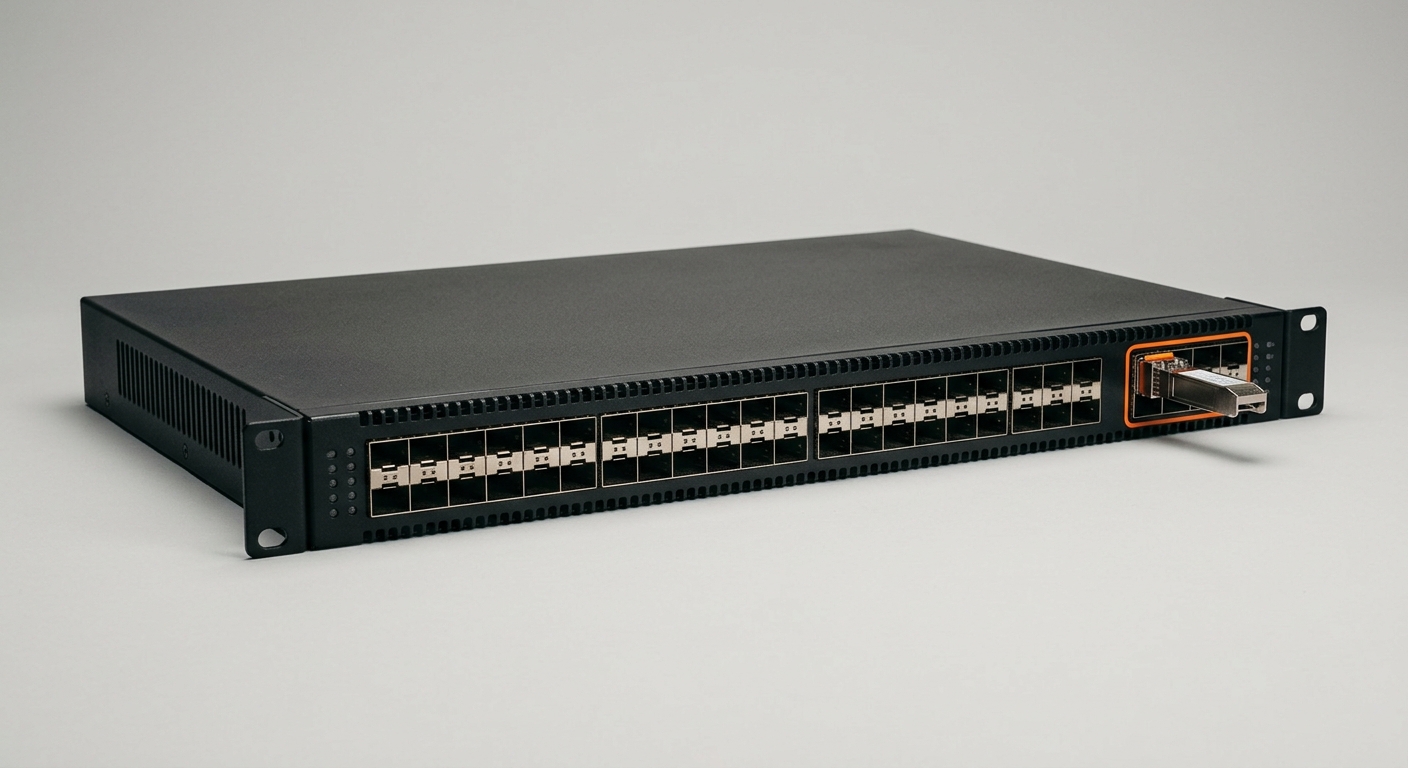
A single cell site going dark at 2am used to mean a pager, a phone tree, and a NOC engineer sifting through thousands of alarms to find the one that mattered. In 2026, at a growing number of operators, an AI agent has already grouped those alarms into one incident, named the probable root cause, rerouted traffic, and drafted the customer notice before anyone picked up the phone. Deutsche Telekom now targets fault detection in under a minute and root-cause analysis in under five with its multi-agent diagnostics system13.
This is not a pilot curiosity any more. TM Forum reported in late 2025 that operators had reached a point of significant change toward Level 4 autonomous networks, with validated progress in specific domains1. Global networks now generate more than 3,800 terabytes of data per minute, and 40 percent of operators in a recent NVIDIA survey said they are already deploying AI into network planning and operations5. The question for a telecom operator, ISP, or MVNO is no longer whether AI belongs in the stack. It is which use cases pay back, which tools are real, and how to connect them to the systems you already run.
This guide is for the network operations lead, CX director, or managing director at a carrier or ISP who needs a practical map. It covers the use cases that return money, the current vendor landscape named honestly, and where a connective AI-employee layer like Superkind fits among the specialists. No hype, no fake scorecard where one vendor wins every row.
TL;DR
AI in telecom splits into two domains - network operations (NOC, assurance, field) and customer operations (care, billing, churn). The value is highest where the two connect.
Six use cases pay back - NOC alarm triage, predictive outage prevention, subscriber ticket triage, churn prediction, field-service dispatch, and billing and care automation.
The tool landscape is real and specialised - NVIDIA, Nokia, Ericsson, and hyperscalers for the network; ServiceNow, Amdocs, and Salesforce for service and BSS. No single tool covers everything.
McKinsey estimates 60 to 100 billion dollars of industry value from generative AI, with up to 8 to 10 EBITDA points over five years for end-to-end adopters9,10.
Superkind is one option among real ones - a company-brain-plus-AI-employees layer that connects to your OSS/BSS, CRM, ticketing, and Teams or email to take over routine work without adding headcount.
The State of AI in Telecommunications
Telecom sits in a hard place. Revenue per user is flat or falling, 5G capex has not produced the growth operators hoped for, and both the network and the contact centre are under constant cost pressure. At the same time, networks and customer expectations are more complex than ever. AI is the lever operators are pulling to break the trade-off between service quality and cost.
- Autonomous networks are crossing a threshold - TM Forum reported significant change toward Level 4 autonomy in late 2025, with 37 certifications presented for progress in specific domains1.
- Data volume is beyond human scale - Global networks produce more than 3,800 terabytes per minute, far past what manual operations teams can monitor5.
- Adoption is already broad - 40 percent of operators in NVIDIA's survey are deploying AI into network planning and operations, and 32 percent of CSPs have introduced generative AI into network operations5.
- The financial prize is large - McKinsey estimates generative AI could unlock 60 to 100 billion dollars of value across telecom10.
- Customer experience is the battleground - 73 percent of telecom executives cite customer experience as their top differentiation driver, and 38 percent link churn directly to network performance9.
- Churn is expensive and chronic - Telecom runs one of the highest churn rates of any sector, with global annual churn around 21.5 percent in 2025 and far higher in competitive prepaid markets20.
Key Data Point
McKinsey estimates operators that apply AI end to end can lift EBITDA and return on invested capital by as much as 8 to 10 percentage points within five years9,10. Few levers in a mature, capital-heavy industry move margin that far. That is why every tier-one operator now has an AI programme, and why the pressure cascades to regional carriers, ISPs, and MVNOs.
The gap is not ambition. It is execution: connecting AI to decades-deep OSS/BSS estates, getting clean data, and taking agents from proof-of-concept into production across both the network and the customer side.
| Indicator | Current State | Source |
|---|---|---|
| Network data volume | 3,800+ TB per minute | NVIDIA5 |
| Operators deploying AI in network ops | 40% (NVIDIA survey) | NVIDIA5 |
| Industry value from generative AI | $60-100 billion | McKinsey10 |
| EBITDA uplift (end-to-end AI, 5 yrs) | Up to 8-10 points | McKinsey9 |
| Executives citing CX as top differentiator | 73% | McKinsey9 |
| Global annual telecom churn | ~21.5% (2025) | Tridens20 |
6 Use Cases That Pay Back for Telecom Operators
Not every telecom AI idea returns money. These six consistently do, based on operator deployments and analyst data. Three sit on the network side, three on the customer side, and the best programmes wire them together.
1. NOC Alarm Triage and Fault Correlation
A network operations centre drowns in alarms. A single fibre cut or misbehaving function can trigger thousands of downstream alerts, and engineers waste hours finding the one root cause. Agentic AI collapses that noise into incidents and drafts the fix.
- Alarm-to-incident compression - Agents group thousands of correlated alarms into a single incident with a probable root cause, cutting mean-time-to-identify dramatically4
- Context across silos - ServiceNow's telecom agents pull context from emails, logs, and diagnostics across disconnected systems to run incident response7
- Autonomous remediation under guardrails - Deutsche Telekom's RAN Guardian analyses RAN performance, detects anomalies, and autonomously initiates fixes on Google's Gemini platform12,13
- Speed targets - DT's MINDR multi-agent system spans RAN, core, and transport with a target of detecting issues in under a minute and root-cause analysis in under five13
- Why it pays - Operators report 15 to 30 percent lower network opex when AI absorbs the first layer of operations work9
Operator Relevance
Regional carriers and ISPs rarely run a 24/7 NOC at the scale of a tier-one. An AI agent that triages alarms overnight and escalates only what matters lets a small team cover a large network without burning out or hiring a night shift they cannot fill.
2. Predictive Outage Prevention
Reactive maintenance is the most expensive kind. AI that predicts cell-site, backhaul, and core failures before they happen converts emergency truck rolls into scheduled work and protects SLAs.
- Anomaly prediction - Models watch performance counters, power, and environmental telemetry to flag degradation before it becomes an outage4
- Energy as a side benefit - Ericsson and Telenor built a proof of concept where agentic AI cuts RAN energy use by learning to optimise capacity and power18
- Fewer and shorter outages - Google, Vodafone, and Deutsche Telekom reported AI network operations cutting repair times by around 25 percent14
- Capacity planning - Agents forecast cell-site and backhaul needs ahead of product launches and traffic spikes, avoiding congestion4
- Why it pays - Every prevented major outage protects SLA credits, brand trust, and the churn that follows a visible failure9
3. Subscriber Ticket Triage
Most inbound contact is routine: a billing question, a coverage complaint, a SIM activation, a password reset. AI agents classify, route, and increasingly resolve these end to end, freeing human agents for the hard cases.
- Omnichannel classification - Agents read tickets across voice, chat, and email, route them to the right queue, and draft first replies in the customer's language
- Autonomous resolution - Gartner projects agentic AI will autonomously resolve 80 percent of common customer service issues by 202921
- Productivity lift - McKinsey estimates generative AI can lift telecom customer support productivity by 30 to 45 percent11
- Cost reduction - Operators running AI-driven care report customer service cost reductions above 40 percent9
- Why it pays - Contact-centre cost per interaction drops sharply while response times fall from hours to minutes11
4. Churn Prediction and Retention
Churn is the defining economic problem of telecom. AI does not just predict who will leave; it surfaces why and triggers the retention action across your systems.
- Risk scoring with reason codes - Models score subscribers by churn risk and name the driver, so the retention play is specific rather than a blanket discount27
- Network-aware retention - AI CX intelligence can flag customers up to five times more likely to churn after a poor network experience9
- Closed-loop action - A high-risk score triggers a proactive fix, a targeted offer, or a priority callback through the CRM, not a report nobody reads27
- Measured impact - Operators report churn reductions in the 10 to 25 percent range from AI-driven retention9
- Why it pays - Retaining a subscriber costs a fraction of acquiring one, and even single-digit churn improvements move a carrier's valuation20
5. Field-Service Dispatch
Fibre installs, repairs, and site visits are a major cost line, and a mis-dispatched technician is money and goodwill lost. AI matches the right tech to the right job and keeps the schedule honest.
- Skills-and-location matching - Agents assign technicians to incidents and installs based on skills, location, SLA, and van stock
- Dynamic rescheduling - When a job overruns or a new priority fault appears, the agent reoptimises the day rather than leaving a dispatcher to firefight
- First-time-fix lift - Giving the technician the right parts and a diagnosis before arrival reduces repeat visits
- Rollout tracking - For fibre and 5G build-out, agents track site progress, unblock permits, and update commercial teams on launch dates
- Why it pays - Truck rolls are expensive; every avoided or shortened visit flows straight to opex9
6. Billing and Customer Care Automation
Billing disputes, rating errors, and revenue leakage quietly drain margin and trust. AI agents reconcile usage against invoices, resolve disputes, and handle routine account changes.
- Billing integrity - Agents reconcile usage, rating, and invoicing across prepaid and postpaid to catch leakage and dispute risk early
- Dispute resolution - Routine billing complaints are handled end to end, with edge cases escalated with full context attached
- BSS-native AI - Amdocs embeds its amAIz telco intelligence across its customer experience and billing suite16
- Personalisation at scale - McKinsey notes AI-enabled service is key to scaling telco personalisation without scaling headcount11
- Why it pays - Recovered leakage and fewer disputes protect revenue that marketing worked hard to win9
| Use Case | Domain | Primary Metric | Typical ROI Timeline |
|---|---|---|---|
| NOC Alarm Triage | Network | 15-30% lower network opex | 3-9 months |
| Predictive Outage Prevention | Network | ~25% faster repairs | 6-12 months |
| Subscriber Ticket Triage | Customer | 40%+ service cost reduction | 3-6 months |
| Churn Prediction | Customer | 10-25% churn reduction | 3-9 months |
| Field-Service Dispatch | Network | Fewer truck rolls, higher first-time fix | 3-9 months |
| Billing and Care Automation | Customer | Recovered leakage, fewer disputes | 3-6 months |
“We are not just imagining the future of autonomous networks, we are building it, together. The results we’re seeing today, validated by our benchmarking tools, are extraordinary: enhanced customer experiences, greater sustainability, lower costs and faster growth.”
- Nik Willetts, CEO of TM Forum25
See which use case pays back first for your network
Book a 30-minute call. We will map your highest-ROI telecom use case together.
The Real Tool Landscape: Who Does What
There is no single AI platform that runs a telecom end to end. The market is a set of specialists, and understanding who owns which layer is the difference between a coherent stack and a pile of overlapping pilots. Here is the landscape as it actually stands, grouped by where each tool lives.
Network and infrastructure AI
- NVIDIA telco stack - NIM microservices and NeMo under NVIDIA AI Enterprise power agentic network operations; NVIDIA also drives the AI-RAN and 6G roadmap and reports broad operator adoption4,5,6
- Nokia - Added agentic AI across its autonomous networks portfolio, including an AI-powered Threat Hunt Assistant, and a network operations copilot built on Azure AI Foundry17
- Ericsson - Cognitive and intent-based network automation, plus energy-optimisation agents such as the Telenor RAN proof of concept18
- Hyperscalers - Google Cloud (Deutsche Telekom RAN Guardian on Gemini, Vodafone agent-to-agent workflows) and AWS provide the data and agent platforms underneath many operator deployments12,14
Service management and NOC workflows
- ServiceNow - Telecom-specific AI agents across the service lifecycle, including autonomous NOC agents that run incident response across disconnected systems7,8
- Specialist assurance vendors - RADCOM and similar players focus on AI-driven CX and assurance data visibility across the network-to-customer path28
BSS, CRM and customer experience AI
- Amdocs amAIz - Telco intelligence suite embedded across the Customer Experience Suite for care, billing, and order management16
- Salesforce Agentforce for Communications - AI agents for contact centre and customer operations, using Google Cloud Vertex AI and Gemini19
- CX and churn specialists - A wide field of vendors offer churn models and retention automation that plug into the CRM27
The connective layer
- Superkind - A company-brain-plus-AI-employees layer that connects to the systems an operator already runs (OSS/BSS, CRM, ticketing, Teams, email) and takes over routine cross-system work rather than owning any one domain
- Why a connective layer exists - The specialist tools above are strong inside their domain but weak at the handoffs between network and customer, where most routine operator work actually happens
The honest read: a tier-one operator will run several of these at once. A regional carrier, ISP, or MVNO cannot afford or integrate all of them, and needs to pick a network-automation core and a connective layer for the cross-system routine work.
| Tool / Vendor | Primary Layer | Strength | What it does not do |
|---|---|---|---|
| NVIDIA telco (NIM, NeMo) | Network / infrastructure | Agentic network ops, AI-RAN, compute | Not a BSS or care product |
| Nokia / Ericsson | Network automation | Deep RAN and core autonomy | Tied to their network domain |
| ServiceNow | Service management / NOC | Workflow and incident orchestration | Not a network element or billing system |
| Amdocs amAIz | BSS / CX | Billing, care, order management AI | Not a network-assurance tool |
| Salesforce Agentforce | CRM / contact centre | Customer-facing agents | Does not touch the network |
| Superkind | Connective / cross-system | Routine work across network and customer systems | Not a replacement for core OSS/BSS or RAN |

Network Stack vs Customer Stack: Where the Value Connects
Most telecom AI tools specialise in one of two worlds. Understanding the split, and the bridge between them, is how operators avoid buying ten tools that never talk to each other.
Two domains, two sets of data
- Network domain (OSS) - Alarms, counters, configuration, inventory, and traffic. Users are NOC and field engineers. Tools: NVIDIA, Nokia, Ericsson, ServiceNow.
- Customer domain (BSS/CRM) - Accounts, billing, orders, tickets, and offers. Users are care agents and subscribers. Tools: Amdocs, Salesforce, CRM-native AI.
- The bridge - A network fault should automatically notify affected customers, open proactive credits, and feed churn models. A churn signal should trigger a network check. This is where value compounds and where tools are weakest.
Point Tools vs a Connective Layer
Specialist Point Tools
- ✓ Depth - best-in-domain for RAN, BSS, or CRM
- ✓ Vendor support - mature roadmaps and references
- ✗ Weak handoffs - network and customer sides stay siloed
- ✗ Integration burden - you own the glue between them
- ✗ Cost stack-up - several licences for full coverage
Connective AI Layer
- ✓ Cross-system work - acts across OSS, BSS, CRM, and ticketing
- ✓ Routine takeover - absorbs the repetitive glue work between domains
- ✓ No rip-and-replace - sits on top of existing systems
- ✗ Not a network element - does not replace RAN or core automation
- ✗ Depends on access - needs API and data access to be useful
Operators get the best result by pairing a deep network-automation core with a connective layer that handles the cross-domain routine. One without the other leaves money on the table.
The 90-Day Deployment Playbook
Full autonomous-network programmes take years. A single high-value use case does not. Here is how to take one from assessment to production in 90 days, whether it is NOC triage or billing-dispute resolution.
Phase 1: Assessment (Weeks 1-4)
- Week 1: Pick one use case - Choose the single process with the clearest cost or churn impact. Resist the urge to boil the ocean across network and customer at once.
- Week 2: Map the real workflow - Sit with the NOC engineers or care agents. Document the exceptions and workarounds nobody wrote down. This is where generic consultants fail.
- Week 3: Audit data and access - Map every system involved (inventory, mediation, rating, billing, CRM, ticketing). Confirm API availability, event streams, and data quality.
- Week 4: Model ROI and guardrails - Quantify current cost, define KPIs, and set the human-in-the-loop checkpoints for anything that touches the live network or a customer bill.
Phase 2: Build and Test (Weeks 5-8)
- Week 5-6: Build the agent - Connect to existing OSS/BSS, CRM, and ticketing. Configure reasoning, tool use, and decision logic. No new platform for the team to learn.
- Week 7: Test on history - Replay past incidents or disputes in a sandbox. Measure accuracy against what the team actually did.
- Week 8: Refine edge cases - Tighten the uncertain cases, finalise escalation paths, and prepare the production environment.
Phase 3: Deploy and Measure (Weeks 9-12)
- Week 9: Shadow mode - Run the agent in parallel with the existing process on a limited scope. Nothing breaks; the team compares its output to theirs.
- Week 10-11: Supervised rollout - Expand scope with humans approving actions, then loosen guardrails as confidence builds.
- Week 12: Measure and report - Compare KPIs to the week-4 baseline. Document results, present to leadership, and plan the next use case.
Telecom AI Readiness Checklist
- You can name your three most time-consuming manual NOC or care processes
- Those processes span at least two systems (for example OSS and ticketing)
- You have historical incident, ticket, or billing data to test against
- Your OSS/BSS and CRM expose APIs or event streams
- You have a process owner who will champion the pilot
- Leadership supports a 90-day pilot with defined success criteria
- You have clear guardrails for actions that touch the live network or a bill
- You are willing to start with one use case, not six
Build In-House vs Partner
Build In-House
- ✓ Full control - own the IP and the roadmap
- ✓ Fits unique network - tailored to your exact topology
- ✓ Builds capability - long-term internal AI muscle
- ✗ Scarce talent - telecom AI engineers are hard to hire
- ✗ Slow - 12 to 24 months is typical for a domain
- ✗ Realistic only at scale - tier-one economics
Partner or Platform
- ✓ Faster - weeks to first production use case
- ✓ Proven patterns - cross-operator experience
- ✓ Lower risk - pay for outcomes, not headcount
- ✓ Fits smaller operators - ISP and MVNO economics
- ✗ Vendor relationship - needs managing
- ✗ Less bespoke - partner shapes the approach
EU AI Act, NIS2 and Data: What Telecom Operators Must Know
Telecom operators sit under more regulation than most. AI deployments have to respect the EU AI Act, the NIS2 Directive for critical infrastructure, and data protection rules. The good news is that most operational AI falls into lower-risk categories.
EU AI Act risk tiers for telecom
| Risk Level | Telecom Examples | Obligations | Common in Telecom? |
|---|---|---|---|
| Prohibited | Social scoring, manipulative systems | Banned entirely | No |
| High-risk | Credit decisions, biometric ID, some HR uses | Conformity assessment, documentation | Only specific use cases |
| Limited risk | Customer-facing chatbots and voice agents | Transparency - disclose AI use | Yes - care and sales agents |
| Minimal risk | NOC triage, predictive maintenance, analytics | No specific obligations | Yes - most network AI |
Key deadlines and duties
- February 2025 (passed) - Prohibited AI practices enforceable; AI literacy duty under Article 4 applies22
- August 2025 (passed) - General-purpose AI model rules apply22
- August 2026 - Full applicability; high-risk rules and transparency obligations take effect22
- Penalties - Up to 35 million euro or 7 percent of global revenue for prohibited uses, with lower caps for other breaches23
- NIS2 overlay - Telecom operators are essential entities under NIS2, so AI touching network security needs governance, incident reporting, and accountability24
Governance Is Now a Standards Topic
TM Forum has called for explicit controls on telecom AI agents, including clear identity, permissions, and audit trails for autonomous actions on the network26. Treat agent governance as a design requirement from day one, not an afterthought. Every autonomous action on a live network or a customer bill needs an owner, a log, and a rollback path.
Telecom AI Compliance Checklist
- Inventory every AI system in network and customer operations
- Classify each by EU AI Act risk tier (most will be minimal or limited)
- Add transparency notices to customer-facing chatbots and voice agents
- Deliver AI literacy training under Article 4 to affected staff
- Map AI actions against NIS2 security and incident-reporting duties
- Define identity, permissions, and audit logs for every autonomous agent
- Keep a human-in-the-loop checkpoint for actions touching live traffic or billing
- Review vendor contracts for who carries which compliance duty
How Superkind Fits
Superkind is one option among the real tools above, and it is honest about where it sits. It does not replace NVIDIA, Nokia, or Ericsson on the network, and it is not a core billing system. It is a company-brain-plus-AI-employees layer that connects to the systems an operator already runs and takes over the routine cross-system work that falls between the specialist tools.
- Process-first discovery - We map how your NOC, care, and back-office teams actually work before building anything. No templates, no assumptions.
- Sits on your stack - AI employees connect to your OSS/BSS, CRM, ticketing, Teams, and email through APIs. No rip-and-replace of core systems.
- Company brain - A shared knowledge layer gives agents the context that lives in runbooks, past tickets, and tribal knowledge, so answers are grounded in how your operator actually runs.
- Routine work taken over - Agents handle the repetitive glue: triaging tickets, correlating an incident with affected accounts, drafting SLA notices, reconciling a billing dispute.
- No added headcount - The goal is to absorb volume growth and the skills shortage, not to grow the team to keep up.
- Live in weeks - First use cases reach production in 8 to 12 weeks, with your team giving feedback from day one.
- Outcomes, not seats - Pricing is tied to measurable results per use case, not a per-seat licence that punishes you for scaling.
- Governance built in - Every agent action is logged, permissioned, and reversible, which matters under the EU AI Act and NIS2.
| Approach | Specialist Point Tool | Superkind |
|---|---|---|
| Scope | One domain (RAN, BSS, or CRM) | Cross-system routine work |
| Integration | Deep but domain-bound | Connects your existing systems together |
| Delivery | Large programme | 90-day use-case sprints |
| Pricing | Seat or platform licence | Per use case, tied to outcomes |
| Best for | Tier-one network depth | Operators, ISPs, MVNOs needing cross-domain takeover |
Superkind
Pros
- ✓ Process-first - agents built around your real workflows
- ✓ Connects silos - works across network and customer systems
- ✓ Fast time-to-value - first results in 8-12 weeks
- ✓ Outcome-based pricing - pay for results, not seats
- ✓ Governance built in - logged, permissioned, reversible actions
Cons
- ✗ Not a network element - does not replace RAN or core automation
- ✗ Not a core billing system - works with your BSS, not instead of it
- ✗ Needs system access - value depends on API and data access
- ✗ Not self-serve - requires engagement with our team
“6G is being built from the ground up with AI at its core - unlocking extreme spectral efficiency, massive connectivity and breakthrough applications.”
- Ronnie Vasishta, Senior Vice President of Telecom at NVIDIA6
Decision Framework: Where to Start
Not every operator should start in the same place. Use these signals to decide which use case and which tools fit your situation.
| Signal | What It Means | Action |
|---|---|---|
| Your NOC is drowning in alarms overnight | First-layer operations work is the bottleneck | Start with AI alarm triage and fault correlation |
| Churn is your worst number | Retention economics dominate | Deploy churn prediction wired to closed-loop retention |
| Contact-centre cost is rising faster than revenue | Care volume outpaces headcount | Start with ticket triage and billing-dispute automation |
| You run several tools that do not talk | The gap is at the handoffs, not inside a domain | Add a connective layer for cross-system routine work |
| You are a tier-one with deep network complexity | Scale justifies in-house and specialist depth | Combine NVIDIA, Nokia, or Ericsson with a connective layer |
| You are an ISP or MVNO with a lean team | You cannot integrate ten platforms | Pick one network core and one connective layer, partner-led |
Acting Now vs Waiting
Acting Now
- ✓ Compounding opex savings - 15-30% on network ops builds quarter over quarter
- ✓ Churn protected early - retention gains accrue on your whole base
- ✓ Skills-shortage buffer - AI absorbs work you cannot hire for
- ✓ Compliance runway - governance in place before August 2026
Waiting
- ✗ Competitor gap widens - AI-native operators lower cost faster
- ✗ Churn keeps compounding - every lost subscriber is re-acquisition cost
- ✗ Talent drain - engineers prefer modern operations
- ✗ Rushed compliance - governance under deadline pressure is harder
Frequently Asked Questions
It means two connected things. On the network side, agentic AI watches alarms and performance counters, correlates faults, and increasingly executes fixes under guardrails. TM Forum reports that operators are now validating Level 4 autonomy in specific domains. On the customer side, AI agents triage tickets, resolve routine billing and coverage issues, predict churn, and dispatch field technicians. The common thread is software that reasons over a goal and acts across OSS, BSS, CRM, and ticketing, rather than a chatbot that only answers questions.
The landscape splits by layer. For network operations, operators use NVIDIA telco AI (NIM microservices, NeMo), Nokia and Ericsson network automation, and hyperscaler stacks like Google Cloud (Deutsche Telekom RAN Guardian) and AWS. For service management and NOC workflows, ServiceNow has telecom-specific AI agents. For BSS and customer experience, Amdocs amAIz and Salesforce Agentforce for Communications are common. Superkind sits above these as a company-brain-plus-AI-employees layer that connects to the systems an operator already runs.
McKinsey estimates generative AI could unlock 60 to 100 billion dollars of value across the telecom industry and lift EBITDA by up to 8 to 10 percentage points over five years for operators that apply it end to end. At the operational level, reported ranges include 15 to 30 percent lower network opex, churn reductions of 10 to 25 percent, and customer service cost reductions above 40 percent. These are ranges from early adopters, not guarantees, and they depend on data quality and process discipline.
An autonomous network runs with minimal human intervention across planning, provisioning, assurance, and optimisation. TM Forum defines a six-level scale from Level 0 (manual) to Level 5 (full autonomy). Level 4 means the network can self-configure, self-heal, and self-optimise in specific domains with humans setting intent and handling exceptions. In late 2025 and early 2026, operators began validating Level 4 in specific domains, which TM Forum called a point of significant change.
Yes, within limits. The telecom industry has one of the highest churn rates of any sector, and a meaningful share of churn is linked to network experience. AI churn models score subscribers by risk and surface the reason, then trigger a retention play such as a proactive network fix, a targeted offer, or a priority callback. Reported churn reductions from AI-driven retention sit in the 10 to 25 percent range. The model only works if the retention action actually reaches the customer through your CRM and contact channels.
The pattern is augmentation, not wholesale replacement. AI agents take over the repetitive first layer: alarm correlation, ticket classification, first-draft remediation, routine billing questions. Engineers and agents move to judgement, escalations, and the cases AI flags as uncertain. Given the skills shortage in network engineering and the cost pressure on contact centres, most operators use AI to absorb volume growth without adding headcount rather than to cut existing teams.
A network AI agent ingests alarms and telemetry, groups thousands of related alarms into a single incident, identifies the probable root cause, and drafts or executes a remediation step such as rerouting traffic or restarting a function. Deutsche Telekom reported targets of detecting issues in under a minute and generating root-cause analysis in under five with its multi-agent diagnostics system. The agent also drafts the customer notification and SLA credit so commercial teams are not blindsided.
Network AI lives in the OSS and network domain: it works with alarms, counters, configuration, and traffic, and its users are NOC and field engineers. Customer-facing AI lives in the BSS and CRM domain: it works with accounts, billing, orders, and tickets, and its users are care agents and subscribers. The highest-value deployments connect the two, so a network fault automatically updates affected customers and feeds churn models. Most tools specialise in one side; the connective layer is where operators struggle.
Modern AI agents connect through APIs, event streams, and data connectors rather than replacing core systems. That matters in telecom, where OSS/BSS estates are decades deep and heavily customised. The realistic approach is a layer that reads from and writes to your existing inventory, mediation, rating, billing, and CRM systems. Rip-and-replace of core BSS is a multi-year programme; an AI layer on top delivers value in weeks to months.
Most network automation and internal process agents fall into the minimal or limited-risk categories, which carry light obligations such as transparency. Customer-facing chatbots must disclose that they are AI. Uses that touch credit decisions, biometric identification, or employment can be high-risk and require conformity assessment. The Act becomes fully applicable in August 2026, and AI literacy obligations under Article 4 already apply. Telecom operators also sit under NIS2 as essential entities, so AI that touches network security needs clear governance.
A focused deployment on one use case, such as NOC alarm triage or billing-dispute resolution, typically runs 8 to 12 weeks from assessment to production. The first weeks map the process and audit data and system access. The middle weeks build and test against historical incidents. The final weeks run a shadow deployment in parallel before full rollout. Full autonomous-network programmes across all domains take years; single-use-case agents deliver measurable results inside 90 days.
Large carriers build parts in-house because they have scale, data science teams, and unique network complexity. Smaller operators, ISPs, and MVNOs rarely have that capacity and get to value faster with a partner or platform. A middle path works for most: use specialist vendors for the network-automation core, and a connective layer such as Superkind for the cross-system agents that take over routine work in NOC, care, and back office. The deciding factors are data access, internal talent, and how fast you need results.
Related Articles
- AI for Stadtwerke and Utilities
- AI in Customer Service
- AI Churn Prevention Tools
- AI in Field Service
- AI Voice Agents for Inbound Calls
- AI Agents for the Mittelstand
Sources
- Fierce Network - Telcos hit Level 4 autonomous network milestone, says TM Forum (2025)
- TM Forum - Members launch AI-Native ODA roadmap for autonomous telecoms
- Microsoft Cloud Blog - TM Forum DTW Ignite 2026: the AI era of telecom
- NVIDIA - Telecom Leaders Call Up Agentic AI to Improve Network Operations
- NVIDIA - Trusted, 24/7 AI Agents to Telecom Operations (DTW Ignite 2026)
- NVIDIA Newsroom - All-American AI-RAN Stack to Accelerate the Path to 6G (Ronnie Vasishta)
- ServiceNow Newsroom - AI agents built for the telecom industry (March 2025)
- ServiceNow Blog - Accelerating Telecom Transformation (2025)
- McKinsey - The network is the product: how AI can put telco customer experience in focus
- McKinsey - Scaling the AI-native telco
- McKinsey - Why AI-enabled customer service is key to scaling telco personalization
- Deutsche Telekom - Partner on Agentic AI for Autonomous Networks (Google Cloud)
- SDxCentral - Deutsche Telekom AI-powered RAN Guardian Agent now lives
- Telco Magazine - Google, Vodafone and DT: AI Network Ops Cuts Repairs by 25%
- Omdia - MWC 2025: AI and network APIs pick up pace, agentic AI permeates the show
- Amdocs - amAIz telco AI suite
- Nokia - Autonomous Networks and agentic AI
- Ericsson - AI in telecom networks
- Salesforce - Agentforce for Communications
- Tridens - Telecom churn rate statistics (2025)
- Gartner - Agentic AI Will Resolve 80% of Common Customer Service Issues by 2029
- EU AI Act - Implementation Timeline
- EU AI Act - Article 99: Penalties
- European Commission - NIS2 Directive
- TM Forum - Names Telstra AI visionary co-chair to accelerate Autonomous Networks Mission (Nik Willetts)
- Telecoms Tech News - TM Forum calls for controls on telecoms AI agents
- Bill Gosling - Reducing Telecom Churn with Agentic AI: A Complete Guide
- RADCOM - The Next Frontier in Telco Customer Experience: AI Agents and Data Visibility
Ready to take routine work off your NOC and care teams?
Book a 30-minute call with Henri. We will identify your highest-ROI telecom use case and outline a 90-day plan - no commitment, no sales pitch.
Book a Demo →