
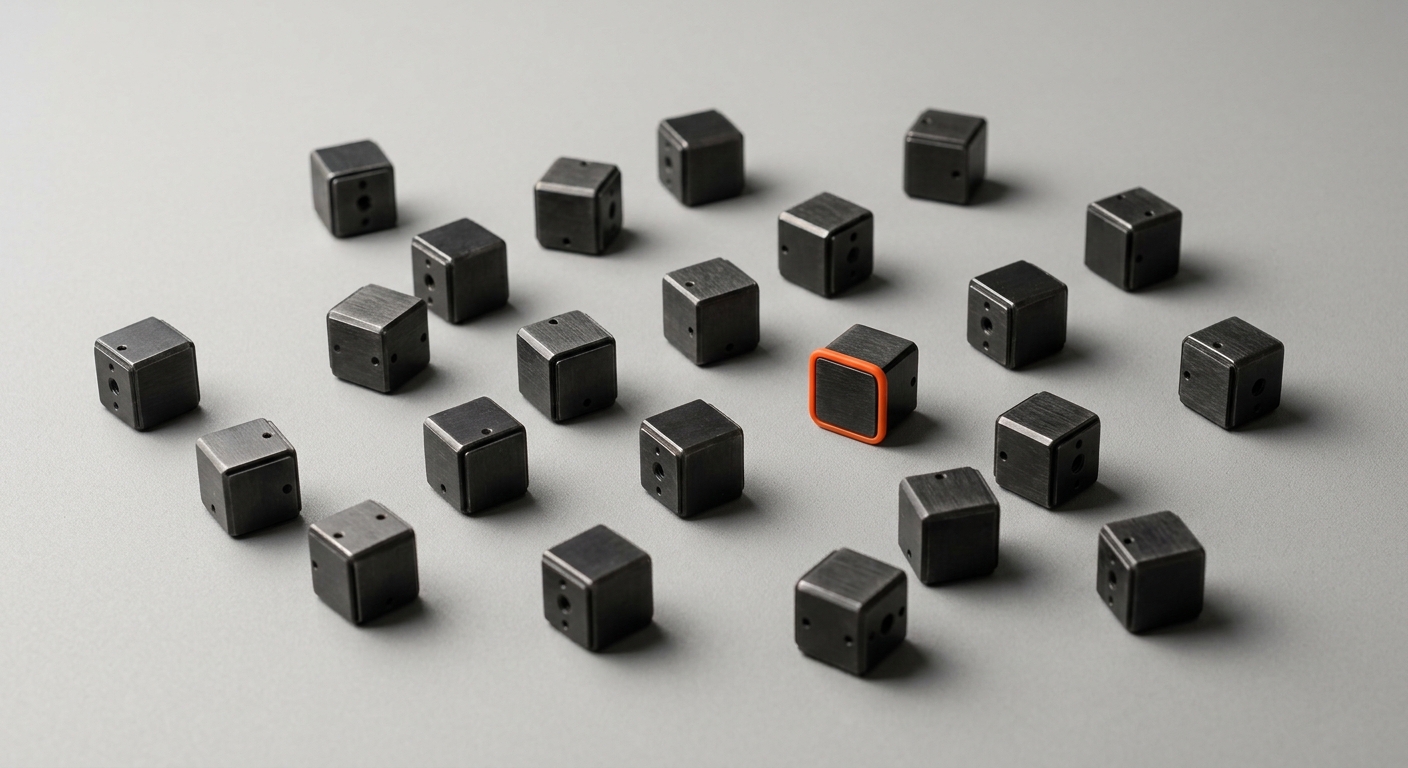
Count the AI tools running inside your company right now. Not the ones IT approved - all of them. The marketing copilot, the sales note-taker, the two chatbots on the website, the coding assistant, the meeting summariser, the three different ChatGPT subscriptions on personal cards, the agent someone in finance built over a weekend. For most mid-sized and large companies, the honest number is somewhere between 20 and 40, and it is growing every quarter.
None of them know each other. Each one keeps its own private memory, answers from its own island of data, and forgets everything the moment you switch to the next one. Gartner projects the average Global Fortune 500 enterprise will run more than 150,000 agents by 2028, up from fewer than 15 in 20251. IBM expects most large enterprises to operate a digital workforce of over 1,600 AI agents by the end of 2026, and seven in ten executives already say their governance is not fit for purpose2.
This is agent sprawl, and it is the AI-era version of a problem companies already know well: SaaS sprawl. More tools were supposed to mean more leverage. Instead they mean duplicated cost, contradictory answers, and knowledge that still walks out the door when people leave. This guide is for the operations leader, CTO, or Geschaeftsfuehrer who has more AI tools than answers, and wants to understand why the fix is not a 41st tool but a shared memory layer that connects the ones you keep.
TL;DR
Agent sprawl is the uncontrolled growth of disconnected AI tools and agents, each with its own siloed memory and no shared understanding of how your company works.
It happens through bottom-up adoption and shadow AI: around 67 percent of employees use AI at work, many against policy, and only about 18 percent of companies have an AI security policy.
It costs more than licences: duplicated spend, an integration tax on every tool, inconsistent output, context-switching drag, and governance risk you cannot see.
More tools is not more leverage because value lives in the connective memory between tools, not in any single tool. MIT found 95 percent of generative AI pilots deliver no measurable financial return.
The fix is a Company Brain: one living memory every AI employee grounds in, so consolidation compounds value instead of multiplying tools.
How Agent Sprawl Happens
Nobody decides to run 40 disconnected AI tools. Sprawl is not a decision, it is an accumulation. It grows the same way SaaS sprawl grew: one useful tool at a time, bought by different people, for different jobs, with nobody watching the total. The AI version is faster and quieter because most of it never touches a procurement form.
- Bottom-up adoption - Individuals adopt AI before the company has a strategy. Around 67 percent of employees now use AI at work, and roughly two-thirds have used it despite believing it was against company policy6,7.
- Shadow AI on personal accounts - Nearly half of generative AI users reach tools through personal accounts that bypass enterprise controls entirely, so IT has no record they exist22.
- Leadership sets the example - Shadow AI is not a junior habit. 65 percent of decision-makers use shadow AI, compared with 31 percent of staff below decision-maker level8.
- Every vendor ships an agent - Your CRM, helpdesk, ERP, and office suite each added their own copilot. You did not choose them as a set; they arrived one product update at a time.
- Business units buy their own - Marketing, sales, and support each pick point tools for their own workflow. In the SaaS world, business units now control roughly 70 percent of software spend, and a third of apps are invisible to IT12.
- Weekend builds become production - Low-code agent builders let anyone stand up an agent in an afternoon. It quietly becomes load-bearing before anyone reviews it.
- No inventory, no owner - Only about 18 percent of organisations maintain a current, complete inventory of the agents already running inside their walls, and just 12 percent have a central platform to manage them3.
Key Data Point
Enterprises run an average of 12 AI agents today and expect to reach 20 within two years, yet 50 percent of those agents already operate in isolated silos with no shared context, and 27 percent of the connections between them are completely ungoverned3. Sprawl is arriving faster than anyone is tracking it.
The pattern rhymes exactly with SaaS. The difference is that a forgotten SaaS app just sits there costing money. A forgotten agent takes actions.
The SaaS sprawl that came first
Agent sprawl did not appear in a vacuum. It landed on top of a software estate that was already overgrown, which is why the waste compounds so quickly.
| Indicator | Current State | Source |
|---|---|---|
| SaaS apps per enterprise | 275 to 342 (roughly doubled in 5 years) | Zylo / Digital Chiefs11,12 |
| Apps invisible to IT | About one third | Digital Chiefs12 |
| Duplicate subscriptions | ~7.6 per company | JumpCloud13 |
| Software budget wasted | ~30% on unused, duplicate, shadow tools | Zylo11 |
| AI agents in silos | 50% with no shared context | iEnable3 |
| Companies with AI policy | Only ~18% | Red Team Partner7 |
Understanding how sprawl happens matters because the cause dictates the cure. You cannot buy your way out of a problem that buying created.
What Sprawl Really Costs
The bill for agent sprawl is rarely one big line item, which is exactly why it goes unmanaged. It hides across five categories, and only the first one shows up cleanly in a budget.
1. Duplicated licence cost
- Overlapping tools - You are paying for three tools that summarise meetings and two that draft emails. Around 30 percent of the average software budget is wasted on unused licences, duplicate tools, and shadow IT11.
- Duplicate subscriptions - Companies average roughly 7.6 duplicate subscriptions, quietly renewing every year13.
- Per-seat creep - Every copilot adds a per-user fee. Multiply five copilots across a few hundred staff and the seats alone become a large recurring number.
2. The integration tax
- Every tool needs plumbing - A tool is only useful once it reaches your CRM, ERP, email, and file stores. That integration work is the hidden 40 to 60 percent of most AI project budgets, and you pay it again for every new tool.
- Connectors rot - APIs change, permissions drift, and each point integration becomes something to maintain. Forty tools means forty sets of plumbing to keep alive.
- No reuse - Because each tool integrates for itself, none of the connection work is shared. You buy the same access ten times over.
3. Inconsistent output
- Different answers to the same question - Ask two tools what your refund policy is and you can get two answers, because each grounds on a different, partial slice of data.
- Quality tracks the data, not the model - Analyses of Microsoft Copilot found output quality depends on the structure and accessibility of the underlying company data, not the model. Only about 5 percent of Copilot deployments moved from pilot to broad scale, with inconsistency a leading barrier21.
- Confident and wrong - A siloed tool cannot know what it does not know, so it fills gaps with plausible guesses that staff then have to catch.
4. The context-switching drain
- Constant toggling - Knowledge workers already switch between apps and websites around 1,200 times a day, one switch roughly every 24 seconds17.
- Reorientation cost - Those switches add up to nearly four hours a week of reorientation time, close to half a working day lost to navigation overhead17.
- Less real work - Amid the tool overload, employees spend only about 45 percent of the workday on productive tasks16. Adding a disconnected AI tool can make this worse, not better.
- Re-explaining context - Every siloed tool has to be re-briefed on who the customer is, what the project is, and how you do things here. That re-briefing is unpaid, invisible work repeated all day.
5. Governance and shadow-AI risk
- You cannot govern what you cannot see - With most agents uninventoried, data can leak, permissions can over-share, and no one has a full picture. Gartner expects 40 percent of organisations to be hit by a shadow-AI-related security incident10.
- Agents act, not just store - Unlike a stale SaaS record, an ungoverned agent with system credentials can act on wrong information at machine speed. Around 69 to 70 percent of enterprises say they cannot properly govern the agents they already have2,23.
- Knowledge still walks out - When each tool holds a private, shallow memory, the person who set it up takes the real know-how with them. Sprawl does not solve knowledge loss; it scatters it.
The Compounding Cost
None of these five costs is dramatic on its own. Together they mean you pay more, move slower, trust the output less, and carry risk you cannot measure - all while believing you are becoming more AI-driven. That gap between spend and value is the real price of sprawl.
| Cost category | What it looks like | Why it hides |
|---|---|---|
| Duplicated licences | Overlapping tools, duplicate seats | Spread across many small invoices |
| Integration tax | Repeated connector work per tool | Booked as project cost, not tool cost |
| Inconsistent output | Conflicting answers, rework | Shows up as wasted time, not a bill |
| Context switching | Toggling, re-briefing tools | Feels like normal busy work |
| Governance risk | Shadow AI, data leakage, unmonitored actions | Invisible until an incident |
Why More Tools Are Not More Leverage
The instinct when AI underdelivers is to add another tool. It rarely works, because the thing that creates leverage is not the tool. It is the shared memory between tools. Ten tools with no shared memory give you ten islands. One shared memory with ten tools grounded in it gives you a system.
- Every point tool starts from zero - It knows nothing about your company until you tell it, and it forgets when the session ends. You are the integration layer, carrying context by hand from tool to tool.
- Memory does not transfer - The preferences, corrections, and context you teach one tool never reach the others. Ten tools means teaching the same lesson ten times.
- Value fragments instead of compounding - A good answer in one tool improves nothing else. There is no place for wins to accumulate, so each use case restarts from scratch.
- Individual wins do not add up - MIT found 95 percent of generative AI pilots deliver no measurable profit-and-loss impact, largely because the tools do not learn, adapt, or integrate with how the business runs19,20.
- The GenAI Divide is about learning, not models - The 5 percent that succeed did not pick better models. They connected AI to real workflows and let it learn, so value compounded in one place19.
“Generic tools like ChatGPT excel for individuals because of their flexibility, but they stall in enterprise use since they don’t learn from or adapt to workflows.”
- Aditya Challapally, lead author of the MIT NANDA “State of AI in Business 2025” report19
The math of connection
The reason a shared layer wins is structural. Value in a network does not come from the number of nodes; it comes from the connections between them. Disconnected tools have no connections, so they scale linearly at best and negatively at worst once switching costs bite.
| Dimension | 40 disconnected tools | Tools grounded in one Company Brain |
|---|---|---|
| Memory | 40 private, shallow memories | One shared, deepening memory |
| Context | Re-explained per tool, per session | Learned once, available everywhere |
| Answers | Conflicting across tools | Consistent, from one source of truth |
| Each new use case | Starts from zero | Builds on everything before it |
| Knowledge when people leave | Walks out the door | Stays in the company |
| Value curve | Flat, then negative with switching cost | Compounds with every interaction |
Adding Another Point Tool vs Adding a Memory Layer
Another Point Tool
- ✗ New island - one more siloed memory to feed and maintain
- ✗ New integration tax - its own plumbing to your systems
- ✗ New answer to reconcile - adds to the inconsistency, not clarity
- ✗ More switching - one more app in the daily toggle
A Shared Memory Layer
- ✓ Connective tissue - grounds every tool in the same truth
- ✓ Integration once - shared access, not per-tool plumbing
- ✓ Consistent answers - one source, many surfaces
- ✓ Compounding value - every correction improves the whole
Drowning in disconnected AI tools?
Book a 30-minute call. We will map your sprawl and the memory layer that connects what you keep.
The Company Brain as Connective Tissue
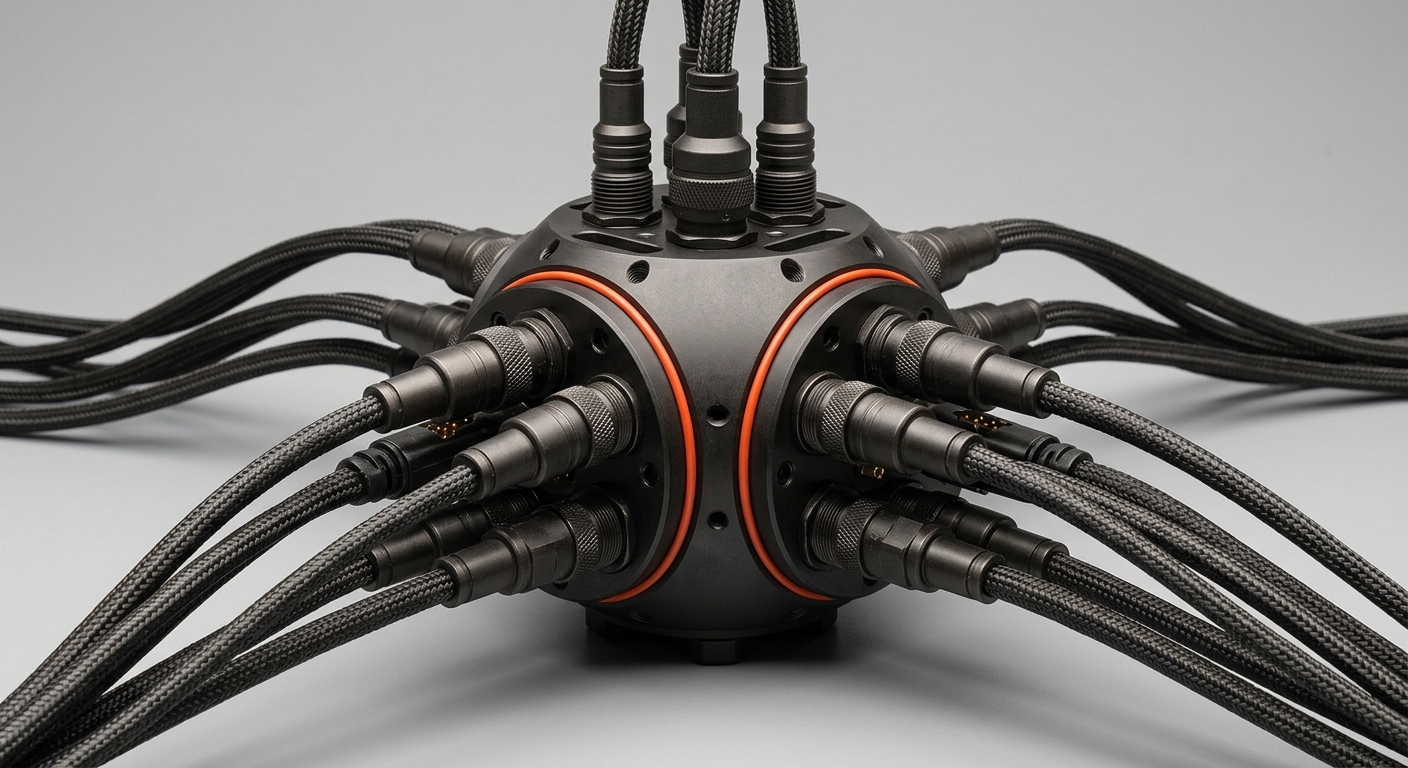
The fix for agent sprawl is not fewer tools for their own sake. It is a shared layer of memory that every AI tool grounds in - a Company Brain. Think of it as the connective tissue between the tools you keep: a single, living record of how your company actually works that each AI employee reads from and writes back to.
What a Company Brain actually is
- A living memory - Not a static wiki that decays the day it is written, but a memory fed by daily work and feedback so it stays current.
- The reasoning, not just the record - Your systems already store outcomes. The Company Brain stores why: the decisions, exceptions, and judgement behind them.
- One source every tool shares - Instead of 40 private memories, there is one memory that all agents ground in, so answers stop contradicting each other.
- Survives turnover - When someone leaves, what they knew stays in the brain rather than walking out the door with them.
- Owned by you - It is your institutional knowledge, held as an asset you control, not locked inside a vendor's silo.
The Core Distinction
Point tools multiply. A Company Brain compounds. Every tool you add without shared memory is another island. Every correction you feed a Company Brain makes every AI employee grounded in it a little sharper. That is the difference between spending on AI and building an AI advantage.
How AI employees use it
A Company Brain is only half the picture. The other half is AI employees that do real work grounded in it - taking over routine tasks connected to the systems you already run.
- Grounded before they act - An AI employee checks the Company Brain first, so it answers and acts from how your company actually does things, not a generic default.
- Connected to real systems - It works across email, Teams, SharePoint, CRM, and ERP, so it completes tasks rather than just describing them.
- Writes back what it learns - Every correction and new decision goes back into the brain, so the next task starts smarter.
- Consistent across the company - Because every AI employee shares the same memory, a customer, a colleague, and a report all get the same answer.
- More output without more headcount - Routine work gets absorbed by AI employees while your team focuses on judgement and relationships.
“Organizations need to find a balance where they can govern agents and manage sprawl, but also safely empower employees to innovate with these tools.”
- Max Goss, Senior Director Analyst at Gartner1
Company Brain vs a generic AI platform
This is the distinction most decision-makers miss. A generic AI platform gives you a place to build more agents. If those agents still do not share memory, a platform can accelerate sprawl rather than cure it.
| Dimension | Generic AI Platform | Company Brain |
|---|---|---|
| Primary output | A way to build more agents | A shared memory agents ground in |
| Effect on sprawl | Can multiply it | Connects and reduces it |
| Memory | Per-agent, often shallow | Shared, deepening, living |
| Knowledge on turnover | Tied to whoever built the agent | Retained by the company |
| Relationship to your tools | Another thing to run | Grounds the tools you keep |
A Company Brain does not replace the copilots and platforms you already own. It grounds them, which is why consolidation and connection go together.
The Consolidation Playbook
Consolidation is not a purge. A hard ban pushes usage further into the shadows and slows teams down. The goal is fewer islands and one shared brain, achieved by connecting and pruning, not banning. Here is the sequence that works.
- Inventory everything, including shadow AI - Build a complete list of every AI tool and agent in use. Ask teams directly, check expense reports, and use discovery tooling. You cannot govern or consolidate what you cannot see, and only about 18 percent of companies have this inventory today3.
- Group by job to be done - Cluster the tools by the actual job they do: meeting notes, drafting, support answers, data lookup. Overlaps become obvious the moment you group them.
- Keep the best per category, retire duplicates - For each cluster, keep the strongest tool and sunset the rest. This is where the roughly 30 percent of wasted software spend comes back11.
- Stand up the shared memory layer - Create the Company Brain: one living memory of how your company works, that the surviving tools and your AI employees ground in.
- Connect survivors to the brain - Point the tools you kept at the shared memory so they stop giving conflicting answers and start reading from one source of truth.
- Assign an owner and an approval path - Give the memory layer one accountable owner, and create a fast, sanctioned way to add new tools so people do not route around IT.
- Measure consistency and reuse - Track whether answers now agree across surfaces, how much context is reused rather than re-explained, and how many duplicate tools you retired.
Consolidation Readiness Checklist
- You have a written inventory of every AI tool and agent, including shadow AI
- Each tool is tagged with the job it does and who owns it
- You have identified overlaps and duplicate subscriptions
- You have named one accountable owner for the AI memory layer
- You have a fast, sanctioned path for teams to request new tools
- Your highest-value process is chosen as the first place to ground a Company Brain
- You can measure answer consistency before and after
- Leadership treats consolidation as strategy, not an IT cleanup
Ban-and-Block vs Connect-and-Prune
Ban-and-Block
- ✗ Pushes AI underground - usage moves to personal accounts
- ✗ Kills momentum - teams lose real gains they had found
- ✗ Breeds resentment - feels like IT taking tools away
- ✗ Solves nothing - the memory is still scattered
Connect-and-Prune
- ✓ Keeps what works - prunes duplicates, not usefulness
- ✓ Adds a shared brain - the survivors get consistent
- ✓ Sanctioned fast path - no reason to route around IT
- ✓ Compounds value - one memory gets deeper over time
Consolidation done this way speeds teams up, because they stop re-explaining context and stop reconciling conflicting answers. The playbook only works if governance travels with it, which is the next section.
Governance: EU AI Act and DSGVO in a Sprawled Estate
Ungoverned sprawl is not just inefficient, it is a compliance liability. The EU AI Act and DSGVO both assume you know which systems process what data and can show oversight. Forty uninventoried agents make that impossible, and the law does not accept "we did not know it was running" as a defence.
Why sprawl breaks compliance
- You cannot document what you cannot see - The EU AI Act expects transparency and record-keeping. Agents nobody inventoried cannot be documented, classified, or overseen.
- Transparency duties apply per interaction - Article 50 requires telling people when they interact with AI and labelling AI-generated content. Every shadow tool that skips this is a gap24.
- DSGVO follows the data, not the tool - Purpose limitation and data minimisation under Article 5 apply to each agent touching personal data. Shadow AI on personal accounts routinely violates both27.
- Penalties are not trivial - The EU AI Act sets fines up to the higher of set caps or a percentage of global turnover, and DSGVO penalties stack on top26.
- Incidents are coming - Gartner expects 40 percent of organisations to experience a shadow-AI-related security incident10.
The Governance Paradox
Around 69 to 70 percent of enterprises say they cannot govern the AI agents they already have2,23, yet only 13 percent believe they have the right governance in place3. You cannot close that gap tool by tool. You close it by giving sprawl one shared, inventoried place to live.
How a shared layer makes governance tractable
A Company Brain does not remove your compliance duties, but it makes them achievable, because there is finally one place to apply policy instead of forty.
- One inventory - Agents grounded in a shared layer are known agents, which is the first of Gartner's six steps to manage sprawl1.
- One place for access control - Permissions and data access are governed centrally rather than re-configured per tool.
- One audit trail - Actions and sources are logged in one place, which is what oversight and record-keeping duties require.
- One policy surface - Transparency notices, retention rules, and data minimisation are applied once and inherited by every grounded AI employee.
- EU-jurisdiction options - A memory layer you own can be run under EU jurisdiction, which matters for DSGVO and data-sovereignty concerns.
| Requirement | Sprawled estate | Grounded in a Company Brain |
|---|---|---|
| Know your AI systems | Most agents uninventoried | One inventory of grounded agents |
| EU AI Act Art. 50 transparency | Shadow tools skip disclosure | Applied once, inherited everywhere |
| DSGVO Art. 5 data limits | Personal accounts bypass controls | Central purpose and access rules |
| Oversight and audit | No unified log | One audit trail for actions and sources |
| Data residency | Scattered across vendors | Ownable, can run on EU soil |
Governance Checklist for Agent Sprawl
- Inventory every AI system, sanctioned and shadow
- Classify each by EU AI Act risk category
- Add transparency notices wherever AI meets customers or staff (Article 50)
- Map which agents touch personal data and apply DSGVO purpose limits
- Assign one owner for AI governance and the memory layer
- Set an access and retention policy at the shared layer
- Keep an audit trail of agent actions and data sources
- Give staff a sanctioned, compliant path so shadow AI has no reason to grow
How Superkind Fits
Superkind is built for exactly this problem. Rather than selling you a 41st tool, Superkind provides the two things sprawl is missing: a Company Brain that holds how your company works, and AI employees that do routine work grounded in it, connected to the systems you already run.
- Company Brain - A living memory of your processes, decisions, terminology, and the reasoning behind them, built from your real work and kept current by daily feedback.
- AI employees, not chatbots - They take over routine tasks end to end across email, Teams, SharePoint, CRM, and ERP, rather than answering in a window and forgetting.
- Grounds the tools you keep - The Company Brain sits underneath as connective tissue, so the copilots and tools you retain stop contradicting each other.
- Learns every day - Corrections and decisions flow back into the brain, so each use case makes the next one stronger instead of starting from zero.
- Survives turnover - Knowledge stays in the company when people leave, because it lives in the shared memory, not in individual heads or private tool silos.
- One place to govern - Because agents ground in one inventoried layer, transparency, access, and audit are applied once, which makes EU AI Act and DSGVO duties tractable.
- More output without more headcount - Routine work is absorbed by AI employees while your people focus on judgement, exceptions, and relationships.
- Outcomes, not seats - The engagement is scoped to real outcomes and use cases, not another per-user licence that adds to the sprawl.
| Approach | Another Point AI Tool | Superkind |
|---|---|---|
| What you get | One more siloed tool | A shared brain plus AI employees |
| Memory | Private, resets each session | Shared, living, compounding |
| Effect on sprawl | Adds an island | Connects and reduces it |
| Systems | Its own plumbing | Works across your existing stack |
| Knowledge on turnover | Walks out the door | Stays in the company |
| Governance | Another thing to track | One place to apply policy |
Superkind
Pros
- ✓ Connective by design - a shared brain, not another island
- ✓ Grounds existing tools - works with what you keep
- ✓ Knowledge survives turnover - memory stays in the company
- ✓ One place to govern - inventory, access, audit in one layer
- ✓ Outcome-based - scoped to use cases, not seat licences
Cons
- ✗ Not a self-serve app - requires engagement with our team
- ✗ Needs process access - we map how you really work
- ✗ Not for a single quick task - overkill if you just need one throwaway automation
- ✗ Consolidation takes will - retiring duplicates needs leadership backing
Decision Framework: Do You Have a Sprawl Problem?
Not every company needs to act today, but most that have adopted AI bottom-up already have more sprawl than they think. Use these signals to decide.
| Signal | What It Means | Action |
|---|---|---|
| You cannot name every AI tool in use | Shadow AI and sprawl are already present | Run an inventory before anything else |
| Two tools give different answers to the same question | Memory is siloed, output is inconsistent | Stand up a shared memory layer |
| You pay for overlapping AI subscriptions | Duplicated licence cost is leaking budget | Group by job, keep the best, retire the rest |
| Knowledge left with a recent departure | Private tool memory is not company memory | Capture it into a Company Brain |
| Your AI pilots impressed but did not scale | Classic GenAI Divide: no learning, no integration | Ground one use case and let it compound |
| You have almost no AI tools yet | You can avoid sprawl by design | Start with the memory layer, then add tools |
Consolidating Now vs Letting Sprawl Grow
Consolidating Now
- ✓ Value compounds earlier - a shared brain gets deeper every week
- ✓ Cost comes back - retired duplicates free real budget
- ✓ Governance is tractable - one place to meet the EU AI Act
- ✓ Knowledge is captured - before the next person leaves
Letting Sprawl Grow
- ✗ Compounding waste - more islands, more integration tax
- ✗ Rising risk - more ungoverned agents acting in real systems
- ✗ Harder to unwind - each tool embeds deeper over time
- ✗ Value never arrives - the 95 percent that see no ROI stay there
Frequently Asked Questions
AI agent sprawl is the uncontrolled growth of disconnected AI tools, copilots, and agents across a company, each with its own siloed memory and no shared understanding of how the business works. It is the AI-era version of SaaS sprawl. Gartner predicts the average Global Fortune 500 enterprise will run more than 150,000 agents by 2028, up from fewer than 15 in 2025. The problem is not the number of tools but that none of them share context, so value fragments instead of compounding.
SaaS sprawl wastes money on overlapping licences and creates security gaps. Agent sprawl does all of that and adds three new problems: each agent has its own memory that never syncs with the others, agents can take actions in real systems rather than just store data, and shadow AI means staff spin up agents without IT ever knowing. An unmonitored SaaS app produces a stale spreadsheet. An unmonitored agent with system credentials can act on wrong information at machine speed.
Because value does not live in the tool, it lives in the connective memory between tools. Every new point tool starts from zero knowledge of your company, re-learns your context from scratch on every prompt, and answers from its own island of data. Employees end up toggling between apps, getting different answers to the same question, and re-explaining context all day. MIT found 95 percent of generative AI pilots deliver no measurable profit-and-loss impact, largely because the tools never learn how the company actually works.
Shadow AI is employees using AI tools without IT approval or oversight. Around 67 percent of employees use AI at work, and roughly two-thirds have used it despite believing it was against policy. Nearly half of generative AI users access tools through personal accounts that bypass enterprise controls, and 65 percent of decision-makers themselves use shadow AI. Only about 18 percent of organisations have any formal AI security policy, which is why sprawl grows faster than governance can contain it.
A Company Brain is a shared, living memory of how your company actually works: its processes, decisions, terminology, customers, and the reasoning behind them. Point tools each keep a private, shallow memory that dies when you switch tools or when the person who set them up leaves. A Company Brain is the one place every AI employee grounds in, so answers are consistent, knowledge survives turnover, and each use case makes the next one stronger instead of starting from zero.
No. A generic AI platform gives you a place to build more agents, which can accelerate sprawl if the agents still do not share memory. A Company Brain is the connective layer underneath: a single source of institutional knowledge that every agent reads from and writes back to. The distinction is memory that compounds versus tools that multiply. You can run a Company Brain alongside the platforms and copilots you already own, because it grounds them rather than replacing them.
You do not rip everything out. Start by building an inventory of every AI tool and agent in use, including shadow AI. Group them by the job they do, keep the best in each category, and retire duplicates. Then connect the survivors to one shared memory layer so they stop giving conflicting answers. Consolidation is about connecting and pruning, not banning. The goal is fewer islands and one shared brain, not zero tools.
Yes. Ungoverned agents make it almost impossible to meet the transparency, documentation, and oversight duties the EU AI Act requires, and you cannot govern agents you do not know exist. Article 50 requires you to tell people when they interact with AI and to label AI-generated content. If agents touch personal data, DSGVO purpose limitation and data minimisation apply to each one. A shared, inventoried memory layer makes compliance tractable because there is one place to apply policy.
Roughly 30 percent of the average enterprise software budget is wasted on unused licences, duplicate tools, and shadow IT. Enterprises average around 7.6 duplicate subscriptions and pay for many seats no one uses. On top of the licence waste sits the integration tax, the hidden cost of connecting each tool to real systems, and the productivity drain of employees switching apps around 1,200 times a day. The waste is rarely one big line item, which is exactly why it goes unmanaged.
Usually nobody, which is the core problem. Business units buy their own tools, individuals bring their own AI, and IT often finds out later. Gartner recommends establishing clear agent governance, a centralised inventory, and defined ownership as the first steps. In practice, one accountable owner for the AI memory layer and a lightweight approval path for new tools prevents most sprawl without slowing teams down.
Done badly, a hard ban slows teams and pushes usage further into the shadows. Done well, consolidation speeds teams up because they stop re-explaining context, stop getting contradictory answers, and stop hunting for which of five tools has the right information. The winning pattern is to give people one grounded place to work and a fast, sanctioned way to add tools, rather than forcing them back to manual work.
Start with an honest inventory and one high-value process. Count the AI tools and agents already in use, pick the process where inconsistent answers or lost knowledge hurt most, and stand up a shared memory layer for that one area with a single AI employee grounded in it. Prove that consolidation compounds value in one place, then expand. This mirrors the pattern MIT found in the 5 percent of companies whose AI actually pays off: pick one pain point and execute well.
Related Articles
- Why 400,000 Copilot Agents Still Do Not Know Your Company
- The Integration Tax: Why AI Value Lives in the Connectors, Not the Model
- The AI Productivity Paradox: Why Individual Wins Do Not Add Up to Business Value
- Agent Washing: How to Tell a Real AI Employee From a Rebranded Chatbot
- Institutional Amnesia: Why Your Company Keeps Solving the Same Problem Twice
Sources
- Gartner - Six Steps to Manage AI Agent Sprawl (2026)
- Beam.ai - IBM: Enterprises Will Run 1,600 AI Agents, 70% Cannot Govern Them
- iEnable - AI Agent Sprawl: 50% of Enterprise Agents Run Ungoverned
- IBM - AI Agent Sprawl: What It Is and How to Control It
- TechInsyte - Gartner Warns Enterprises Must Prepare for AI Agent Sprawl
- PagerDuty - 2026 Shadow AI Workplace Survey
- Red Team Partner - Shadow AI: 67% Use AI at Work, 18% Have Policies
- Help Net Security - TrustedTech: The C-Suite Loves Shadow AI
- Unseen Security - The State of Shadow AI 2026
- Infosecurity Magazine - Gartner: 40% of Firms to Be Hit by Shadow AI Incidents
- Zylo - Stop SaaS Sprawl: SaaS Management Index
- Digital Chiefs - 275 Apps, One Third Invisible: SaaS Sprawl
- JumpCloud - 2025 SaaS Usage Statistics
- Coommit - Duplicate SaaS Subscriptions: The 2026 Benchmark
- Inside Consulting - The Hidden Cost of Too Many Tools
- Inc. - AI Tool Sprawl Is Eating Away at Productivity
- SpeakWise - Context Switching Statistics 2026 (HBR: 1,200 switches/day)
- SpeakWise - Workplace Technology Overload Statistics 2026
- Fortune - MIT Report: 95% of GenAI Pilots Failing (Aditya Challapally)
- Legal.io - MIT Report Finds 95% of AI Pilots Fail, Exposing the GenAI Divide
- Xenoss - Microsoft Copilot in Enterprise: Limitations and Best Practices
- Vectra AI - Shadow AI: Risks, Costs, and Enterprise Governance
- Beri.net - Why 69% of Enterprises Cannot Govern Their Own AI Agents
- EU AI Act - Article 50: Transparency Obligations
- EU AI Act - Implementation Timeline
- EU AI Act - Article 99: Penalties
- GDPR - Article 5: Principles Relating to Processing of Personal Data
Ready to connect your AI tools instead of adding another?
Book a 30-minute call with Henri. We will map your agent sprawl and the Company Brain that connects what you keep - no commitment, no sales pitch.
Book a Demo →