
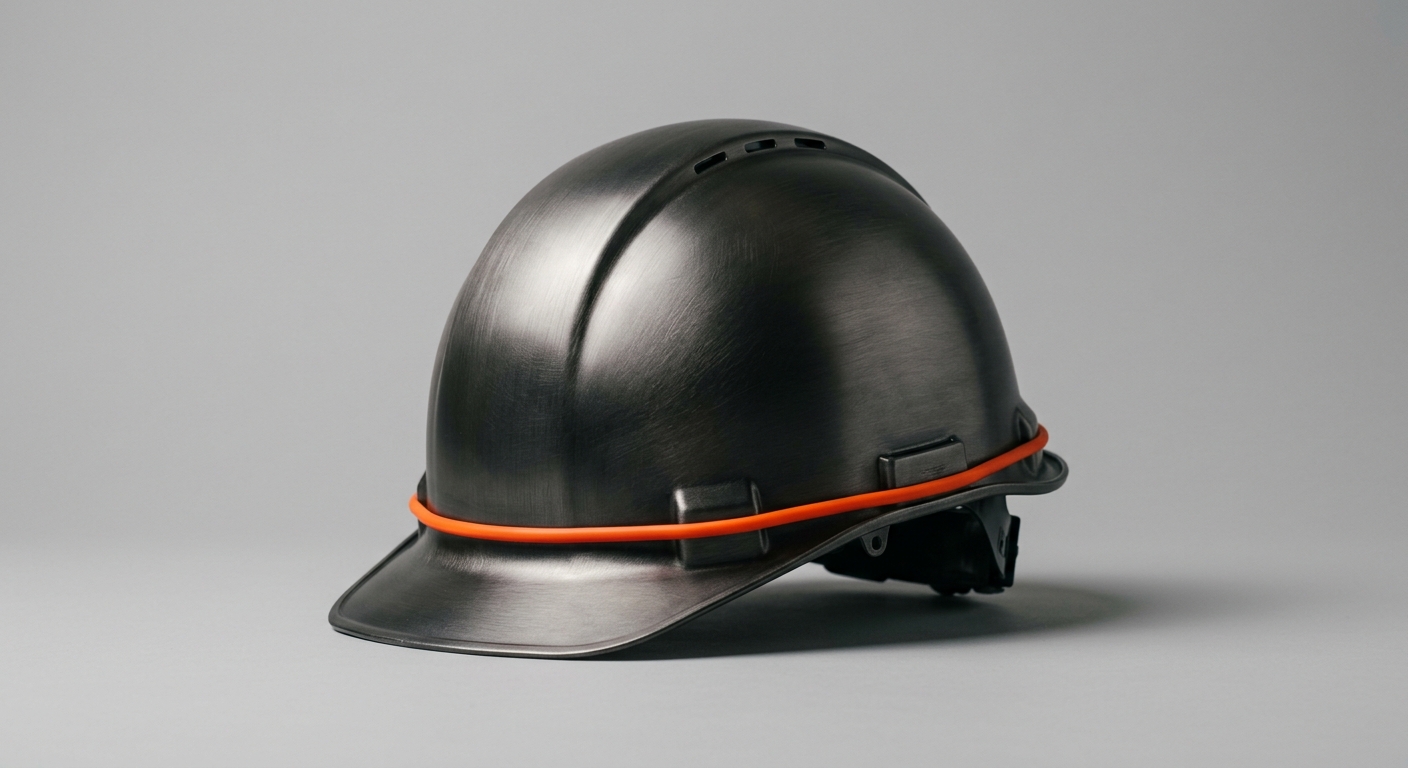
A safety manager at a mid-size manufacturer starts the week with a phone full of photos from Friday’s shift, eleven open corrective actions past their due date, three certifications about to lapse, and an internal audit in ten days. None of it is hard. All of it is manual. By Wednesday the audit prep has eaten the week, the near-miss someone flagged on Monday is still sitting in an inbox, and the actual work of preventing the next accident has not started. That is not a diligence problem. It is a capacity problem, and it is the quiet reason good safety programmes stall.
The stakes are not abstract. The International Labour Organization estimates nearly three million people die every year from work-related accidents and diseases, and work-related ill-health and injury costs the European Union an estimated 3.3 percent of its GDP, around 476 billion euros a year1,2. In Germany the trend is genuinely good, with 712,257 reportable work accidents in 2024 and a record-low 307 fatal ones, but the gains come from constant, unglamorous work that a stretched team has to keep doing3.
This is an honest roundup of the real tools that automate workplace safety and EHS in 2026 - what each is genuinely good at, roughly what it costs, and where it stops. No vendor wins every row. And there is one thing almost none of them keep, which is the difference between a tool that files the paperwork and a system that remembers how your company actually keeps people safe.
TL;DR
The market splits by job - enterprise EHS suites (Cority, VelocityEHS, Intelex, Enablon, Sphera, Benchmark Gensuite), mid-market EHS platforms (Evotix, EcoOnline), a frontline inspection leader (SafetyCulture), camera-based hazard detection (Intenseye, Protex AI, Voxel), and the DACH platforms (Quentic, iManSys).
The constraint is the team, not the software - safety programmes stall on the manual admin of logging incidents, chasing actions and prepping audits, so the win is more coverage per safety professional, not more headcount1,2.
Every EHS tool is a process engine - it records incidents, runs risk assessments, and tracks actions. What it rarely keeps is the reasoning behind your controls and decisions when the safety manager who held it retires.
Compliance is not uniform - camera-based worker monitoring is high-risk under the EU AI Act and triggers DSGVO and works-council duties, while the back-office admin generally is not21.
The durable win - a Company Brain that retains how your company runs safety, plus AI employees that work the routine incident intake, corrective-action chasing and certification tracking inside the systems you already use.
The verdict is not build or buy - buy the EHS tool, do not build one, and layer memory and action on top.
The Safety Team Bottleneck
Workplace safety is where a company protects its people and its licence to operate, and where a single missed hazard can end in an injury, a prosecution, or worse. Yet the day-to-day of running it is a mountain of routine admin resting on a small number of experienced people who are already stretched across several sites.
- Incident intake is manual and slow - a near-miss reported by phone, photo or paper has to be keyed into the system, categorised, and routed, and the friction means many are never reported at all, so the data that should drive prevention is thin.
- Corrective actions go stale - the finding is easy; the follow-through is hard. Actions get assigned and then quietly slip past their due date because no one has time to chase every owner on every site.
- Certifications and training lapse - forklift licences, first-aid tickets, machine authorisations and mandatory trainings all expire on their own schedule, and keeping every worker current across a plant is a tracking job nobody has time for.
- Audits swallow weeks - preparing for an internal or external audit means pulling records, evidence, and closed actions together by hand, and the prep repeatedly crowds out the preventive work.
- The people to do the work are scarce - qualified safety specialists are hard to hire, and one Sifa or EHS manager often carries several locations, so capacity, not commitment, caps the programme.
- The knowledge lives in people - which line keeps throwing up the same near-miss, which contractor cuts corners, what the last auditor really cared about, and why a control was chosen usually sits with one long-serving safety manager and a spread of notes nobody else reads.
Key Data Point
Work-related ill-health and injury costs the European Union an estimated 3.3 percent of its GDP, around 476 billion euros every year, and the ILO estimates nearly three million work-related deaths annually1,2. The human and financial case for prevention is overwhelming. The constraint is not whether safety matters; it is how much a small, stretched team can actually cover. The highest-leverage move is to raise the output of the safety professionals you already have, so each one spends less time on admin and more on preventing the next incident.
| Pressure | Typical figure | Why it matters |
|---|---|---|
| Global work-related deaths | ~3 million per year1 | Prevention is a life-and-death mandate |
| Cost to the EU economy | ~3.3% of GDP (~476bn euros)2 | Poor safety is a major financial drag |
| Reportable accidents in Germany | 712,257 in 20243 | Even a falling rate is a huge admin load |
| Fatal work accidents in Germany | 307 in 2024 (record low)3 | Progress comes from constant, manual effort |
| Safety specialist availability | Scarce, multi-site load | Coverage is capped by hiring |
So the question is not whether to put automation on the problem. It is which category of tool fits your industry and your bottleneck, and whether the tool just records the safety data or actually works the programme the way your best safety manager would.
“It is crucial to integrate OSH considerations into AI design to enhance worker well-being and prevent risks, as AI continues to reshape workplace safety.”
- Maurizio Curtarelli, Senior Research Project Manager, EU-OSHA6
Why 2026 Is Different
Safety software is not new. What changed is that AI moved from a form-filling database to systems that read a photo, draft an investigation, watch a shop floor, and chase an action on their own, and the analyst community now treats AI as the thing redefining what EHS software is worth.
- AI turned the paperwork into a first draft - generative assistants now log an incident from a photo and a voice note, draft a risk assessment, and summarise an audit, so the slowest, most manual part of safety is increasingly a draft a human reviews, not hours of typing4.
- Computer vision reached the shop floor - tools like Intenseye, Protex AI and Voxel turn existing cameras into continuous hazard detection, flagging a missing hard hat, a person in a forklift path, or a blocked exit in real time16,17,18.
- Analysts called the shift - Verdantix, which benchmarks the EHS software market, describes AI features starting to redefine the value users extract from EHS software, with EHS virtual assistants leading the charge4,5.
- The labour ceiling made productivity a survival question - with safety specialists scarce and each carrying several sites, raising output per professional is the only way to widen coverage without headcount you cannot find.
- Recognition went mainstream - Intenseye was named a World Economic Forum Global Innovator in 2026, with customers including Siemens, Unilever and Heineken, a sign that AI safety moved from pilot to production at serious industrial scale16.
- The honest caveat - AI safety is only as good as the data and the follow-through, and camera-based monitoring brings real privacy, works-council and EU AI Act obligations, so the winners pair the tool with clean process and lawful governance, not a demo run untouched.
The Recording vs Preventing Trap
A tool that logs an incident in seconds and files it neatly feels like the job is done. It is not the same as preventing the next one. The value is only realised when the corrective action is actually closed, the pattern behind repeat near-misses is understood, the right control is chosen and remembered, and the reasoning survives so the next safety manager does not relearn it. A tool that records the safety data is only half the job.
With that lens in place, here is the honest read on the tools that matter.
What EHS and Safety Tools Actually Do
Before the tool list, it helps to be precise about the jobs these tools do across the safety programme, so you can judge each vendor against the same yardstick rather than a feature grid.
The safety and EHS stages
- Hazard identification and risk assessment - spotting what could go wrong and documenting the controls, the foundation the whole programme rests on.
- Incident and near-miss management - capturing what happened, investigating the cause, and recording it, including the near-misses that predict the serious events.
- Corrective and preventive actions - assigning, tracking and closing the fixes that come out of incidents, audits and inspections.
- Inspections and audits - running the checklists, walk-throughs and formal audits that verify controls are in place and working.
- Training and certification - keeping every worker current on the qualifications, authorisations and mandatory trainings their role requires.
- Chemicals, permits and compliance - managing hazardous substances, safety data sheets, permits-to-work and the regulatory obligations that apply to the site.
- Real-time hazard detection - watching the workplace as work happens and flagging unsafe acts and conditions before they become incidents.
- Reporting and analytics - turning all of it into the trends, leading indicators and board and regulator reports that show the programme is working.
The six things the tools do well
- Digitise the record - move incidents, risk assessments, audits and training off paper and spreadsheets into one system of record.
- Capture from the frontline - let workers report a hazard or complete an inspection from a phone, where the work actually happens.
- Draft with AI - use generative AI to turn a photo or a prompt into a checklist, a first-pass investigation, or an audit summary.
- Detect hazards with vision - use computer vision on existing cameras to flag unsafe acts and conditions in real time.
- Manage compliance data - keep chemicals, permits, safety data sheets and regulatory obligations current and auditable.
- Report on performance - track incident rates, leading indicators and action closure to show trends and satisfy regulators.
Process engine vs system of judgement and action
What EHS tools give you
- ✓ System of record - incidents, risk, audits, training in one place
- ✓ Frontline capture - reporting and inspections from a phone
- ✓ Hazard detection - computer vision on the shop floor
- ✓ Analytics - incident rates, leading indicators, closure
What they rarely keep
- ✗ Control reasoning - why this control was chosen over a cheaper one
- ✗ Pattern memory - why line three keeps throwing the same near-miss
- ✗ Auditor context - what your last auditor actually cared about
- ✗ The follow-through - chasing the action closed, not just logging it
The Best AI Workplace Safety and EHS Tools in 2026
Here is the honest read on the platforms that matter, grouped by who each serves best, what it is genuinely good at, and where it stops. Pricing is directional because most enterprise and vision tools are quote-only and priced on modules, users, sites or cameras.
Enterprise EHS suites
1. Cority
- What it is - A mature enterprise EHSQ suite and analyst-recognised leader, especially strong in occupational health and industrial hygiene, whose Cortex AI adds capabilities like incident image analysis and compliance permit review4,7.
- Best for - Large, regulated organisations that want occupational health integrated alongside a deep EHS programme.
- Pricing - Enterprise, custom-quoted, commonly tens of thousands to low six figures per year.
- Where it stops - It is a system of record and workflow; the safety judgement and the follow-through still live with your team.
2. VelocityEHS
- What it is - A configurable EHS platform (Accelerate) that leads on US process safety and chemical management, with VelocityAI adding automated ergonomic assessments from video and other AI features4,8.
- Best for - Mid-market to enterprise teams that value configurability, chemical management and ergonomics.
- Pricing - Subscription, quote-based by module and user.
- Where it stops - Broad and capable, but the programme still needs a human to run the reasoning behind it.
3. Intelex
- What it is - A long-established EHSQ platform (part of Fortive) positioned as the specialist when quality and safety are operationally unified, with a wide module set and AI features4,9.
- Best for - Organisations that run quality and safety together and want one configurable system across both.
- Pricing - Enterprise, custom-quoted.
- Where it stops - Deep and flexible, which also means configuration and rollout are a project, not a switch.
4. Enablon (Wolters Kluwer)
- What it is - One of the largest EHS platforms by deployment footprint, with the deepest ESG capability, named a Verdantix Leader with the strongest market momentum in the 2025 benchmark4,10.
- Best for - Large enterprises that want EHS and ESG in one platform at global scale.
- Pricing - Enterprise, custom-quoted, at the higher end.
- Where it stops - Power and breadth come with weight; it is more platform than a mid-size single site needs.
5. Sphera
- What it is - An EHS and operational-risk platform strong in process safety, built for asset-intensive industries such as oil and gas, chemicals and mining11.
- Best for - High-hazard, asset-intensive operations that need process safety and operational risk at depth.
- Pricing - Enterprise, custom-quoted.
- Where it stops - Specialised for heavy industry; overkill for a light-hazard office or retail environment.
6. Benchmark Gensuite
- What it is - A broad EHS suite with a large user base and an active AI programme, including AI Advisors that guide users through EHS tasks4,12.
- Best for - Enterprises that want a wide, established module set with practical AI assistance built in.
- Pricing - Subscription, quote-based.
- Where it stops - A capable system of record; the reasoning and the chasing are still yours to own.
Mid-market EHS platforms
7. Evotix
- What it is - A mid-market EHS platform (formerly SHE Software) focused on frontline engagement and usability, with Evotix Assist adding AI help across safety tasks13.
- Best for - Mid-size organisations that want a usable, engagement-focused EHS system without enterprise weight.
- Pricing - Subscription, quote-based, below the enterprise suites.
- Where it stops - Lighter than the enterprise platforms; very high-hazard, complex programmes may need more.
8. EcoOnline
- What it is - A European EHS platform strong in chemical safety and safety data sheet management, with a broad mid-market module set and AI features4,14.
- Best for - European mid-market companies with a chemical-management need alongside core EHS.
- Pricing - Subscription, quote-based.
- Where it stops - Strong in its core; the deepest process-safety and enterprise needs sit with the heavier suites.
Frontline inspections and operations
9. SafetyCulture
- What it is - A workplace operations platform built around the iAuditor inspection app that leads the category for frontline mobile adoption, with AI that turns a request into a checklist and summarises findings15.
- Best for - Teams whose primary need is mobile inspections, checklists and issue capture from a phone.
- Pricing - Free tier; affordable per-seat paid plans.
- Where it stops - It is not a full EHS programme system; it lacks the depth for OSHA 300 recordkeeping, permit-to-work or industrial hygiene.
Computer-vision hazard detection
10. Intenseye
- What it is - An AI workplace-safety platform that uses vision-only pose tracking on existing cameras to detect unsafe acts and conditions without wearables, named a WEF Global Innovator in 2026, with customers including Siemens, Unilever and Heineken16.
- Best for - Large manufacturers and industrial sites that want continuous, real-time hazard detection at scale.
- Pricing - Enterprise, quote-only, priced per camera or site.
- Where it stops - It watches for hazards; it is not a programme system, and worker monitoring carries heavy EU AI Act, DSGVO and works-council obligations.
11. Protex AI
- What it is - A computer-vision safety platform that connects to existing camera infrastructure with configurable safety rules and edge processing, so sensitive footage stays on site rather than in an external cloud17.
- Best for - Logistics, warehousing and manufacturing sites that want vision-based detection with a privacy-conscious, on-premise footing.
- Pricing - Enterprise, quote-only.
- Where it stops - Detection and analytics, not full EHS programme management; the same monitoring obligations apply.
12. Voxel
- What it is - A computer-vision platform that turns existing security cameras into real-time safety monitors, flagging near-miss vehicle collisions, poor ergonomics, spills and restricted-area breaches, trained on billions of hours of industrial scenarios18.
- Best for - Warehouses and industrial sites that want to reuse existing camera infrastructure for safety detection.
- Pricing - Enterprise, quote-only, per camera or site.
- Where it stops - It is a detection layer; the response, the record and the reasoning still sit elsewhere, and monitoring rules apply.
DACH platforms
13. Quentic
- What it is - The established EHS and sustainability platform across the DACH region, founded in Berlin and now part of AMCS, with modules for occupational safety, hazardous substances, audits and compliance built around German conventions19.
- Best for - German-speaking organisations that need EHS aligned to DGUV, Berufsgenossenschaft and local paperwork.
- Pricing - Subscription, quote-based by module.
- Where it stops - Built for the DACH programme; the deepest global process-safety needs may point to a specialist.
14. iManSys (Domeba)
- What it is - A German EHS software from Domeba, strong on Unterweisungen, Gefährdungsbeurteilungen, operating instructions and e-learning, widely used in manufacturing and the public sector20.
- Best for - German companies whose priority is training, instruction and hazard assessment in the local language.
- Pricing - Subscription, quote-based.
- Where it stops - Strong on training and instruction; broader enterprise EHS needs may need a wider suite.
15. General assistants (ChatGPT, Microsoft Copilot) as a baseline
- What they are - General-purpose assistants that can draft a toolbox-talk, summarise a regulation, or sanity-check a risk assessment.
- Best for - One-off drafting and research tasks alongside a real EHS tool.
- Pricing - Per-seat subscriptions.
- Where they stop - They are not a safety system. They do not hold your incident data, cannot chase an action, and have no connected view of your sites. Use them as a co-pilot, not the system.
| Tool | Category | Best for | Pricing (directional) |
|---|---|---|---|
| Cority | Enterprise EHSQ | Occupational health depth | Enterprise, quote-only |
| VelocityEHS | Enterprise EHS | PSM, chemicals, ergonomics | Quote-based, by module |
| Intelex | Enterprise EHSQ | Unified quality and safety | Enterprise, quote-only |
| Enablon | Enterprise EHS + ESG | Global scale, ESG depth | Enterprise, higher end |
| Sphera | EHS + process safety | Asset-intensive industry | Enterprise, quote-only |
| Benchmark Gensuite | Enterprise EHS | Broad modules, AI Advisors | Quote-based |
| Evotix | Mid-market EHS | Frontline engagement | Quote-based, mid-tier |
| EcoOnline | Mid-market EHS | Chemical safety, Europe | Quote-based |
| SafetyCulture | Frontline inspections | Mobile checklists and issues | Free tier; low per-seat |
| Intenseye | Computer vision | Real-time detection at scale | Enterprise, per camera |
| Protex AI | Computer vision | Privacy-conscious, edge | Enterprise, quote-only |
| Voxel | Computer vision | Reuse existing cameras | Enterprise, per camera |
| Quentic | DACH EHS | German conventions, DGUV | Quote-based, by module |
| iManSys | DACH EHS | Training and instruction | Quote-based |
Cover more, keep the judgement
Book a 30-minute call. We will find the routine safety admin worth automating and the safety reasoning worth keeping.

What Every EHS Tool Misses
Run the tools above side by side and a pattern appears. They differ on price, on breadth, and on whether they manage the programme or watch the floor. They agree on one blind spot: every one of them is a process engine, and none of them keeps the safety judgement that makes the programme work when the person who held it retires.
- They record the incident, not the reason - a tool knows a near-miss happened on line three. It does not know that it is the fourth this quarter, that the root cause is a layout change nobody documented, or that the last fix was quietly reversed.
- The context walks out the door - when a long-serving safety manager retires, the tool keeps the records but loses the sense of which contractor cuts corners, what the last auditor really cared about, and why a control was chosen. The next hire relearns it from scratch.
- Logging is not closing - a perfectly recorded corrective action still needs someone to chase the owner, verify the fix, and confirm it holds. The tool tracks the action; a person still has to make it happen.
- Reach stops at the tool edge - most EHS systems are strong inside their own record but do not touch the emails, the maintenance logs, the shift handovers, and the HR training data where the real story of a hazard often lives.
- Detection is not response - a camera flagging a missing hard hat only helps if someone sees the alert, acts on it, and captures the lesson. Vision tools surface hazards; they do not run the follow-through.
- The programme outgrows the team - as sites, workers and regulations multiply, the admin load grows faster than you can hire safety specialists, so the backlog builds and the good judgement gets spread thinner.
The Real Constraint
The best EHS tool in the world cannot tell you why the same near-miss keeps recurring on one line, remember what your last auditor actually pressed on, or chase a corrective action across three sites until it is truly closed. In 2026 the differentiator is not the record - it is whether your safety reasoning is captured and reusable, and whether something actually works the routine intake, chasing and tracking across your incidents, emails, and shift logs. That is a knowledge-and-execution problem the EHS market mostly leaves to you.
This is the gap a Company Brain, plus AI employees, is built to close.
The Company Brain Approach
A Company Brain is company memory: the people-knowledge, processes, and decisions that make your safety programme work, captured so they survive turnover and can be acted on. It is the layer above the EHS tool, and it is what turns a system of record into an AI employee that works the programme and answers the questions.
What it keeps
- Why your incidents cluster - the patterns behind repeat near-misses and where they trace back to, so prevention targets the real cause instead of the last symptom.
- Which controls actually hold - what worked, what was reversed, and why a control was chosen over a cheaper one, so decisions are grounded in your real experience.
- What your auditors care about - the specific things past auditors and the Berufsgenossenschaft pressed on, so audit prep starts from the right place.
- Who and what carries risk - which contractor cuts corners, which process drifts under pressure, and which site runs hot, so attention goes where it matters.
- Feedback as it happens - the Company Brain learns from your safety team’s corrections every day, so it stays accurate as people, sites and rules change, rather than going stale.
The AI employees on top
Grounded in that memory, AI employees do the routine work end to end and stay connected to the systems where your safety data and its context actually live.
- Log the incident - turn a photo, a voice note or an email into a categorised, routed record in your EHS system, so nothing is lost to reporting friction.
- Draft the investigation - pull the history and the context and produce a first-pass root-cause draft for a safety professional to review and own.
- Chase the actions - track every corrective action, nudge the owner, escalate the ones that slip, and confirm closure, across every site.
- Keep certifications current - watch every licence, ticket and mandatory training, and prompt the renewal before it lapses.
- Prep the audit - assemble the records, the closed actions and the evidence into an audit-ready pack, so the week before an audit is not lost.
- Improve daily - every correction and every closed incident feeds back into the Company Brain, so you get more coverage without more headcount.
| Dimension | EHS tool with AI | Company Brain + AI employees |
|---|---|---|
| What it holds | Incidents, risk, actions, training | The reasoning behind each control and decision |
| What it does | Records the data, runs the workflow | Works the programme and chases it closed |
| Reach | Strong inside its own record | Across incidents, email, maintenance, shift logs, HR |
| When your safety manager retires | Records stay, judgement is lost | The reasoning is retained and reused |
| Over time | Data ages unless maintained | Improves daily from real feedback |
A Company Brain does not replace your EHS tool. It sits above it and keeps the thing the tool never captured: how your company actually keeps people safe, and who works the follow-through.
“By embracing AI-powered technologies to monitor for hazards, automate tasks and identify worker wellbeing issues, organizations can enhance their EHS programmes, reduce risks and improve overall performance.”
- Chris Sayers, Senior Analyst, Verdantix5
Build vs Buy vs Layer: The Verdict
The instinct with safety automation is to frame it as build versus buy. That is the wrong question. The right frame has three parts, and for most companies the answer is all three, in order.
- Buy the EHS tool - incident management, risk registers, audits and hazard detection are solved problems. Building your own in spreadsheets and forms is a false economy; pick a tool from the roundup that fits your industry and connect it.
- Do not build the platform - a homegrown EHS system or vision model competes with vendors that have years of regulatory content and training data. You will spend more and cover less.
- Layer memory and action on top - the part no EHS tool gives you, the retained safety reasoning and the AI employees that work the routine intake, chasing and tracking across your incidents, emails and shift logs, is where a custom layer earns its place, because it is specific to how your company runs safety.
| Your situation | Sensible shortlist | Why |
|---|---|---|
| Large, regulated, occupational health | Cority, Enablon, Intelex | Deep enterprise EHSQ programme depth |
| Asset-intensive, high hazard | Sphera, VelocityEHS | Process safety and chemical management |
| Mid-market, fast rollout | Evotix, EcoOnline | Usable EHS without enterprise weight |
| Frontline inspections first | SafetyCulture | Mobile checklists and issue capture |
| Real-time shop-floor hazards | Intenseye, Protex AI, Voxel | Computer-vision detection (mind the AI Act) |
| German Mittelstand, DGUV world | Quentic, iManSys | DACH-fit conventions and language |
| Judgement walks out when people retire | Company Brain + AI employees | Keeps the reasoning and works the routine admin |
Buyer’s Checklist
- Decide whether your real bottleneck is the office admin or the shop-floor hazard, and shortlist that strength
- Confirm the tool fits your industry, hazards and regulatory regime, not just a feature list
- For any camera-based tool, check the EU AI Act high-risk classification and works-council position first
- Ask who owns the sign-off after the AI logs, drafts or detects
- Map which of your systems it reaches natively versus with custom integration
- Model total cost including licence, configuration, integration, and keeping data current
- Ask what happens to the safety reasoning when your senior safety manager retires
- For DACH, confirm German-language support, DGUV fit, DSGVO handling, and EU data residency
Single broad platform vs specialist plus a layer
Single broad platform
- ✓ One vendor - incidents, risk, audits, training in one place
- ✓ Consistent data - one record across the programme
- ✓ Enterprise depth - strong for large, regulated operations
- ✗ Heavy and costly - long rollout, enterprise pricing
- ✗ Still an engine - it does not keep your reasoning
Specialist plus a layer
- ✓ Right tool per job - best-fit inspection, suite or vision
- ✓ Faster to value - quick wins on the biggest bottleneck
- ✓ Memory and action - a layer keeps judgement and works the process
- ✗ More integrations - more tools to connect
- ✗ Needs discipline - only pays off if you capture and act
The 90-Day Deployment Playbook
Most safety projects stall because they try to digitise the whole programme at once and then nobody owns the follow-through. A focused 90-day plan takes one high-volume, high-pain part of the programme from baseline to a working, measurable loop, then expands. Here is the shape.
Phase 1: Baseline and capture (Weeks 1-4)
- Week 1: Pick the pain - choose the one part of safety that hurts most, usually incident intake or corrective-action chasing, and connect the tool or AI employee to your EHS system and inbox.
- Week 2: Baseline the numbers - measure near-misses reported, time to close an action, percentage closed on time, and audit completion. This is your before picture.
- Week 3: Capture the reasoning - sit with your best safety manager and document the recurring patterns, the contractors and processes that carry risk, and what past audits pressed on. This seeds the Company Brain.
- Week 4: Set guardrails - define what an AI employee may do automatically, what needs review, and what always goes to a human, such as closing a serious-incident investigation or signing off a high-hazard risk assessment.
Phase 2: Build and test (Weeks 5-8)
- Week 5-6: Connect and ground - wire the AI employee to your EHS system, email, maintenance logs and training records, and ground it in the captured reasoning. It runs alongside your team, not on live sign-offs yet.
- Week 7: Shadow mode - the AI logs incidents, drafts investigations and chases actions on real events, and your safety team reviews and corrects. Every correction feeds the Company Brain.
- Week 8: Refine - tune the edge cases, finalise the review checkpoints, and set the go-live scope for the first process.
Phase 3: Run and measure (Weeks 9-12)
- Week 9: Soft launch - let the AI run intake and action-chasing for one site or one process, with a safety professional owning the sign-offs.
- Week 10-11: Full rollout - expand to the wider programme, add certification tracking and audit prep, and open the loop across the team.
- Week 12: Measure and expand - compare near-misses reported, action closure time, and audit readiness against the week-1 baseline, then pick the next process.
Safety Readiness Checklist
- You can name the one safety task where manual effort and missed follow-through hurt most
- Your incident, action and training data is in a form a tool or AI employee can read
- You have identified who owns the sign-offs after go-live
- Your email, maintenance and HR systems expose the context the AI needs
- Your best safety manager can spend time capturing patterns and reasoning
- Leadership backs a 90-day pilot with a closure-rate or reporting target
- You have decided your autonomy and review guardrails, especially for serious incidents
- For any monitoring tool, the EU AI Act, DSGVO and Betriebsrat position is cleared before go-live
How Superkind Fits
Superkind builds AI employees grounded in a Company Brain. In safety, that means AI employees that work the routine incident intake, corrective-action chasing, certification tracking and audit prep end to end, connected to the systems you already use, and a company memory that keeps how your company runs safety even when people retire.
- Works on top of your EHS tool - it sits alongside Cority, Enablon, Quentic, SafetyCulture or your spreadsheets, no rip-and-replace of the systems you already run.
- Grounded in your Company Brain - it acts on your real incident patterns, your controls, and your audit history, not a generic template.
- Connected to your real systems - it works across your EHS system, email, Teams, maintenance logs and HR training data through API connections.
- Works the programme, not just the record - it logs incidents, drafts investigations, chases actions to closure, and prepares audits, with a safety professional owning the serious-incident and high-hazard sign-offs.
- Widens coverage - by taking the routine intake, chasing and tracking off the team, each safety professional covers more sites and closes more actions in the same week.
- Keeps the knowledge - the patterns, controls and audit context your safety manager holds are captured as the work happens, so they survive retirements and turnover.
- Improves every day - your team’s feedback and every closed incident make it more accurate over time, so you get more coverage without more headcount.
- Live in weeks - a first safety loop typically reaches production in a few weeks, running one process before it expands.
| Approach | Typical EHS tool | Superkind |
|---|---|---|
| Primary job | Record the data, run the workflow | Work the programme and chase it closed |
| Grounding | Templates and regulatory content | Company Brain kept current by daily feedback |
| Reach | Strong inside its own record | Across EHS system, email, Teams, maintenance, HR |
| Knowledge retention | Records kept, judgement lost | Safety reasoning retained through retirement |
| Model | Per-user or module licensing | AI employees tied to outcomes |
Superkind
Pros
- ✓ Works the process - intake, chasing, tracking and audit prep, not just a record
- ✓ Grounded in your knowledge - not a generic assistant
- ✓ Acts across real systems - EHS, email, Teams, maintenance, HR
- ✓ Keeps the judgement - survives retirements and turnover
- ✓ No rip-and-replace - works on top of your existing EHS tool
Cons
- ✗ Not a self-serve product - it is built with your team
- ✗ Needs process access - we map how you really run safety
- ✗ Not a camera system - it works the admin, not shop-floor vision detection
- ✗ Overkill at tiny scale - a light inspection app may be enough for one small site
EU AI Act, DSGVO and the DACH Angle
For a German or European employer, compliance belongs at the top of the shortlist, not the afterthought pile, and safety is the one area where the EU AI Act genuinely bites. The crucial distinction is between watching workers and doing the paperwork: one is high-risk, the other usually is not.
EU AI Act
- Worker monitoring is high-risk - under Annex III, AI used to monitor and evaluate the performance and behaviour of workers is classed as high-risk, which pulls camera-based worker-monitoring systems into risk management, transparency, human-oversight and logging obligations that begin to apply from August 202621.
- Admin work is generally lower risk - logging an incident, drafting a risk assessment, chasing an action, or tracking a certification generally sits outside the high-risk categories, so the heavy conformity duties usually do not apply21.
- Article 50 transparency - where an AI system interacts with a person, they should be told. If an AI drafts a safety message or communicates with a worker, keep that transparent22.
- Keep a human on the serious calls - the close-out of a serious-incident investigation, a high-hazard risk sign-off, and any judgement about whether a worker followed procedure should stay human-owned, which satisfies the oversight expectation and is simply good safety practice.
DSGVO and the DACH fit
- Safety data is often personal and health data - injury records, health surveillance and worker training are covered by DSGVO, and health data is a special category, so process it lawfully, minimally, and with a clear purpose.
- Camera monitoring triggers heavy scrutiny - workplace video monitoring in Germany raises DSGVO proportionality questions and requires a data protection impact assessment, and the footage cannot be repurposed for performance monitoring by default.
- Works council co-determination - under the Betriebsverfassungsgesetz, introducing systems that can monitor worker behaviour is subject to Betriebsrat co-determination. Bring them in before the pilot, not after.
- German-language and DGUV fit - a tool that does not fit the DGUV, Berufsgenossenschaft and Arbeitsschutzgesetz world, in German, will not fit a German programme, which is where Quentic and iManSys lead19,20.
- Audit and access control - every AI action that touches an incident, a health record or worker data should be logged, and access should follow least privilege.
Practical Compliance Stance
Separate the two cases. For camera-based worker monitoring, treat it as high-risk under the EU AI Act, run a DSGVO impact assessment, and secure Betriebsrat co-determination before go-live. For the safety admin an AI employee handles, keep a human on serious-incident and high-hazard sign-offs, disclose the AI where it communicates, prefer EU data residency, and log every action. That posture respects the AI Act, satisfies DSGVO, and happens to be good safety governance regardless of the regulation.
Frequently Asked Questions
There is no single best tool, because the right choice depends on your industry, your size, and whether your bottleneck is the office admin or the shop-floor hazard. For a full enterprise EHS programme, Cority, VelocityEHS, Intelex, Enablon and Sphera lead the analyst rankings, with Benchmark Gensuite close behind. For mid-market teams that want fast rollout, Evotix and EcoOnline fit well. For frontline mobile inspections and checklists, SafetyCulture leads adoption. For camera-based hazard detection, Intenseye, Protex AI and Voxel are the AI-native specialists. In the DACH market, Quentic and iManSys are the established German-language platforms. The more useful question is not which tool you buy, but whether the safety reasoning survives when your safety manager retires, and whether something actually works the routine incident logging, corrective-action chasing and certification tracking across the systems you already run.
An EHS platform is a system of record for the whole safety programme: incidents, risk assessments, audits, corrective actions, training records, chemical and permit data. Cority, Enablon, Intelex, VelocityEHS and Quentic are in this category. A computer-vision safety tool watches the shop floor through cameras and flags unsafe acts and conditions in real time, such as a missing hard hat, a person in a forklift path, or a blocked fire exit. Intenseye, Protex AI and Voxel are in this category. They solve different problems: one manages the paperwork and the programme, the other detects hazards as they happen. Many larger sites run both, and neither on its own keeps the reasoning behind why your safety programme is shaped the way it is.
For some of them, heavily, which is the honest and important distinction. Under Annex III of the EU AI Act, AI used to monitor and evaluate the performance and behaviour of workers is classed as high-risk, which pulls camera-based worker-monitoring systems into the conformity, transparency, human-oversight and logging obligations that begin to apply from August 2026. Administrative EHS work, such as logging an incident, drafting a risk assessment, or tracking a certification, generally sits outside the high-risk categories. So a computer-vision tool that watches workers carries a much heavier compliance load than a tool that files the paperwork, and in Germany any camera monitoring also triggers DSGVO scrutiny and Betriebsrat co-determination. Treat the classification as a shortlist question, not an afterthought.
Pricing spans a very wide range. Enterprise EHS suites like Cority, Intelex, Enablon and Sphera are custom-quoted and commonly run from around 30,000 dollars to well over 200,000 dollars per year depending on modules and user count. Mid-market platforms such as Evotix and EcoOnline sit lower and are faster to deploy. SafetyCulture offers a free tier and affordable per-seat pricing for inspections. Computer-vision tools like Intenseye, Protex AI and Voxel are priced per camera or per site and quote-only, and the hardware and integration add to the total. The cost that catches teams out is rarely the licence; it is the configuration, the integration, and the ongoing effort to keep the data current and the corrective actions actually closed.
For the routine parts, increasingly yes, within guardrails, but the sign-off should stay human-owned. AI can log an incident from a photo and a voice note, draft the first-pass investigation, route the corrective action to the right owner, chase it until it is done, and flag the certification that is about to expire. What it should not do unsupervised is close a serious-incident investigation, sign off a risk assessment on a hazardous process, or decide a worker followed procedure, because those calls carry legal weight and depend on judgement a model does not fully hold. The safe pattern is AI does the volume work and the chasing, and a safety professional reviews and owns the decisions that matter.
An EHS tool is a system of record and workflow: it stores your incidents, risk assessments, and corrective actions and runs the process. A Company Brain keeps the reasoning that makes the safety programme work: why a particular near-miss pattern on line three keeps recurring, which contractor always cuts a corner, what the last auditor actually cared about, why a control was chosen over a cheaper one, and the tacit knowledge your long-serving safety manager carries. The tool runs the workflow; the Company Brain remembers how your company actually keeps people safe, and an AI employee acts on both. One is a compliance engine, the other is institutional safety memory.
Vendors report strong numbers, and the mechanism is real, but treat the figures as vendor-reported and site-dependent. Intenseye, whose customers include Siemens, Unilever and Heineken, was named a World Economic Forum Global Innovator in 2026 and reports large reductions in compensation costs at manufacturing sites. Protex AI reports a logistics client cutting incidents by around a quarter. The plausible mechanism is that continuous detection surfaces unsafe acts and conditions a human observer would miss, and the alert prompts a fix before an accident happens. The caveat is that detection only helps if someone acts on the alert, and that worker-monitoring cameras raise real privacy and works-council questions that have to be handled first.
For German-speaking teams, Quentic, founded in Berlin and now part of AMCS, is the established EHS and sustainability platform across the DACH region, and iManSys from Domeba is strong on Unterweisungen, Gefährdungsbeurteilungen and e-learning for German workplaces. The international suites, Cority, Enablon, Intelex, VelocityEHS and Sphera, all operate in Germany, but the German-language platforms fit the local paperwork, the DGUV and Berufsgenossenschaft world, and the Betriebssicherheitsverordnung and Arbeitsschutzgesetz conventions more directly. Beyond the tool, the DACH-specific questions are DSGVO handling of personal and health data, EU data residency, works-council co-determination on any monitoring, and German-language support.
It varies with the depth of the programme and how clean your data is. A frontline inspection tool like SafetyCulture can be live in days. A computer-vision pilot on a few cameras can be running in a few weeks. A full enterprise EHS suite that ties incidents, risk, audits, chemicals and training together across sites can take several months to a year, most of which is configuration and data migration, not software. A focused approach that automates one high-volume, high-pain part first, usually incident intake or corrective-action chasing, reaches value faster and de-risks the rollout compared with a big-bang cutover across the whole programme.
The bottleneck in most safety functions is not a lack of will; it is the hours a small team can spend keying incident reports, chasing action owners, updating registers, and preparing for audits. When AI takes the routine intake, chasing and tracking off the team, each safety professional spends more of their week on the work only a human can do: investigating serious events, coaching supervisors, and improving controls. That is the core promise: more coverage and faster closure from the team you already have, in a labour market where safety specialists are hard to hire and often carry several sites each.
Not a full one, and it is honest to be clear about that. SafetyCulture, built around the iAuditor inspection app, leads the category for frontline mobile adoption: checklists, inspections, sensors, and issue capture from a phone, with AI that turns a template request into a checklist and summarises findings. What it is not is a deep enterprise EHS programme system with OSHA 300 recordkeeping, permit-to-work, industrial hygiene, and chemical management to the depth of Cority or Enablon. Many companies run SafetyCulture for the frontline layer and a heavier suite, or a Company Brain and AI employees, for the programme and the reasoning behind it.
Track the total recordable incident rate and lost-time injury frequency, the number of near-misses reported, the average time to close a corrective action, the percentage of actions closed on time, the audit and inspection completion rate, and the share of certifications and training that are current. Measure each before and after. Pair them with a knowledge metric most teams ignore: how much of the reasoning behind your controls and risk decisions is captured and reusable versus locked in one or two people. The outcome that matters is more near-misses surfaced, faster closure, and fewer repeat incidents, without the safety programme quietly breaking the moment an experienced safety manager retires.
Related Articles
- The Best AI Tools for Quality Management
- The Best AI Tools for Facility Management
- AI for Deskless Frontline Workers
- What the EU AI Act Means for the Mittelstand
- AI Agents for the Mittelstand
Sources
- International Labour Organization - Nearly 3 million people die of work-related accidents and diseases each year
- EU-OSHA - Good OSH is good for business (work-related ill-health and injury costs the EU an estimated 3.3% of GDP)
- DGUV - Unfallrisiko bei der Arbeit 2024 erneut zurückgegangen (712,257 reportable work accidents, 307 fatal, record low)
- Verdantix - Green Quadrant: EHS Software 2025 (13 Leaders; AI reshaping the value of EHS software)
- Verdantix - Green Quadrant Reveals AI Revolutionizing EHS Software (Chris Sayers quote)
- EU-OSHA - AI and worker safety: what do the experts say? (Maurizio Curtarelli)
- Cority - CorityOne EHSQ platform and Cortex AI
- VelocityEHS - Accelerate platform and VelocityAI (ergonomics, PSM, chemical management)
- Intelex - EHSQ management software
- Wolters Kluwer Enablon - EHS and ESG software (largest deployment footprint)
- Sphera - EHS and process safety management software
- Benchmark Gensuite - EHS software with AI Advisors
- Evotix - EHS management software (Evotix Assist)
- EcoOnline - EHS and chemical safety software
- SafetyCulture - Workplace operations and inspection platform (iAuditor)
- Intenseye - AI workplace safety platform; WEF Global Innovator 2026
- Protex AI - AI safety platform with edge processing (footage stays on site)
- Voxel - AI workplace safety from existing cameras
- Quentic (part of AMCS) - EHS and sustainability software for the DACH region
- Domeba iManSys - German EHS software (Unterweisung, Gefährdungsbeurteilung, e-learning)
- EU AI Act - Annex III: High-Risk AI Systems (employment and worker management)
- EU AI Act - Article 50: Transparency Obligations
Ready to widen safety coverage without losing the judgement?
Book a 30-minute call with Henri. We will find the routine safety work worth automating and the safety knowledge worth keeping - no commitment, no sales pitch.
Book a Demo →