
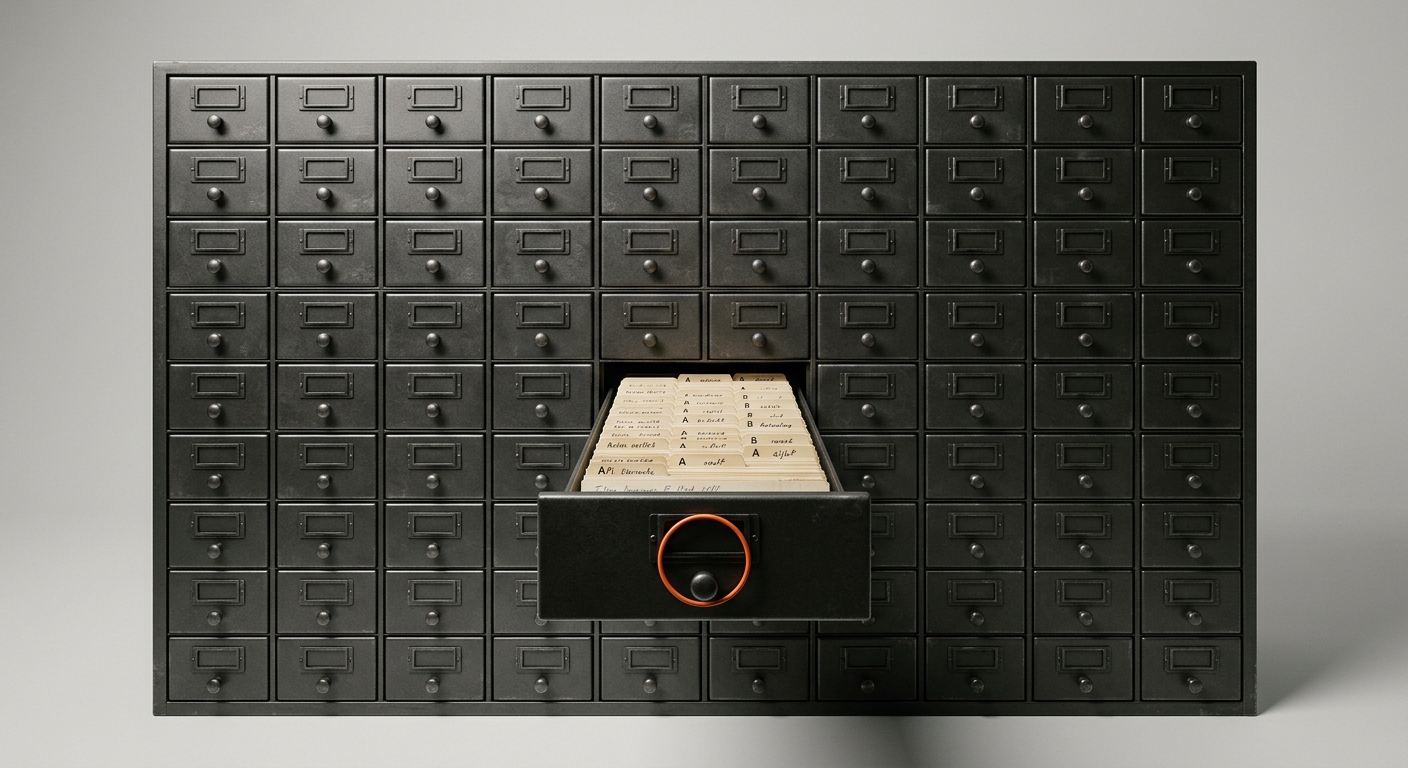
Somewhere in your company right now, three teams report revenue three slightly different ways, a dashboard everyone trusts is quietly built on a table nobody has updated since the analyst who owned it left, and a new hire is asking in a chat channel where to find the customer list, again. None of it is negligence. It is just data, piling up faster than anyone can label it.
Around 55 percent of all enterprise data is dark: collected, stored, and paid for, but never used for analysis or a decision1. Poor data quality costs the average organisation roughly 12.9 million US dollars a year3. And Gartner predicts that through 2026, organisations will abandon 60 percent of AI projects that are not supported by AI-ready data4. The data is there. The problem is that no one can find it, trust it, or explain it.
This is an honest roundup of the real tools that fight that in 2026 - data catalogs and data and analytics governance platforms, what each is genuinely good at, roughly what it costs, and where it stops. No vendor wins every row. And there is one thing almost none of them keep, which is the difference between a tool that indexes where your data lives and a system that remembers how your company actually understands it.
TL;DR
The market splits three ways - cloud-agnostic enterprise catalogs and governance suites (Collibra, Alation, Atlan, Informatica now part of Salesforce, IBM, Ataccama), platform-native catalogs (Microsoft Purview, Snowflake Horizon, Databricks Unity Catalog, Google Dataplex), and open-source or knowledge-graph options (DataHub, OpenMetadata, data.world).
The problem is real and expensive - about 55 percent of enterprise data is dark, poor data quality costs around 12.9 million dollars a year, and most AI projects fail on data readiness, not models1,3,4.
Every catalog is a system of record for metadata - it discovers, documents, and governs. What it rarely keeps is the business reasoning and decision context that leaves when your data steward or lead analyst does.
The durable win - a Company Brain that retains how your company defines and uses its data, plus AI employees that run the routine curation, documentation, and data questions across the systems you already use.
The verdict is not build or buy - buy a catalog, do not build one, and layer memory and action on top.
The Data Nobody Can Find, Trust, or Explain
Most companies do not have a data shortage. They have a data-findability and data-trust problem. The tables exist, the reports exist, the numbers exist, but the knowledge of what they mean, where they came from, and whether to believe them is scattered across people, wikis, and Slack threads.
- Most data is dark - industry estimates put around 55 percent of enterprise data in the dark category, stored but never used, and nearly one in three organisations say 75 percent or more of their data is dark or obsolete1.
- Bad data is expensive - Gartner puts the cost of poor data quality at roughly 12.9 million US dollars per organisation per year, in wasted effort, bad decisions, and rework3.
- AI dies on the data, not the model - Gartner predicts organisations will abandon 60 percent of AI projects through 2026 for lack of AI-ready data, and that successful AI initiatives invest up to four times more in data and analytics foundations than the ones that struggle4,5.
- Governance ambition outruns capability - 88 percent of organisations used AI in at least one function in 2025, but only a small fraction have a comprehensive governance framework behind it6.
- Forgotten data is a security hole - a meaningful share of breaches trace back to forgotten or unclassified storage, because you cannot protect what you have never inventoried2.
- The meaning lives in people - the reasoning behind each metric, the caveats on each dataset, and the reason one report is trusted over another usually sit with one or two long-tenured analysts and a scatter of notes nobody else reads.
Key Data Point
Roughly 55 percent of enterprise data is dark, and poor data quality costs about 12.9 million US dollars per organisation each year1,3. The highest-leverage move is not collecting more data - it is making the data you already have findable, trustworthy, and explainable.
| Metric | Typical benchmark | Why it matters |
|---|---|---|
| Dark data share | ~55% of enterprise data1 | Stored and paid for, never used |
| Cost of poor data quality | ~$12.9M per organisation/year3 | Rework, bad decisions, wasted effort |
| AI projects abandoned | 60% through 2026 (no AI-ready data)4 | The model is rarely the blocker |
| Investment gap | Up to 4x more in data foundations5 | Successful AI orgs fund the basics |
| Governance maturity | 88% use AI, few have a framework6 | Ambition outruns control |
So the question is not whether to put a catalog on the problem. It is which category fits your stack, and whether the tool indexes your data or actually makes it usable.
“Without trust in the data, outputs and decisions of AI models and agents, there is no value from AI.”
- Rita Sallam, Distinguished VP Analyst and Gartner Fellow4
Why 2026 Is Different
Data dictionaries and metadata repositories are not new. What changed is that the estate got too big and too fast-moving to document by hand, the market consolidated hard, and AI turned data governance from a compliance chore into the precondition for every AI project you want to ship.
- Governance became a Gartner category - Gartner published its first Magic Quadrant for Data and Analytics Governance Platforms covering the 2025 cycle, evaluating vendors including Alation, Collibra, Atlan, Informatica, IBM, Ataccama, and data.world, a sign the market has matured into a defined buying decision7.
- The big vendors consolidated - Salesforce acquired Informatica for around 8 billion US dollars, completing the deal in November 2025, explicitly to own the data foundation for agentic AI13,14. The top of the market is now more concentrated.
- Catalogs moved from wikis to active metadata - modern platforms do not just store a static dictionary; they harvest lineage, usage, and quality automatically and push context back into the BI tools and query editors people actually use10.
- Platform-native governance got serious - Snowflake Horizon and Databricks Unity Catalog now offer real discovery, lineage, and access control inside their platforms, and Databricks open-sourced Unity Catalog to make it a cross-platform standard16,17.
- AI-ready data became the gating factor - with Gartner predicting 60 percent of AI projects abandoned for lack of governed data, the catalog stopped being optional for anyone serious about AI4.
- Regulation raised the stakes - the EU AI Act ties high-risk AI to documented, governed training data, and DSGVO already demands you know what personal data you hold and where, making the catalog part of your compliance evidence25,26.
The Index vs Understanding Trap
A catalog that lists 40,000 tables and a clean lineage graph feels like progress. It is not the same as understanding. The value is only realised when someone can find the right dataset, trust it, and explain what it means - and remembers why, so the next person does not relearn it from scratch. A tool that indexes is only half the job.
With that lens in place, here is the honest read on the tools that matter.
What Data Catalog and Governance Tools Actually Do
Before the tool list, it helps to be precise about the jobs these tools do, and where catalog and governance overlap, so you can judge each vendor against the same yardstick rather than a feature grid.
The overlapping disciplines
- Data catalog - the inventory: discover tables, columns, reports, and pipelines, and capture technical and business metadata so people can find and understand what data exists.
- Metadata management - the layer beneath the catalog: lineage, glossaries, and the relationships between assets, increasingly delivered as active metadata that updates itself.
- Data governance - the rules: ownership, policies, quality standards, classifications, and access controls that decide how data may be used, by whom, and for what.
The six things the tools do well
- Discover and inventory - connect to your warehouses, lakes, BI tools, and pipelines to build a complete, searchable inventory of data assets.
- Document and glossary - attach descriptions, business terms, and ownership so a table means the same thing to everyone.
- Trace lineage - show where a number came from, which pipeline produced it, and what breaks downstream if it changes.
- Govern access and policy - classify sensitive data, enforce who can see what, and apply masking and retention rules.
- Monitor quality - profile data, detect anomalies, and flag freshness and completeness problems before they reach a dashboard.
- Certify and report - mark trusted datasets, prove compliance, and give business users a place to find data they can rely on.
System of record vs system of understanding and action
What catalogs give you
- ✓ Discovery - a searchable inventory of every data asset
- ✓ Lineage - where each number came from and what depends on it
- ✓ Governance - ownership, policy, classification, access
- ✓ Quality signals - profiling and anomaly detection
What they rarely keep
- ✗ Definitional reasoning - why revenue is defined exactly this way
- ✗ The caveats - what everyone treats as clean but is not
- ✗ Decision context - which report the board trusts and why
- ✗ The follow-through - running the curation, not just enabling it
The Best AI Data Catalog and Governance Tools in 2026
Here is the honest read on the platforms that matter, grouped by who each serves best, what it is genuinely good at, and where it stops. Pricing is directional because most of these are quote-only and priced on sources, users, or assets under management.
Cloud-agnostic enterprise catalogs and governance suites
1. Collibra
- What it is - A Brussels-founded data intelligence platform combining catalog, governance workflow, data quality, and policy management, with deep support for the ownership, stewardship, and regulatory processes large organisations run11.
- Best for - Regulated enterprises, especially in finance, healthcare, and the public sector, where governance rigour, policy enforcement, and auditability are the priority.
- Pricing - Enterprise, quote-only.
- Where it stops - Powerful but heavy: it rewards organisations with the maturity and headcount to run formal governance, and the reasoning behind decisions still lives in your stewards.
2. Alation
- What it is - One of the original data catalogs, built around search, collaboration, and adoption, and recognised as a Leader in Gartner's 2025 Data and Analytics Governance evaluation9.
- Best for - Organisations that want a catalog analysts and business users will actually use, with strong discovery and a data-culture emphasis.
- Pricing - Enterprise, quote-only.
- Where it stops - Adoption-first design is a strength, but it is still a system of record; curation and the meaning behind the data remain human work.
3. Atlan
- What it is - A modern active-metadata platform with 120-plus native connectors, automatic column-level lineage, and deep integration with Snowflake, Databricks, dbt, and Tableau, backed by a 105 million dollar funding round10.
- Best for - Modern, cloud-native data teams that want a fast, collaborative catalog wired into the tools they already use.
- Pricing - Quote-based.
- Where it stops - Excellent metadata plumbing, but it surfaces context; it does not remember why your company decided what it decided.
4. Informatica (now part of Salesforce)
- What it is - The enterprise data-management incumbent, spanning cloud data governance and catalog, integration, quality, and master data management under the CLAIRE AI engine, now owned by Salesforce after an 8 billion dollar acquisition12,13.
- Best for - Large enterprises that want one vendor across integration, governance, quality, and MDM, and Salesforce-invested organisations post-acquisition.
- Pricing - Enterprise platform, quote-only.
- Where it stops - Breadth and depth come with weight, cost, and services; it is more platform than a mid-sized company needs, and the acquisition adds integration uncertainty.
5. IBM (Knowledge Catalog)
- What it is - IBM's catalog and governance offering within Cloud Pak for Data and the watsonx.data world, recognised as a Leader in the 2025 Gartner Magic Quadrant for Data and Analytics Governance Platforms8.
- Best for - Large IBM-invested enterprises that want governance close to their existing data-and-AI platform and hybrid-cloud estate.
- Pricing - Enterprise, quote-only.
- Where it stops - Strongest inside the IBM stack; standalone it competes with more focused, lighter catalogs.
6. Ataccama ONE
- What it is - A unified platform that leads with data quality and observability alongside catalog and governance, with a strong European footprint and AI-driven quality automation7.
- Best for - Data-quality-driven organisations, particularly in Europe, that want governance and quality in one product rather than two.
- Pricing - Quote-based.
- Where it stops - Quality-led rather than adoption-led; the business-facing discovery experience is lighter than the catalog specialists.
Platform-native catalogs
7. Microsoft Purview
- What it is - Microsoft's unified data catalog, quality, lineage, and compliance suite, and the native governance layer for Microsoft Fabric and OneLake15.
- Best for - Microsoft-centric organisations on Microsoft 365, Azure, and Fabric that want governance already integrated and often already licensed.
- Pricing - Consumption and per-capability, bundled into the Microsoft estate.
- Where it stops - Strongest in the Microsoft world; heterogeneous estates with heavy non-Microsoft sources may outgrow its reach.
8. Databricks Unity Catalog
- What it is - Unified governance for data and AI across the Databricks lakehouse, with real-time column-level lineage across tables, notebooks, dashboards, and ML models, and now open-sourced under Apache 2.016.
- Best for - Databricks-centric teams that want governance for data and AI assets in one place, and anyone wanting an open catalog standard.
- Pricing - Included with the Databricks platform; open-source core is free.
- Where it stops - Deepest inside Databricks; cross-platform coverage of non-Databricks assets is still maturing.
9. Snowflake Horizon Catalog
- What it is - Snowflake's built-in governance layer, with role-based access control, dynamic masking, row access policies, tag-based governance, and zero-copy data sharing native to Snowflake queries17.
- Best for - Snowflake-centric organisations that want governance and discovery without adding a separate tool.
- Pricing - Bundled with Snowflake consumption.
- Where it stops - Built for the Snowflake estate; a multi-platform business still needs cross-tool governance on top.
10. Google Dataplex Universal Catalog
- What it is - Google Cloud's data catalog and governance service, unifying discovery, metadata, quality, and policy across BigQuery and the wider Google Cloud data estate18.
- Best for - Google Cloud and BigQuery-centric organisations that want native governance in their own platform.
- Pricing - Usage-based within Google Cloud.
- Where it stops - Strongest inside Google Cloud; less compelling as a cross-cloud enterprise catalog.
Open-source and knowledge-graph options
11. DataHub (Acryl Data)
- What it is - The leading open-source metadata and context platform, originally built at LinkedIn and open-sourced in 2020, with a 13,000-plus community and a managed DataHub Cloud tier, backed by a 35 million dollar Series B19,20.
- Best for - Engineering-led data teams that want a scalable, extensible, active-metadata platform and are comfortable running open source or paying for the managed cloud.
- Pricing - Open-source core is free to self-host; DataHub Cloud is quote-based.
- Where it stops - Powerful but engineering-heavy to run well; business-user polish trails the commercial catalogs, and it is still a metadata layer, not a memory.
12. OpenMetadata
- What it is - An open-source catalog and metadata-management project with a unified metadata store, connectors, quality, and lineage, driving open standards for metadata21.
- Best for - Teams that want an open, standards-based catalog they can self-host and extend without licence fees.
- Pricing - Free open source; managed options via the sponsoring vendor.
- Where it stops - Self-hosting and maintenance is on you, and enterprise governance workflows are lighter than Collibra or Informatica.
13. data.world
- What it is - A cloud-native catalog built on a knowledge-graph architecture, strong on connecting data, context, and business meaning across assets, and evaluated in Gartner's governance quadrant22.
- Best for - Organisations that want a knowledge-graph approach to linking data and business context, and agile catalog rollouts.
- Pricing - Quote-based.
- Where it stops - The knowledge graph is powerful input, but the graph still models data assets, not the tacit reasoning of your people.
14. General assistants (ChatGPT, Microsoft Copilot) as a baseline
- What they are - General-purpose assistants that can help write a table description, draft a data policy, or reason through a definition question.
- Best for - One-off documentation and analysis tasks alongside a real catalog.
- Pricing - Per-seat subscriptions.
- Where they stop - They are not a catalog. They do not hold your inventory, cannot crawl your warehouse, and have no governed view of lineage, ownership, or quality. Use them as a co-pilot, not as the system.
| Tool | Category | Best for | Pricing (directional) |
|---|---|---|---|
| Collibra | Governance suite | Regulated enterprise governance | Enterprise, quote-only |
| Alation | Data catalog | Adoption and discovery | Enterprise, quote-only |
| Atlan | Active metadata | Modern cloud-native teams | Quote-based |
| Informatica (Salesforce) | Enterprise data management | Governance + quality + MDM | Enterprise, quote-only |
| IBM Knowledge Catalog | Governance suite | IBM-invested enterprises | Enterprise, quote-only |
| Ataccama ONE | Quality + governance | Data-quality-led, European | Quote-based |
| Microsoft Purview | Platform-native | Microsoft and Fabric estates | Consumption, bundled |
| Databricks Unity Catalog | Platform-native | Databricks lakehouse + AI | Bundled; OSS core free |
| Snowflake Horizon | Platform-native | Snowflake estates | Bundled with Snowflake |
| Google Dataplex | Platform-native | Google Cloud / BigQuery | Usage-based |
| DataHub | Open-source metadata | Engineering-led teams | OSS free; cloud quote-based |
| OpenMetadata | Open-source catalog | Self-hosted, standards-based | Free open source |
| data.world | Knowledge-graph catalog | Linked data and context | Quote-based |
Keep the meaning, not just the metadata
Book a 30-minute call. We will find the routine data curation worth automating and the business knowledge worth keeping.

What Every Catalog Misses
Run the tools above side by side and a pattern appears. They differ on price, on breadth, and on how much they automate. They agree on one blind spot: every one of them is a system of record for metadata, and none of them keeps the reasoning that makes the record useful when the person who held it leaves.
- They store metadata, not meaning - a catalog knows a column is called net_revenue. It does not know that net_revenue excludes intercompany sales for good reasons the finance lead can explain and nobody wrote down.
- The context walks out the door - when a long-tenured data steward or lead analyst leaves, the catalog keeps the table names but loses why each metric is defined the way it is and which datasets to distrust. The next hire relearns your data from scratch.
- Documenting is not deciding - a catalog full of descriptions is a reference, not an answer. Someone still has to curate it, resolve conflicting definitions, and answer the actual data question, every day, forever.
- Catalogs rot without curation - the biggest failure mode is staleness. A catalog nobody maintains teaches people to distrust it, and then they go back to asking in Slack.
- Reach stops at the data platform edge - most catalogs are strong inside the data stack but do not touch the email threads, Teams messages, tickets, and documents where the business context around the data actually lives.
- The estate outgrows the data team - with tens of thousands of assets and rising, the volume of curation and data questions grows faster than the data team, so the backlog builds and the catalog drifts out of date.
The Real Constraint
The best data catalog in the world cannot explain why a metric is defined the way it is, remember which report the board trusts, or answer a hundred data questions on its own. In 2026 the differentiator is not the inventory - it is whether your data reasoning is captured and reusable, and whether something actually runs the curation and answers the questions. That is a knowledge-and-execution problem the catalog market mostly leaves to you.
This is the gap a Company Brain, plus AI employees, is built to close.
The Company Brain Approach
A Company Brain is company memory: the people-knowledge, processes, and decisions that make your data usable, captured so they survive turnover and can be acted on. It is the layer above the catalog, and it is what turns a tool that indexes data into an AI employee that runs the work and answers the questions.
What it keeps
- How each metric is defined and why - the reasoning behind net revenue, active customer, or churn, so a number means the same thing across the company and the definition does not drift.
- The caveats on the data - which dataset looks clean but is not, which pipeline is fragile, and which numbers to trust for which decision.
- Decision context - which report the board actually uses, which analysis settled a past debate, and who to ask before you touch a sensitive dataset.
- Ownership and tacit knowledge - the things the long-tenured analyst carries in their head, captured before they leave rather than lost when they do.
- Feedback as it happens - the Company Brain learns from your team's corrections every day, so it stays accurate as definitions, sources, and needs change, rather than rotting like a static catalog.
The AI employees on top
Grounded in that memory, AI employees do the routine work end to end and stay connected to the systems where your data and its context actually live.
- Curate the catalog - draft descriptions, propose glossary terms and classifications, and flag assets whose owner has left, with a steward approving anything that changes a definition or policy.
- Answer data questions - tell a colleague where to find the trusted customer list, which revenue figure to use, and what caveats apply, in Teams or email, instead of a wiki they never open.
- Keep definitions consistent - detect when two teams define the same metric differently and route it to the owner to resolve, so the drift is caught early.
- Prepare for audits - assemble the lineage, ownership, and governance evidence an EU AI Act or DSGVO review needs, from the catalog and the reasoning around it.
- Improve daily - every correction and every answered question feeds back into the Company Brain, so you get more output without more headcount.
| Dimension | Data catalog with AI | Company Brain + AI employees |
|---|---|---|
| What it holds | Metadata, lineage, ownership, policy | The reasoning behind each metric and dataset |
| What it does | Discovers, documents, governs, reports | Runs the curation and answers the questions |
| Reach | Strong inside the data stack | Across warehouse, BI, Teams, email, tickets, docs |
| When your steward leaves | Table names stay, context is lost | The reasoning is retained and reused |
| Over time | The catalog rots unless curated | Improves daily from real feedback |
A Company Brain does not replace your data catalog. It sits above it and keeps the thing the catalog never captured: how your company actually understands its data, and who runs the follow-through.
“Truly autonomous, trustworthy AI agents need the most comprehensive understanding of their data.”
- Steve Fisher, President and Chief Technology Officer, Salesforce14
Build vs Buy vs Layer: The Verdict
The instinct with data governance is to frame it as build versus buy. That is the wrong question. The right frame has three parts, and for most companies the answer is all three, in order.
- Buy the catalog - discovery, lineage, and governance are solved problems. Building your own catalog in a spreadsheet or a homegrown wiki is a false economy; pick a tool from the roundup that fits your stack and connect it.
- Do not build the catalog - a custom metadata platform competes with vendors that have hundreds of connectors, automatic lineage, and years of governance workflow. You will spend more and see less.
- Layer memory and action on top - the part no catalog gives you, the retained data reasoning and the AI employees that run curation and answer questions, is where a custom layer earns its place, because it is specific to how your company defines, trusts, and uses its data.
| Your situation | Sensible shortlist | Why |
|---|---|---|
| Regulated, governance-heavy enterprise | Collibra, Informatica, IBM | Deep policy, stewardship, and audit strength |
| Modern cloud-native data team | Atlan, Alation, data.world | Active metadata, adoption, fast rollout |
| Mostly one platform | Purview, Snowflake Horizon, Unity Catalog, Dataplex | Native governance, already integrated |
| Engineering-led, open-source preference | DataHub, OpenMetadata | Scalable, extensible, no licence lock-in |
| Data quality is the pain | Ataccama, Informatica | Quality and observability lead the product |
| Meaning walks out when people leave | Company Brain + AI employees | Keeps the reasoning and runs the routine work |
Buyer’s Checklist
- Decide whether your real problem is discovery, governance, quality, or a single-platform estate, and shortlist that category
- Confirm the catalog connects natively to your warehouses, lakes, BI tools, and pipelines
- Ask who will curate the catalog after launch, and how it stays current, not just how it fills up
- Map which of your systems it reaches natively versus with custom integration
- Model total cost including licence, implementation, and the internal effort to curate and maintain
- Test it on your top 50 assets by importance with your real data before you commit
- Ask what happens to the definitional reasoning when your data steward leaves
- Confirm DSGVO handling, data residency, and EU AI Act evidence support
Single suite vs best-of-breed plus a layer
Single broad suite
- ✓ One vendor - catalog, governance, and quality in one place
- ✓ Simpler governance - one contract, one data model
- ✓ Audit strength - strong for regulatory evidence
- ✗ Heavy and costly - long rollout, enterprise pricing
- ✗ Still a record - it does not keep your reasoning
Best-of-breed plus a layer
- ✓ Right tool per job - specialist catalog and quality
- ✓ Faster to value - quick wins on discovery and trust
- ✓ Memory and action - a layer keeps reasoning and runs work
- ✗ More integrations - more tools to connect and govern
- ✗ Needs discipline - only pays off if you curate and act
The 90-Day Deployment Playbook
Most catalog projects stall because they try to document everything at once and then nobody curates it. A focused 90-day plan takes one high-value data domain from baseline to a living, trusted catalog, then expands. Here is the shape.
Phase 1: Discover and baseline (Weeks 1-4)
- Week 1: Connect discovery - stand up a catalog and connect it to your warehouse, BI tools, and pipelines so you see the real inventory and lineage, including the assets nobody documented.
- Week 2: Baseline the numbers - measure curation coverage, the number of undocumented critical assets, and time-to-find for a typical data question. This is your before picture.
- Week 3: Capture the reasoning - sit with your data lead and top analysts to document how the most important metrics are defined and which datasets to trust or distrust. This seeds the Company Brain.
- Week 4: Set guardrails - define what an AI employee may curate automatically, what needs steward approval, and what always goes to a human, plus the AI disclosure notice.
Phase 2: Build and test (Weeks 5-8)
- Week 5-6: Connect and ground - wire an AI employee to your catalog and data platform, and ground it in the captured reasoning. It runs alongside your team, not in front of the business yet.
- Week 7: Shadow mode - the AI proposes descriptions, classifications, and answers to data questions on real assets, and your stewards approve or correct. Every correction feeds the Company Brain.
- Week 8: Refine - tune the edge cases, finalise the approval checkpoints, and set the go-live scope for the first data domain.
Phase 3: Run and measure (Weeks 9-12)
- Week 9: Soft launch - let the AI curate and answer data questions for one domain, with a steward on call for anything that changes a definition.
- Week 10-11: Full rollout - expand to the whole domain, open the data-question channel to the business, and add consistency checks across teams.
- Week 12: Measure and expand - compare curation coverage, time-to-find, and trusted-dataset counts against the week-1 baseline, then pick the next domain.
Data Governance Readiness Checklist
- You can name your top 3 data domains where findability and trust hurt most
- Your warehouse, BI tools, and pipelines can feed a catalog
- You have identified who owns curation after the catalog goes live
- Your data platform exposes APIs for metadata and lineage
- Your data lead and top analysts can spend time capturing metric reasoning
- Leadership backs a 90-day pilot with a findability and trust target
- You have decided your autonomy and approval guardrails for AI curation
- DSGVO, data residency, and EU AI Act questions are cleared before go-live
How Superkind Fits
Superkind builds AI employees grounded in a Company Brain. In data catalog and governance, that means AI employees that run the routine curation, documentation, consistency checks, and data questions end to end, connected to the systems you already use, and a company memory that keeps how your company defines and trusts its data even when people leave.
- Works on top of your catalog - it sits alongside your data catalog and data platform, no rip-and-replace of the system of record you already run.
- Grounded in your Company Brain - answers and actions reflect how your company defines its metrics and which data it trusts, not a generic model or a stale wiki.
- Connected to your real systems - it acts across your warehouse, BI tools, catalog, SharePoint, Teams, and email through API connections.
- Runs the work, not just the reference - it drafts documentation, proposes classifications, resolves definition drift, and answers data questions, with steward approval for anything that changes a definition or policy.
- Teams and email native - colleagues get the trusted answer where they already work, not in a catalog they never open.
- Keeps the knowledge - the definitional reasoning your data lead holds is captured as the work happens, so it survives turnover and retirements.
- Improves every day - your team's feedback and every answered question make it more accurate over time, so you get more output without more headcount.
- Live in weeks - a first curation-and-answers loop typically reaches production in 8 to 12 weeks, running one domain before it expands.
| Approach | Typical data catalog | Superkind |
|---|---|---|
| Primary job | Discover, document, govern | Run the curation and answer the questions |
| Grounding | Metadata and lineage | Company Brain kept current by daily feedback |
| Reach | Strong inside the data stack | Across warehouse, BI, catalog, Teams, email, docs |
| Knowledge retention | Metadata kept, reasoning lost | Metric and dataset reasoning retained through turnover |
| Model | Platform or per-user licensing | AI employees tied to outcomes |
Superkind
Pros
- ✓ Runs the work - curation and data answers, not just a catalog
- ✓ Grounded in your knowledge - not a generic assistant
- ✓ Acts across real systems - warehouse, BI, catalog, Teams, email
- ✓ Keeps the reasoning - survives turnover and retirements
- ✓ No rip-and-replace - works on top of your existing catalog
Cons
- ✗ Not a self-serve product - it is built with your team
- ✗ Needs process access - we map how you really define and trust data
- ✗ Not a system of record - it complements your catalog, not replaces it
- ✗ Overkill at tiny scale - a native catalog may be enough for a small estate
EU AI Act, DSGVO and Data Residency
For a German or European buyer, compliance belongs on the shortlist, not the afterthought pile. The good news is that the catalog itself is usually low risk under the EU AI Act, but the data underneath it is exactly what the Act and DSGVO care about, and the catalog is your evidence.
EU AI Act
- Article 10 data governance - high-risk AI systems must be built on data that is relevant, representative, and appropriately governed, so documented lineage, quality, and ownership from your catalog become part of your compliance evidence25.
- Article 50 transparency - when an AI system interacts with people, they must be told. If an AI assistant answers data questions for employees, that should be clear26.
- Mostly low risk to run - AI used to curate metadata, suggest descriptions, and answer internal data questions generally sits outside the high-risk categories, so the heavy conformity obligations usually do not apply.
- The catalog is the audit trail - the fastest way to prove your AI runs on governed data is a catalog that shows where each dataset came from, who owns it, and how it is classified.
DSGVO and data residency
- Know what personal data you hold - DSGVO requires you to know what personal data exists and where, which is exactly the discovery and classification a catalog provides.
- Keep data where it belongs - prefer tools that process within your infrastructure or a compliant EU boundary, with encrypted connections and no unnecessary data transfer.
- Residency and sovereignty matter - for many DACH organisations, where the catalog and any AI processing runs is a procurement question in its own right, not a footnote.
- Works council involvement - where AI touches staff-related data, the Betriebsrat is typically involved in German companies. Bring them in early, not after the pilot.
- Audit and access control - every AI action that changes a definition, classification, or access should be logged, and access should follow least privilege.
Practical Compliance Stance
Use the catalog as your data-governance evidence, disclose the AI to employees, keep a human on every change to a definition or policy, prefer EU data residency, involve the works council early, and log every action. That posture satisfies the EU AI Act's data-governance and transparency duties, respects DSGVO, and happens to be good data governance regardless of the rules.
Frequently Asked Questions
There is no single best tool, because the right choice depends on your data stack and your reason for buying. For a broad, cloud-agnostic enterprise catalog with strong governance workflows, Collibra, Alation, and Atlan lead. If you live inside one platform, the native catalog is usually the pragmatic pick: Microsoft Purview for the Microsoft and Fabric world, Snowflake Horizon for Snowflake, Databricks Unity Catalog for the lakehouse. Informatica, now part of Salesforce, and IBM anchor the heavy enterprise data-management end, and DataHub and OpenMetadata are the credible open-source options. The more useful question is not which system of record for metadata you buy, but whether the business meaning and decision context survive when your data steward leaves, and whether anything actually acts on the governed data rather than just displaying it.
A data catalog is an inventory of your data assets: it discovers tables, columns, reports, and pipelines, captures technical and business metadata, and lets people search for and understand what data exists and where it lives. Data governance is the broader discipline of policies, ownership, quality standards, and access rules that decide how that data may be used. In practice the two have merged: modern platforms like Collibra, Alation, Atlan, and Microsoft Purview combine catalog, lineage, quality, and policy in one product, which is why Gartner now evaluates them together as data and analytics governance platforms rather than as standalone catalogs.
Most enterprise catalogs are quote-only, priced on the number of data sources, users, or data assets under management, so public list prices are rare. As a rough guide, mid-market catalog deployments run into the low-to-mid tens of thousands of euros a year, and enterprise Collibra, Alation, Informatica, or IBM commitments are six-figure platform investments before implementation services. Platform-native catalogs like Snowflake Horizon and Databricks Unity Catalog are largely bundled into what you already pay for the platform. Open-source options like DataHub and OpenMetadata are free to self-host, with paid managed cloud tiers. The cost that matters most is not the licence but the internal effort to populate, curate, and keep the catalog current, which is where most deployments quietly stall.
A large majority. Industry estimates put around 55 percent of all enterprise data in the dark category, meaning it is collected and stored but never used for analysis or decisions, and nearly one in three organisations report that 75 percent or more of their stored data is dark or obsolete. The cost is both direct and hidden: companies pay to store data they never touch, and they cannot govern, secure, or extract value from what they have never inventoried. A catalog is the first step to turning dark data into usable data, but only if someone actually curates and acts on what it finds.
Yes. Salesforce signed a definitive agreement to acquire Informatica in May 2025 for around 8 billion US dollars in equity value and completed the acquisition in November 2025. The stated purpose was to strengthen the data foundation, metadata management, catalog, governance, quality, and master data management, that trustworthy and agentic AI depends on. For buyers, the practical effect is that Informatica is now part of the Salesforce world, which matters if you are already invested in Salesforce, and consolidates the top of the enterprise data-management market further after years of catalog and governance vendors merging.
Yes, and increasingly the default one for Microsoft-centric organisations. Microsoft Purview combines a unified data catalog, data quality, lineage, and data-loss-prevention and compliance tooling, and it is the native governance layer for Microsoft Fabric and OneLake. If your estate is mostly Microsoft 365, Azure, and Fabric, Purview is the pragmatic choice because it is already integrated and often already licensed. Its limits show up in heterogeneous estates with heavy non-Microsoft sources, where a cloud-agnostic catalog like Atlan, Alation, or Collibra, or an open-source platform like DataHub, may cover more of your stack.
Active metadata is the idea that a catalog should not be a static, manually maintained inventory but a continuously updated, machine-readable layer that flows back into the tools your team already uses. Instead of people filling in a data wiki nobody reads, active metadata platforms like Atlan and DataHub automatically harvest lineage, usage, and quality signals and push context into BI tools, notebooks, and query editors. It matters because the biggest failure mode of traditional catalogs is staleness: a catalog that is out of date is worse than none, because it teaches people to distrust it. Active metadata is also the substrate AI needs to understand your data.
For routine curation, increasingly yes. Suggesting descriptions and business glossary terms, proposing data classifications, flagging tables whose owner has left, detecting quality anomalies, and drafting documentation are repeatable tasks a connected AI can execute against your catalog and data platform with the right approvals. The safe pattern is action with oversight: the AI drafts and proposes, a data steward approves anything that changes a policy or a definition, and everything is logged. That keeps the tedious curation volume off your data team while keeping a human on the decisions that carry governance weight. The harder part, the reasoning about why a metric is defined the way it is, is exactly what a Company Brain keeps.
A data catalog is a system of record for metadata: it tells you a table exists, what its columns mean, where it came from, and who owns it. A Company Brain keeps the reasoning that makes that data usable: why revenue is defined the way it is, which caveats apply to a dataset everyone treats as clean, which report the board actually trusts and why, and the tacit knowledge the long-tenured analyst carries in their head. The catalog tells you where the data lives; the Company Brain remembers how your company actually understands and uses it, and an AI employee acts on both. One is an index, the other is institutional memory.
Often the native catalog is enough to start. Snowflake Horizon and Databricks Unity Catalog provide discovery, lineage, access control, and governance for assets inside their own platforms, and if nearly all your data lives there, buying a separate cross-platform catalog can be premature. The case for a standalone catalog grows when your data spans multiple clouds and tools, when business users outside the data platform need a friendly place to find and trust data, or when you need governance and a business glossary that reaches beyond one vendor. Many companies start native and add a cross-platform catalog only when the estate genuinely fragments.
The catalog itself is usually low risk, but the AI Act raises the stakes on the data underneath it. Article 10 requires that high-risk AI systems are trained and operated on data that is relevant, representative, and appropriately governed, which makes documented data lineage, quality, and governance, exactly what a catalog provides, part of your compliance evidence. Article 50 requires transparency when an AI system interacts with people, relevant if an AI assistant answers data questions for employees. For most internal cataloguing and curation the heavy high-risk obligations do not apply, but the catalog becomes the audit trail that proves your AI runs on governed data.
Track curation coverage (the share of important assets with an owner, description, and classification), search-to-find success, the freshness of metadata, the number of certified or trusted datasets, and time-to-find for a typical data question, each measured before and after. Pair them with a knowledge metric most teams ignore: how much of the reasoning behind key metrics and datasets is written down and reusable versus locked in one or two analysts. The outcome that matters is that people can find and trust the right data quickly, that governance is provable, and that the catalog does not rot the moment the data steward who built it moves on, not the raw count of assets a vendor demo shows.
Related Articles
- The AI Employee for Master Data Management
- The Best AI Tools for Compliance and Audit Management
- The Best AI Tools for Process Mining
- RAG vs Fine-Tuning vs a Company Brain
- Glean vs Company Brain: Enterprise Search vs Company Memory
- AI Agents for the Mittelstand
Sources
- Komprise - What Is Dark Data? Risks, Costs and Hidden Value (share of dark enterprise data)
- DataStackHub - Dark Data Statistics for 2025-2026 (obsolete data, breaches from forgotten storage)
- Gartner - Data Quality: Why It Matters (poor data quality costs ~$12.9M per year)
- Gartner - Lack of AI-Ready Data Puts AI Projects at Risk (Rita Sallam; 60% of AI projects abandoned)
- Gartner - Organizations with Successful AI Initiatives Invest Up to Four Times More in Data and Analytics Foundations (April 2026)
- Knostic - AI Governance Statistics 2025 (88% use AI, share with a governance framework)
- Ataccama - The 2025 Gartner Magic Quadrant for Data and Analytics Governance Platforms (inaugural, vendors evaluated)
- IBM - Recognized as a Leader in the 2025 Gartner Magic Quadrant for Data and Analytics Governance Platforms
- Alation - Gartner Magic Quadrant for Data and Analytics Governance Platforms
- Atlan - Atlan Raises $105M to Power Data and AI Governance
- Collibra - Data Intelligence Platform
- Informatica - Complimentary 2025 Gartner Magic Quadrant for Data and Analytics Governance Platforms (CLAIRE, CDGC)
- Salesforce - Completes Acquisition of Informatica (November 2025)
- Salesforce - Signs Definitive Agreement to Acquire Informatica (May 2025; Steve Fisher quote)
- Microsoft Learn - Microsoft Purview Unified Catalog and Data Quality
- Databricks - Open Sourcing Unity Catalog (open catalog for data and AI)
- Snowflake - Snowflake Horizon vs. Databricks Unity Catalog: The Technical Comparison
- Google Cloud - Dataplex Universal Catalog
- DataHub - Raises $35M Series B to Enable AI Data Management (Bessemer; total funding)
- DataHub - The Context Platform for your Data and AI Stack (open source, LinkedIn origin, community)
- OpenMetadata - Open Source Data Catalog and Metadata Management
- data.world - Data Catalog Platform
- Board.org - 2025 State of Enterprise Data Governance Report
- Precisely and Drexel LeBow - 2026 State of Data Integrity and AI Readiness
- EU AI Act - Article 10: Data and Data Governance
- EU AI Act - Article 50: Transparency Obligations
Ready to make your governed data actually usable?
Book a 30-minute call with Henri. We will find the routine data curation worth automating and the business knowledge worth keeping - no commitment, no sales pitch.
Book a Demo →