
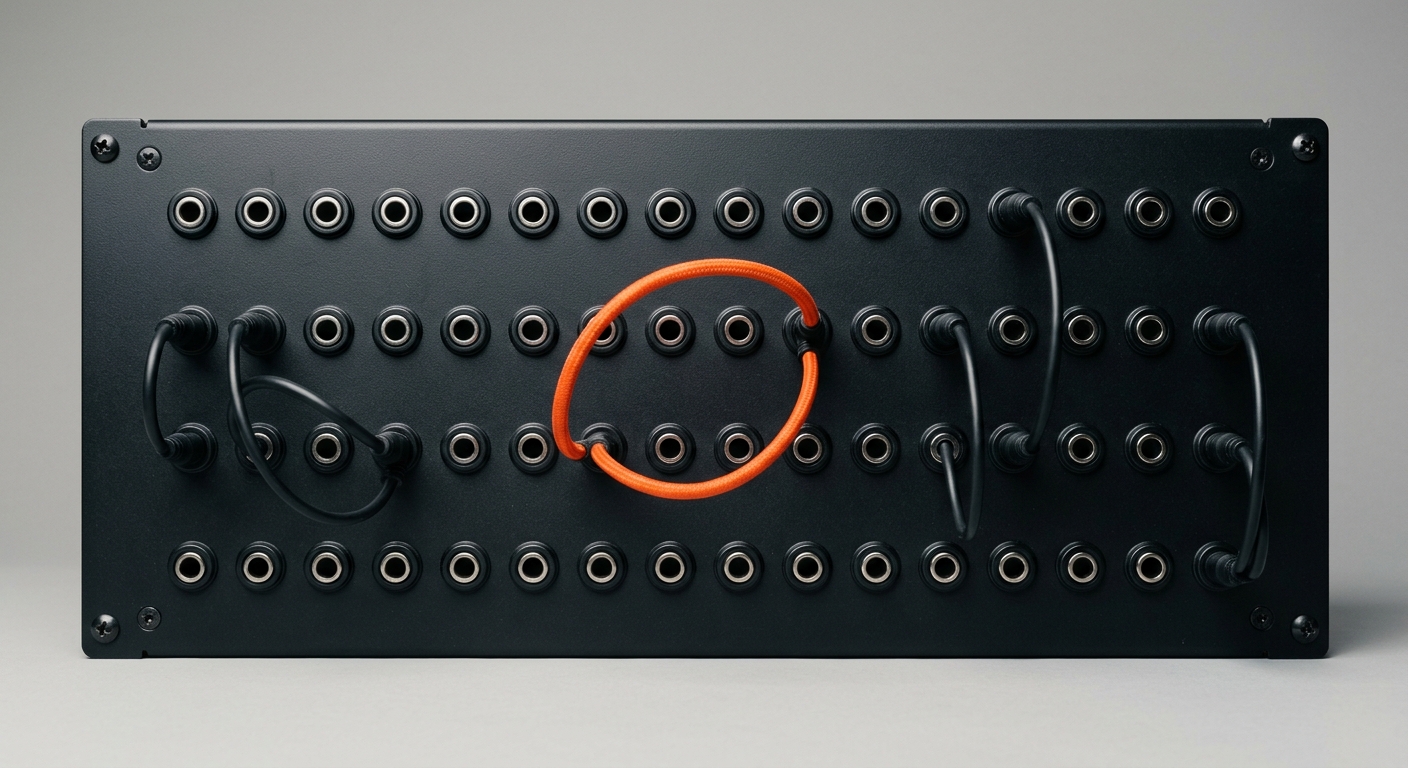
A key account manager hands in her notice. The handover checklist gets filled in: open deals in the CRM, login credentials, where the contracts live on SharePoint, the status of every active project. Two weeks later she is gone, and on paper everything transferred cleanly. Then the largest customer goes quiet. The supplier who always squeezed in the rush order now quotes standard lead times. A cross-department project that used to move in a single phone call now takes three meetings. Nothing on the checklist explains why.
What left with her was not documented process knowledge. It was relational capital - the trust, the history, and the informal network of who to call that she had built over twelve years. It is the hardest knowledge to replace and the most invisible on any handover. And with US voluntary turnover costing employers roughly $1 trillion a year2 and a retirement wave now hitting German industry, more of it is walking out the door than ever.
This piece is for the operations leader, HR director, or Geschaeftsfuehrer who has felt this loss and never had a name for it. We will define relational capital precisely, show why it evades every standard knowledge-management effort, quantify what it costs, and explain how a Company Brain that remembers relationships - not just procedures - is the antidote.
TL;DR
Relational capital is the value stored in an employee’s working relationships - trust with customers and suppliers, the who-to-call network, and the history behind every account. It is one of four kinds of knowledge that leave when someone resigns1.
It is invisible on handover checklists because it was never written down. Panopto found 42 percent of institutional knowledge is unique to one person and shared with nobody else4.
It is expensive. Replacing an employee costs one-half to two times their salary2, and the relationship reset is the part those numbers never capture.
It cannot be fully documented in a two-week handover - experience-based knowledge resists capture in text or oral form7.
A Company Brain captures the relationships, context, and reasoning as work happens, so they survive turnover and AI employees can act on them.
What Relational Capital Actually Is
When a company loses an employee, it loses more than a pair of hands. Knowledge-loss researchers have long argued that what leaves splits into distinct types, and the one nobody plans for is relational. Relational capital is the value that lives in a person’s working relationships and social ties, both outside and inside the company.
- Trust built over time - the confidence a customer or supplier places in a specific person, earned through years of reliable dealings and impossible to transfer by memo.
- The who-to-call network - the mental map of exactly which person at a supplier, regulator, partner, or internal department gets things done, and how to approach them.
- The history behind each relationship - the concessions once made, the disputes resolved, the promises kept, the context that explains why an account behaves the way it does.
- Unwritten context - the reasons a customer prefers one contact channel, why a supplier gives one buyer priority, what a partner will and will not tolerate.
- Social standing - the personal credibility that lets someone pick up the phone and get a yes where a stranger would get a form.
This is different from documented process knowledge, and the distinction matters. A process can be written into a standard operating procedure. A relationship cannot. Academic work on relational social capital shows that the decision to share the knowledge behind a relationship resides with the individual who holds it, which makes it structurally hard to extract8.
The Core Distinction
Process knowledge answers “how is this task done?” Relational capital answers “who do I call, why do they trust us, and what is the history that makes this relationship work?” The first fits on a wiki page. The second lives in a person and their network - which is exactly why it is the part that disappears.
| Dimension | Process Knowledge | Relational Capital |
|---|---|---|
| Where it lives | Documents, systems, SOPs | In a person and their network |
| Form | Explicit, writable | Tacit, experience-based |
| Transfer method | Documentation, training | Time, trust, shared history |
| Time to rebuild | Days to weeks | Months to years, sometimes never |
| Visible on handover? | Usually yes | Almost never |
| Recovers after departure? | Fully | Partially, if at all |
Once you see the split, the pattern behind so many painful resignations becomes obvious: the process transferred fine, and the relationships reset to zero.
Why It Never Shows Up on a Handover Checklist
The standard offboarding process is built to capture assets, not relationships. It works well for the things that can be listed and badly for the things that matter most. The result is a systematic blind spot.
- Checklists capture the transferable - accounts, passwords, file locations, and open tasks are easy to hand over because they already exist in a system. Relationships do not.
- The knowledge is unique to one head - Panopto’s workplace study found 42 percent of institutional knowledge is held by a single employee and shared with no colleague, meaning when they leave, coworkers cannot do 42 percent of that job4.
- Exit interviews come too late - by the time notice is given, the departing person is disengaging, and nobody can compress twelve years of context into a two-week window.
- People do not know what they know - much relational knowledge is tacit and automatic. The account manager does not think to write down that a customer’s procurement lead responds better to a call before 9am, because to her it is obvious.
- There is no place to put it - even a diligent employee who wants to hand over relationship context often has nowhere structured to record it, so it goes into a hurried email or a shadowing session and evaporates.
- Organisations underestimate the gap - APQC found that 84 percent of senior leaders are concerned about knowledge loss from departures, yet only 8 percent of organisations consistently capture it5.
The Awareness-Action Gap
Eighty-four percent of leaders worry about knowledge walking out the door. Eight percent do anything systematic about it5. That 76-point gap is where relational capital quietly bleeds out of companies, one resignation at a time.
“By the time you realize that valuable knowledge is walking out the door, it becomes much harder to capture it.”
- Dorothy Leonard-Barton, Professor of Business Administration Emerita at Harvard Business School7
The uncomfortable truth is that the moment you notice relational capital is leaving is the moment it is already almost gone. Which is why the answer cannot be a better exit interview - it has to be continuous capture that runs long before anyone resigns.
What Relational Capital Loss Actually Costs
Turnover cost models are good at the visible expenses and blind to the relational ones. They count recruiting and ramp-up, then stop - which means the real cost of a departure is routinely understated.
The documented costs
- One-half to two times salary - Gallup’s estimate for the direct cost of replacing an employee, depending on role and seniority2.
- Roughly $1 trillion a year - the total US bill for voluntary turnover across recruiting, hiring, onboarding, and lost productivity2.
- Six to nine months of salary - SHRM’s benchmark for the cost to replace a single employee once soft costs are included3.
- 200 percent for leaders - senior and specialised roles sit at the top of the range because their relationships and judgement take longest to replace2.
- 75 percent preventable - most departures are avoidable, which means most of this cost is a choice, not a given11.
The hidden relational costs
- The relationship reset - a customer or supplier relationship that took years to build restarts at zero with the successor, and revenue or favourable terms can leak away during the rebuild.
- Lost external knowledge flows - Massingham’s knowledge-loss research describes exactly this: lost relational capital produces disrupted external knowledge flows that degrade how the company senses and responds to its market1.
- Delay and rework - Panopto found employees lose 5.3 hours a week waiting for information or recreating knowledge that already existed, and 66 percent of those delays last up to a week4.
- Frustration and follow-on churn - 81 percent of employees report frustration when they cannot get the information they need, and a stalled team is a team more likely to lose its next member too4.
- Compounding across departures - each resignation removes a slice of the network, and the losses interact rather than simply adding up14.
| Cost Type | Typical Figure | Captured in Standard Models? | Source |
|---|---|---|---|
| Direct replacement | 0.5x to 2x salary | Yes | Gallup2 |
| Full replacement (soft costs) | 6-9 months salary | Sometimes | SHRM3 |
| Weekly knowledge-gap loss | 5.3 hours per employee | Rarely | Panopto4 |
| Relationship reset | Months to years of rebuild | No | Massingham1 |
| Disrupted external flows | Hard to quantify, often largest | No | Massingham1 |
Why the Numbers Understate Reality
A finance team can put a euro figure on recruiting and onboarding because those costs generate invoices. The relationship reset generates no invoice - it shows up as a slow decline in an account, a supplier who no longer bends the rules, a deal that quietly does not renew. That is why relational capital loss is both the largest cost of turnover and the one least likely to appear in any spreadsheet.
The Four Kinds of Knowledge That Leave
To see why relational capital is the hardest to replace, it helps to separate it from the other knowledge that departs with an employee. Peter Massingham’s research on knowledge loss identifies four distinct types, each degrading a different organisational capability1.
| Capital Type | What It Is | What Its Loss Damages | Replaceability |
|---|---|---|---|
| Human capital | Individual skills and expertise | Output and productivity | Hire and train |
| Social capital | Internal networks and collaboration | Organisational memory | Slow to rebuild |
| Structural capital | Documented processes and systems | Organisational learning | Recoverable from records |
| Relational capital | External and cross-boundary relationships | Knowledge flows with customers, suppliers, partners | Hardest - depends on trust and time |
- Human capital loss is the one everyone sees - you know you lost a skilled welder or a seasoned controller, and you can post a job to replace the skill.
- Structural capital is the most recoverable - if your processes were written down, they survive the departure in your systems.
- Social capital erodes organisational memory - the internal ties that made collaboration fast fray when a well-connected person leaves.
- Relational capital is uniquely fragile - because it depends on trust and shared history with parties outside your control, you cannot hire it back or read it off a server.
- The four interact - losing a person usually drains several capitals at once, and the review literature stresses that these losses compound rather than stay isolated14.
“In many cases, institutional knowledge lives in people, not systems: the engineer who understands why a system was designed the way it was, the plant manager who can spot a production issue before the data reveals it, or the account leader who knows the history behind a client decision.”
- Eyal Cahana, Knowledge Capital Practice Lead at Deloitte Consulting6
Cahana’s three examples are all relational capital wearing different clothes: the reasoning behind a design, the pattern-sense behind an intervention, and the history behind a client decision. None of them fit on a handover form.
Find out where your relational capital is at risk
Book a 30-minute call. We will map the relationships that depend on a single person.
Why This Is a 2026 Problem, Not a Someday Problem
Relational capital loss has always existed, but three forces are converging to make it acute right now, and they hit the German Mittelstand harder than most.
- The retirement wave has arrived - APQC reports organisations expect an average of 51 percent of their workforce to retire or leave within five years, and Deloitte projects $6.9 trillion to $9.6 trillion in lost economic output as more than 30 million people reach 65 in four years5,6.
- The German skills shortage compounds it - the IW projects a shortage of 768,000 skilled workers in Germany by 2028, so every departing relationship-holder is harder to replace than before9.
- Voluntary turnover is expensive and often self-inflicted - with 75 percent of departures preventable and replacement running to twice salary, the churn draining relational capital is largely a management problem, not a market one2,11.
- People are leaving shortage occupations entirely - Bertelsmann found roughly 191,000 people left occupations already suffering shortages between 2022 and 2023, taking their relationships with them10.
- The demographic base is shrinking - the OECD projects Germany’s working-age population will fall by 3.9 million by 2030, thinning the pool that could rebuild lost relationships12.
The Mittelstand Exposure
Germany’s hidden champions built their edge on decades-long customer and supplier relationships, often held by a handful of long-tenured people. That is a strength until those people retire in the same window - and the DIHK reports skills bottlenecks persisting across the economy, with no quick backfill available13.
| Force | Data Point | Source |
|---|---|---|
| Retirement / departure wave | 51% of workforce expected to leave within 5 years | APQC5 |
| Knowledge exodus value | $6.9-9.6 trillion in lost output | Deloitte6 |
| German skills gap | 768,000 workers short by 2028 | IW9 |
| Working-age decline | -3.9 million by 2030 | OECD12 |
| Preventable turnover | 75% of departures avoidable | Work Institute11 |
The Five Relationships That Walk Out the Door
Relational capital is not one thing. When a long-tenured person leaves, at least five distinct relationships can reset at once. Naming them makes the risk concrete - and shows where a Company Brain has to hold context.
1. The key customer relationship
- What leaves - years of trust, the memory of past issues resolved, knowledge of who really decides at the customer, and the informal give-and-take that keeps the account loyal.
- How it fails - the successor inherits a CRM record of transactions but not the reasoning or rapport, and the customer starts shopping around because the relationship feels new and untested.
- Real scenario - a Mittelstand supplier loses the account manager who knew that a major customer tolerated price rises only if flagged a quarter ahead; the successor raises prices without warning and the contract goes out to tender.
2. The supplier and procurement relationship
- What leaves - the goodwill that earns priority on scarce parts, the personal contact who bends a lead time, and the history of favours traded in both directions.
- How it fails - the new buyer is treated as a stranger and drops to the back of the queue, so rush orders that used to take days now take weeks.
- Real scenario - during a shortage, the supplier prioritises the buyers they trust; the company whose trusted buyer just retired waits in line and misses a delivery commitment to its own customer.
3. The internal who-to-call network
- What leaves - the map of exactly who in finance, IT, legal, or operations can unblock a specific problem quickly, and the personal credit that makes them say yes.
- How it fails - work that used to move in one phone call now routes through formal channels and multiple meetings, and cross-department cycle times quietly lengthen.
- Real scenario - a project that always cleared a compliance check in a day because two colleagues trusted each other now waits in a queue, because the connector who greased it has gone.
4. The regulator, partner, and institutional contacts
- What leaves - the named contact at a regulator, certification body, bank, or channel partner who answers quickly and interprets grey areas helpfully.
- How it fails - queries that used to get a fast, informal answer now go through official intake, adding delay and uncertainty to audits, approvals, and financing.
- Real scenario - a certification renewal that always went smoothly because a long-standing contact knew the company’s history now triggers extra scrutiny under a new, unfamiliar reviewer.
5. The reasoning behind past decisions
- What leaves - the why behind choices already made: why a clause was negotiated a certain way, why a customer is handled with kid gloves, why a supplier was dropped years ago.
- How it fails - the company repeats a mistake it already learned from, or reopens a resolved issue, because only the departed person knew the history.
- Real scenario - a team re-approaches a supplier that was dropped for quality problems nobody documented, because the person who made the call - and knew the reason - is gone.
Relationship Held by a Person vs Held by the Company
Held Only by a Person
- ✗ Resets on departure - trust and history restart at zero
- ✗ Invisible to the team - nobody else knows the context
- ✗ No audit trail - the reasoning behind decisions is lost
- ✗ Single point of failure - one resignation breaks the chain
Held by the Company Brain
- ✓ Survives departure - context stays when the person leaves
- ✓ Shared across the team - the successor inherits history
- ✓ Reasoning preserved - the why is recorded, not just the what
- ✓ No single point of failure - the relationship is backed up
The Antidote: A Company Brain That Remembers Relationships
If relational capital cannot be fully documented in an exit interview, the answer is to stop relying on exit interviews. A Company Brain captures the relationships, context, and reasoning as work happens, so the knowledge accumulates in the company instead of only in a person’s head.
What a Company Brain is
- A living company memory - a shared record of the people-knowledge, processes, and data that make your company work, built from how work actually flows.
- Connected to your real systems - it draws on email, Teams, SharePoint, CRM, and ERP, where the relationships and decisions already live, rather than asking people to fill in a separate tool.
- Focused on the why, not just the what - it records who dealt with whom, what was agreed, and the reasoning behind it, which is the part that normally leaves.
- Owned by the company - because it sits in the organisation and not in an individual, it stays when someone resigns or retires.
- A foundation for AI employees - once the context exists, AI employees can act on it, drafting, preparing, and routing with the full history in view.
How it captures relational capital in practice
- Continuous, not last-minute - context builds every day in the background, so there is no two-week scramble when notice is given.
- Relationship-aware - it connects each customer, supplier, and partner to the history of interactions and the reasoning behind past decisions.
- Searchable by the successor - a new account manager can ask what was agreed with a customer two years ago and why, and get an answer instead of a shrug.
- Feedback-driven - it learns the company through daily use and correction, sharpening its picture of each relationship over time.
- Bounded and governed - it works within your infrastructure and access controls, so relationship data stays inside your governance framework.
The Shift in One Sentence
Instead of hoping a departing employee remembers to hand over twelve years of context in two weeks, the context is already in the Company Brain - captured as the work happened, available to whoever holds the relationship next.
| Approach | Traditional Handover | Company Brain |
|---|---|---|
| When capture happens | In the two weeks before departure | Continuously, as work happens |
| What is captured | Tasks, logins, file locations | Relationships, context, reasoning |
| Depends on memory? | Yes - what the person recalls | No - drawn from real records |
| Available to successor | A document, quickly outdated | A searchable, living history |
| Acted on by AI employees | No | Yes - with full context |
This does not replace the human relationship. A person still holds the account and picks up the phone. What changes is that the knowledge behind the relationship no longer belongs to one person alone.
How to Capture Relational Capital Before It Leaves
You do not need to boil the ocean. Capturing relational capital starts with finding the relationships that would hurt most if they reset, then building continuous memory around them.
- Map single points of failure - list the customer accounts, supplier relationships, and internal connections that depend entirely on one person. This is your relational risk register.
- Rank by damage, not by size - a mid-sized account held by a retiring veteran can be riskier than a large one held by a whole team. Weight by how exposed the relationship is, not just its revenue.
- Connect the systems where relationships live - email, CRM, Teams, and shared drives already hold most of the interaction history. Bring them into one company memory instead of leaving them in silos.
- Capture the why, not just the what - record the reasoning behind decisions as they happen: why terms were set, why a customer is handled a certain way, why a supplier was chosen or dropped.
- Make capture a by-product of work - if recording context requires extra effort, it will not happen. The memory has to build from the work people already do.
- Give successors a searchable history - when a handover comes, the successor should be able to query the relationship, not read a hurried summary.
- Put AI employees on top - once the context exists, let AI employees draft account replies, prepare handover briefs, and surface the relevant history at the moment of need.
Relational Capital Risk Checklist
- You can name the accounts that depend entirely on one person
- You know which of your long-tenured people are near retirement
- Your CRM records what was agreed, not just what was sold
- The reasoning behind key decisions is written somewhere the team can find
- A successor could reconstruct a relationship’s history without the departed person
- Supplier goodwill and priority arrangements are documented, not just remembered
- Internal who-to-call knowledge is not locked in a few heads
- Capturing context is part of daily work, not a last-minute exit task
Waiting for the Exit Interview vs Continuous Capture
Wait for the Exit Interview
- ✗ Too late - the person is already disengaging
- ✗ Compressed - twelve years into two weeks is impossible
- ✗ Memory-dependent - people forget what they know tacitly
- ✗ One shot - if it is missed, the context is gone
Continuous Capture
- ✓ Always on - context accrues before anyone resigns
- ✓ Complete - built from real interactions, not recall
- ✓ Low friction - a by-product of normal work
- ✓ Resilient - no single departure erases it
How Superkind Fits
Superkind builds a Company Brain and AI employees on top of it for SMEs and enterprises. The starting point is your existing systems and relationships, not a generic product you have to adapt to.
- A Company Brain that stays - a living memory of people-knowledge, processes, and data that remains when someone leaves, so relationships are backed up in the company.
- Connected to your real systems - it plugs into email, Teams, SharePoint, CRM, and ERP, where relationship history already lives, with no rip-and-replace.
- Captures reasoning, not just records - it holds the why behind decisions and the context around each relationship, the part that normally walks out the door.
- AI employees that act on it - once the context exists, AI employees take over routine work with the full history in view, from drafting account replies to preparing handover briefs.
- Learns your company daily - it improves through everyday feedback, sharpening its picture of each relationship over time.
- Live in weeks, use case by use case - first results in around two weeks, starting with your highest-risk relationships rather than a multi-year programme.
- Leverage without more headcount - it lets a smaller team hold more relationships reliably, which matters when the labour pool is shrinking.
- Built for your governance - it runs within your infrastructure with access controls and audit logs, and is designed to sit inside your compliance framework, including GDPR.
| Approach | Traditional Knowledge Management | Superkind Company Brain |
|---|---|---|
| Focus | Documenting processes | Capturing relationships and reasoning |
| Input | Manual wiki entries | Real work in your existing systems |
| Upkeep | Goes stale without effort | Stays current as work happens |
| On departure | Knowledge still leaves | Context stays in the company |
| Action | A place to read | AI employees that act on the memory |
Superkind
Pros
- ✓ Relationship-first memory - captures the context that normally leaves
- ✓ Works on your stack - no new platform to learn
- ✓ Fast to value - first use case live in weeks
- ✓ AI employees included - the memory does work, not just storage
- ✓ Leverage without hiring - a smaller team holds more relationships
Cons
- ✗ Not a self-serve tool - it requires working with our team
- ✗ Needs system access - the memory is only as good as its inputs
- ✗ Not instant - relational context builds over time, not overnight
- ✗ Governance work upfront - access and retention need defining first
Decision Framework: How Exposed Are You?
Not every company faces the same relational risk. Use these signals to judge how exposed you are and what to do first.
| Signal | What It Means | Action |
|---|---|---|
| Key accounts held by one person | High relational single-point-of-failure risk | Start capturing that relationship’s context now |
| Several long-tenured people near retirement | A concentrated relational exodus is coming | Prioritise their relationships in a Company Brain |
| Supplier priority rests on personal goodwill | Procurement advantage could reset on one departure | Document arrangements and the history behind them |
| Cross-department work runs on personal favours | Internal who-to-call knowledge is fragile | Make the internal network visible and shared |
| Nobody can explain past decisions | Reasoning already left with previous departures | Start recording the why, not just the what |
| Small team, simple relationships | Lower exposure for now | Keep light records; revisit as you grow |
Acting Now vs Waiting for the Next Resignation
Acting Now
- ✓ Context is still capturable - the people are still here
- ✓ Successors inherit history - no cold restart on key accounts
- ✓ Resilience compounds - each captured relationship reduces future risk
- ✓ Leverage now - AI employees start acting on the memory immediately
Waiting
- ✗ Each departure is permanent - lost relationships rarely come back
- ✗ The retirement window closes - veterans leave in the same period
- ✗ Costs stay hidden - you feel the loss but cannot name it
- ✗ Harder to backfill - the shrinking labour pool slows recovery
Frequently Asked Questions
Relational capital is the value stored in the working relationships an employee holds - the trust built with customers and suppliers, the informal network of who to call inside and outside the company, and the shared history behind each account. It is one of four kinds of organisational knowledge identified in knowledge-loss research, alongside human, structural, and social capital. Unlike a documented process, relational capital lives in a person, not a file, which is why it is the hardest form of knowledge to replace when someone resigns.
Institutional knowledge is the broad term for everything a company knows collectively, including documented processes and undocumented know-how. Relational capital is the specific slice of that knowledge tied to relationships and social ties: who trusts whom, the history of a negotiation, the unwritten context of a supplier arrangement. Most knowledge-management efforts capture procedures and forget relationships, which is why relational capital is the part that most often walks out the door unnoticed.
Because it was never written down. A handover checklist captures logins, open tasks, and file locations, but it cannot capture the twelve years of trust a key account manager built with a customer, or the reason a supplier gives one buyer priority. That knowledge exists only in the departing person's head and in their personal relationships. When they leave, the relationship resets to zero and the successor has to rebuild it from scratch, often losing the account or the favourable terms in between.
Gallup estimates the direct cost of replacing an employee at one-half to two times their annual salary, with the total US bill for voluntary turnover reaching roughly $1 trillion a year. SHRM has put the figure at six to nine months of the departing employee's salary. Those numbers cover recruiting, onboarding, and lost productivity during ramp-up, but they usually exclude the hardest cost to measure: the relationships and context that leave with the person and never come back.
Partially, but not fully with traditional documentation. Harvard's Dorothy Leonard-Barton found that experience-based knowledge, what she calls deep smarts, cannot be wholly captured or transferred in text or oral form. A wiki page can record that a customer prefers email over calls, but it struggles to hold the reasoning, the history, and the trust. A Company Brain closes part of that gap by capturing the reasoning and context of every interaction as work happens, rather than relying on a rushed exit interview.
A Company Brain is a shared, living memory of how your company actually works: the people-knowledge, the processes, and the data, connected to your real systems like email, Teams, SharePoint, CRM, and ERP. It captures not just what was decided but why, who was involved, and what context surrounded each relationship. Because it sits in the company rather than in individual heads, it stays when people leave, and AI employees can act on it.
It observes the real flow of work - the emails, the meeting notes, the CRM updates, the decisions - and builds a connected record of who dealt with whom, what was agreed, and the reasoning behind it. Instead of asking a departing employee to remember twelve years of context in a two-week handover, the context accumulates continuously in the background. When the person leaves, their successor inherits a searchable history of every relationship instead of a blank page.
A Company Brain works with business relationship data your company already holds and processes lawfully - correspondence, contracts, account histories, meeting records. It runs inside your existing infrastructure with access controls and audit logs, and it does not export data to external systems. As with any data processing, you define the lawful basis, retention, and access scope. Superkind builds the system to sit within your governance framework, including GDPR requirements, rather than around it.
No. Customer and supplier relationships are the most visible form, but relational capital also includes internal ties: who to call in another department to get something unblocked, which regulator contact answers quickly, which partner honours informal commitments. Research on knowledge loss treats these external and internal knowledge flows as distinct capital that degrades when the person holding the connections leaves. Losing an internal connector can stall cross-department work as badly as losing a key account.
There is no fixed number, but the ramp is far longer than for procedural tasks. A new hire can learn a documented workflow in weeks, but rebuilding trust with a sceptical customer or re-earning a supplier's priority can take months or years, and sometimes never fully recovers. This is why the productivity dip after a resignation lasts well beyond the formal onboarding period - the person is up to speed on the process long before the relationships are back.
Relationship-heavy and expertise-heavy sectors are the most exposed: manufacturing with long supplier relationships, professional services, financial services, healthcare, and any B2B business where accounts are managed by individuals over years. German Mittelstand companies are particularly exposed because their competitive edge often rests on decades-long customer and supplier relationships held by a small number of long-tenured people, combined with a wave of retirements now underway.
Once relationships and context live in a Company Brain, AI employees can draft a reply to a customer with the full account history in mind, flag that a supplier has always been given priority on a specific part, prepare a handover brief that includes the reasoning behind past decisions, and route an internal request to the person who has handled it before. They do not replace the human relationship - they make sure the knowledge behind it survives turnover and is available to whoever holds the relationship next.
Start by finding your single points of failure: the relationships and accounts that depend entirely on one person. Map who holds which critical external and internal connections, and where a single resignation would reset a relationship to zero. From there, begin capturing the context of those relationships continuously rather than waiting for an exit interview. A short assessment with a partner like Superkind can identify the highest-risk relationships and outline how a Company Brain would hold them.
Related Articles
- Institutional Amnesia: Why Your Company Keeps Solving the Same Problem Twice
- The Retirement Cliff: Capturing Decades of Expertise Before Your Experts Walk Out the Door
- The Bus Factor: When One Person Leaving Stalls the Whole Company
- The Context Graph: Why Recording Outcomes Is Not Enough
- When the Model Changes, Your Company Brain Shouldn’t
Sources
- Peter Massingham - Measuring the Impact of Knowledge Loss: More Than Ripples on a Pond? (Management Learning, 2008)
- Gallup - This Fixable Problem Costs U.S. Businesses $1 Trillion
- SHRM via Waterfall Planning - The Real Cost of Employee Turnover
- Panopto - Inefficient Knowledge Sharing Costs Large Businesses $47 Million Per Year
- APQC - Study Warns of Looming Great Retirement Crisis
- Deloitte - The $9 Trillion Knowledge Exodus
- Dorothy Leonard-Barton - Deep Smarts (Harvard Business Review, 2004)
- Gubbins et al. - Relational Social Capital and Tacit Knowledge Sharing (Human Resource Development Quarterly, 2021)
- Institut der deutschen Wirtschaft (IW) - 2028 fehlen 768.000 Fachkraefte
- Bertelsmann Stiftung - Beschaeftigte wenden sich ab, Fachkraeftemangel verschaerft sich (2025)
- BackgroundChecks.com - The Real Cost of Employee Turnover (2026)
- OECD Economic Surveys: Germany 2025
- DIHK - Skilled Labour Report 2025/2026
- ScienceDirect - Knowledge Loss Induced by Organizational Member Turnover: A Review (2023)
Ready to keep what walks out the door?
Book a 30-minute call with Henri. We will map the relationships that depend on one person and show how a Company Brain holds them - no commitment, no sales pitch.
Book a Demo →