

Look at the age profile of your most valuable people. In a typical German engineering firm or manufacturer, a striking share of the people who actually know how the place runs are within a few years of the same retirement date. Not one senior expert leaving with a card and a cake, but a whole cohort: the master machinist who can hear when a spindle is about to drift, the process engineer who remembers why a workaround exists, the service technician who has run the same key account for two decades. They are leaving inside the same narrow window, and they are taking with them knowledge that was never written down.
This is the retirement cliff, and it is a demographic event, not a run of bad luck. The baby-boomer generation is reaching pension age all at once. Deloitte and eGain call it a knowledge exodus worth 6.9 to 9.6 trillion dollars in lost output as more than 30 million Americans turn 65 in four years, and in Germany the Statistisches Bundesamt counts 13.3 million people, 30 percent of the workforce, crossing retirement age within fifteen years1,4. The usual response, a rushed exit interview and a handover document in the notice period, was never designed for a cohort. It fails one expert at a time, and it fails catastrophically when many go at once.
There is a different way to handle it, and it starts years earlier than the leaving date. Instead of trying to download three decades of judgement in a fortnight, you capture how your veterans actually decide, handle exceptions, and manage relationships while they are still doing the job, into a Company Brain that keeps that knowledge and lets AI employees act on it after they leave. This guide is for the Geschaeftsfuehrer, operations lead, or plant manager staring at an org chart where too many critical roles share a birth decade, and who wants a plan that turns a cliff into a managed step.
TL;DR
The exodus is demographic, not incidental - a whole cohort of experts retires in one window, costing an estimated 6.9 to 9.6 trillion dollars of output, with 30 million Americans and 13.3 million German workers reaching pension age soon1,4.
Exit interviews fail at cohort scale - only 8 percent of organisations consistently capture retiring knowledge while 84 percent of leaders fear losing it, and a queue of handovers nobody has time to run is worse than one7.
The stakes are concrete - replacing a senior expert costs 50 to 200 percent of salary, ramp takes 6 to 12 months, and 42 percent of role knowledge lives in one head9,10,11.
Capture during active employment, not at the exit - the real judgement and exceptions can only be recorded in context, while the expert is still doing the work.
A Company Brain keeps it and AI employees act on it - the knowledge stays in a living memory after the person leaves, so the routine work keeps running with a smaller successor team.
The Retirement Cliff Is Concentration Risk, Not a Trickle
Ordinary turnover is a trickle you can absorb: someone leaves, you hire, they learn, life goes on. The retirement wave breaks that model because the departures are correlated. They cluster in time, in seniority, and often in the exact roles that hold the most undocumented knowledge. That correlation is the risk, and it is why treating each retirement as an isolated event underestimates the danger.
- The cohort leaves together - in Germany, 13.3 million people, 30 percent of the workforce, reach the statutory retirement age within fifteen years, and the 55-to-64 group already numbers 10 million4.
- The macro cost is measured - Deloitte and eGain estimate 6.9 to 9.6 trillion dollars in lost output as more than 30 million Americans turn 65 in four years, the largest transfer of institutional knowledge in business history1.
- Manufacturing and engineering skew older - roughly a quarter of the manufacturing workforce is 55 or older, so industrial firms feel the cliff first and hardest6.
- The replacements are not there - the IW projects a net shortfall of 4.3 million workers in Germany by 2036, about 500,000 fewer people each year as 1.3 million retire and only 800,000 enter5.
- Tenure is collapsing underneath - boomers average more than eight years in role while overall job tenure has fallen from 4.6 to 3.9 years, so deep knowledge will not re-accumulate the way it did1.
- The Mittelstand is most exposed - when a key person is a larger share of a small team, losing them removes a bigger fraction of the company's working knowledge than in a large firm with a bench.
The Core Idea
Risk managers do not fear one loss; they fear correlated losses that arrive together and overwhelm the buffer. The retirement wave is exactly that: a portfolio of your most experienced people, all maturing toward the exit at the same time. A plan that handles one departure calmly still fails when fifteen land in the same eighteen months, because the constraint is not any single handover, it is the total capacity to transfer knowledge in a fixed window. Concentration, not the individual leaver, is the thing to manage.
The German data makes the concentration concrete, and the researchers behind it are blunt about the timing.
“Deutschland steht nicht vor dem demografischen Wandel, sondern befindet sich bereits mittendrin. Schon in wenigen Jahren fehlen der Wirtschaft die Arbeitskraefte, um Wohlstand zu erarbeiten.”
- Holger Schaefer, Senior Economist for Labour Market Economics at the Institut der deutschen Wirtschaft5
| Dimension | Normal Turnover | The Retirement Cliff |
|---|---|---|
| Timing | Spread out, unpredictable | Clustered in a narrow window4 |
| Who leaves | Mixed seniority | The most experienced cohort1 |
| Knowledge lost | Often documented or shared | Deep, tacit, undocumented |
| Backfill | Hire one, absorb the gap | Shrinking talent pool5 |
| Transfer capacity | One handover at a time | Overwhelmed by volume |
For the broader labour-market backdrop and how AI capacity fills the gap, see our piece on AI agents and the German skills shortage.
Why the Exit Interview Fails at Cohort Scale
The default tool for capturing a departing expert is the offboarding interview and a handover document written in the notice period. For one leaver it is already weak. For a cohort it collapses, because it runs at the wrong time, in the wrong format, and at a scale it was never built for.
- Wrong time - a notice period is the worst moment to capture thirty years, when the expert is mentally halfway out and there is no time to observe the work.
- Wrong format - a document captures the happy path and omits the exceptions and judgement that are the real value, because those are hard to remember on demand and tedious to write.
- Wrong scale - one handover can be squeezed in, but fifteen retirements in the same window create a queue no manager has the hours to run properly.
- No validation - a handover doc is never tested before the author leaves, so gaps and errors only surface months later when it is too late to ask.
- It decays immediately - even a good document starts going stale the day it is written, so by the time the successor needs it, the process has already moved on.
Key Data Point
APQC found that while 84 percent of senior leaders are concerned about knowledge loss from retiring employees, only 8 percent of organisations consistently capture that knowledge, and 41 percent say they rarely or never even try. Organisations expect an average of 51 percent of their workforce to retire or leave within five years7. The gap between concern and action is the whole problem: everyone knows the cliff is coming, almost nobody has a mechanism that works at cohort scale.
The researchers who priced the exodus are explicit that the fix is not a better farewell, but a change in when and how capture happens.
“The organizations that thrive through this transition will be the ones that treat knowledge as a strategic asset requiring C-suite attention.”
- Evan Siegel, Vice President of AI at eGain2
Exit-Time Capture vs Continuous Capture
Continuous Capture (During Employment)
- ✓ Records judgement in context - the real decision, not a summary
- ✓ Catches the exceptions - edge cases captured as they happen
- ✓ Validated before departure - tested by real use while the expert is here
- ✓ Scales across a cohort - not a queue of rushed sessions
Exit-Time Capture (Notice Period)
- ✗ Idealised summary - the tidy version, not the real one
- ✗ Misses the hard cases - exceptions forgotten under pressure
- ✗ Never tested - gaps surface after the author has gone
- ✗ Breaks at volume - no capacity for many at once
None of this means the offboarding interview is useless; it means it is a last line, not a plan. Our detailed guide to capturing a single leaver's knowledge before their last day covers that final mechanic when continuous capture was not in place.
What the Cliff Actually Costs: A Retirement Exposure Model
The macro numbers are hard to feel, so it helps to build the exposure from the bottom up for a single firm. The point is not a precise forecast; it is a defensible order of magnitude that turns an abstract demographic worry into a figure a management team can act on. Take a 300-person Mittelstand manufacturer as the worked example.
- Count the exposed cohort - if a quarter of the workforce is 55 or older, that is roughly 75 people, and perhaps 20 of them hold specialist or tacit roles that retire within five years6.
- Price each replacement - SHRM and Gallup put replacement at 50 to 200 percent of salary once recruiting, lost productivity, and ramp are counted; for senior specialists assume the upper half9.
- Add the ramp gap - a replacement in a complex role takes 6 to 12 months or more to reach full productivity, a period of reduced output on top of the hiring cost10.
- Count the single points of failure - with an estimated 42 percent of role-specific knowledge held in one head, some of what leaves is never recovered by hiring at all11.
- Layer the error tail - the successor makes avoidable mistakes the veteran would have caught, from a mis-set machine to a mishandled key account, each with its own cost.
- Multiply by concentration - because the 20 departures cluster, the ramp gaps and error tails overlap instead of spreading out, so the peak load is far worse than the average.
A Rough Exposure, Worked Through
Say the 20 at-risk specialists earn an average of 70,000 euros. At a mid-range replacement cost of 100 percent of salary, that is about 1.4 million euros in direct replacement cost alone. Add 6 to 12 months of reduced productivity per successor and the error tail from lost judgement, and the total exposure for this one 300-person firm runs to several million euros concentrated in a few years. These figures overlap and should not simply be stacked, but the direction is unambiguous: a clustered retirement wave is one of the largest foreseeable risks on a mid-sized company's books, and it is almost never on them.
The uncomfortable part is that most of this cost is avoidable, because the expensive component is the knowledge that never transferred, not the recruiting fee.
| Cost Component | Basis | Rough Impact (20 specialists, 300-person firm) |
|---|---|---|
| Direct replacement | 50-200% of salary9 | ~1.4 million euros at mid-range |
| Ramp-up gap | 6-12 months to full output10 | Months of reduced productivity each |
| Unrecovered knowledge | 42% of role knowledge in one head11 | Permanent capability loss |
| Error tail | Avoidable mistakes by successors | Scrap, rework, lost accounts |
| Concentration penalty | Overlapping departures4 | Peak load far above average |
For the generic version of this calculation across all knowledge loss, not just retirement, our breakdown of what having no Company Brain really costs a 200-person firm works the euro model in detail.
The Expertise That Walks Out the Door
To capture veteran knowledge you first have to be precise about what it is, because the valuable part is exactly the part that is invisible in your systems. Your ERP records what was ordered; it does not record why the buyer chose that supplier. The knowledge at risk is tacit: decisions, exceptions, and relationships.
The three kinds of tacit knowledge
- How they actually decide - the veteran weighs signals a junior cannot see, choosing a supplier, a setting, or a sequence by pattern recognition built over decades15.
- How they handle exceptions - the real value is the edge cases: the rush order that breaks the standard process, the machine that behaves differently in summer, the customer who needs handling off-script.
- Which relationships hold it together - who to call at a supplier when a deadline slips, which colleague really approves things, which customer must be warned before a change.
- Why the rules exist - the reasons behind a procedure, so the successor knows which rules are load-bearing and which are habit that can be dropped.
- What the written rule omits - the quiet exceptions where the documented process is wrong or out of date and everyone has silently worked around it for years.
Why Systems Do Not Hold This
Enterprise systems are outcome recorders. They store the order, the ticket, the transaction, the finished value, and none of the reasoning that produced it. The knowledge management literature has a name for this: the SECI model distinguishes tacit knowledge, held in people and hard to articulate, from explicit knowledge that can be written down15,16. The retirement wave is dangerous because it removes tacit knowledge at scale, and tacit knowledge is precisely what a document store was never able to hold.
Because this knowledge cannot be dictated on demand, it has to be captured where it lives: in the actual handling of real work.
| Knowledge Type | Example in a Manufacturer | Where It Lives Today |
|---|---|---|
| Decision judgement | Which supplier to trust on a tight lead time | The buyer's head |
| Exception handling | How to run a rush order without breaking the line | The planner's experience |
| Relationship map | Who really signs off, who to call in a crisis | Nowhere written |
| Reasoning behind rules | Why a tolerance is tighter than the spec | Institutional memory |
| Silent workarounds | The SOP step everyone skips and why | Team folklore |
Recording outcomes is not enough; you need the reasoning behind them, which is the subject of our piece on the context graph and decision-reasoning memory.
Know which of your experts are irreplaceable before they retire
Book a 30-minute call. We will map your retirement exposure and show how to capture the knowledge while your veterans are still here.
Capture During Active Employment, Not at the Exit
The single most important shift is timing. Capture has to happen while the expert is still doing the job, because only then is the knowledge available in the form that matters: in context, applied to real cases, correctable in the moment. This is the difference between recording expertise and merely interviewing about it.
- Context beats recollection - watching how a decision is actually made captures more than asking someone to describe how they make it, because much of the judgement is not consciously accessible.
- Exceptions arrive on their own schedule - the valuable edge cases cannot be scheduled into an interview; they have to be caught as they occur over months of ordinary work.
- Correction is cheap while they are here - when the AI gets something wrong and the expert is still in the building, the fix is a two-minute correction, not a lost piece of knowledge.
- Validation happens before departure - because the captured way of working is used on real tasks while the expert supervises, gaps are found and closed before the person leaves, not after.
- It removes the notice-period crunch - by the time retirement arrives, the transfer is largely done, so the last weeks are a checkpoint rather than a panic.
The Timing Reversal
Traditional knowledge retention is triggered by departure: someone announces they are leaving, and only then does anyone try to capture what they know. Continuous capture reverses the trigger. It runs from the moment you identify a concentration risk, years before the leaving date, so capture is a background process that the retirement date merely completes. The organisations that treat capture as an ongoing practice, not a farewell event, are the ones that turn the cliff into a step.
This is also the mechanism the Deloitte and eGain framework arrives at: not a one-off download, but capture embedded in the flow of work.
“Knowledge management initiatives designed to address the workforce transition generate benefits extending far beyond risk mitigation.”
- Eyal Cahana, Managing Director at Deloitte2
| Question | Exit-Time Answer | During-Employment Answer |
|---|---|---|
| When does capture start? | When notice is given | When the risk is identified |
| What is captured? | What the expert recalls | What the expert actually does |
| Are exceptions caught? | Only the remembered ones | As they occur, over time |
| Is it validated? | No, author has left | Yes, while author is present |
| How does a cohort scale? | Queue that overflows | Runs in parallel in the background |
The Continuous Capture Engine: A Company Brain
Continuous capture needs a place for the knowledge to accumulate and a mechanism to keep it current. That place is a Company Brain: a living memory built from your people-knowledge, processes, and data, that AI employees build and use every day. It is not another wiki; it is fed by the work itself.
How the memory captures a veteran
- It works alongside the expert - an AI employee connects to the systems the veteran already uses and starts handling routine tasks, observing how the real work is done.
- It learns from every correction - when the expert fixes an answer or overrides a decision, that correction updates the shared memory, so the judgement is captured as a by-product of supervision.
- It captures exceptions as they happen - each edge case the veteran handles is recorded in context, so the hard cases accrue instead of being forgotten.
- It grounds answers in live systems - prices, stock, specs, and customer records come from the source of truth, not a snapshot, so the memory stays current after the expert leaves.
- It keeps the knowledge in the company - because the memory belongs to the organisation, the veteran's way of working stays when the veteran does not.
Why This Is the Load-Bearing Wall
A handover document is maintained against the grain of daily work, so it loses and decays. A Company Brain is built with the grain of daily work, so capturing the veteran's knowledge is the same act as doing the job alongside them. That single reversal is what makes continuous capture feasible at cohort scale: you are not adding a documentation project for every retiring expert, you are letting the work itself write the memory. The retirement date then transfers a role that has already been partly absorbed, not a black box.
The research on transferring knowledge from retiring engineers points the same way: AI can act as the interviewer and the memory that a busy successor cannot.
“In the next four years, more than 30 million Americans will turn 65, triggering the largest single transfer of institutional knowledge in business history.”
- The $9 Trillion Knowledge Exodus, Deloitte Insights1
| Capture Need | Static Handover | Company Brain |
|---|---|---|
| Records how work is done | From memory, once | By observing the work |
| Handles exceptions | Whatever is recalled | Captured as they occur |
| Stays current after departure | Decays from day one | Grounded in live systems |
| Acts on the knowledge | A person must read it | AI employees execute it |
The mechanics of how the memory improves week over week are covered in our deep dive on the feedback loop that makes AI employees better every week.
Handing the Knowledge to AI Employees After They Leave
Capturing the knowledge is only half the plan. The other half is what acts on it once the expert is gone. A memory that only a human can read still needs a human with time to read it; the retirement wave has removed exactly that person. This is why the hand-off is to AI employees that carry the routine work, supervised by a smaller successor team.
- Routine work keeps running - the AI employee handles the common cases and known exceptions from the Company Brain, so output does not fall off a cliff when the expert leaves.
- The successor supervises, not relearns - a junior or new hire oversees and corrects the AI rather than reconstructing thirty years from scratch, which is a far smaller job.
- Escalation stays human - genuinely novel judgement calls escalate to the successor, so people handle the new while the memory handles the known.
- The memory keeps learning - the successor's own corrections feed the same Company Brain, so knowledge compounds across generations instead of resetting each time.
- Capacity replaces headcount - the team grows in output without one-for-one rehiring, which matters when the replacements simply are not in the labour market5.
Cliff Into Step
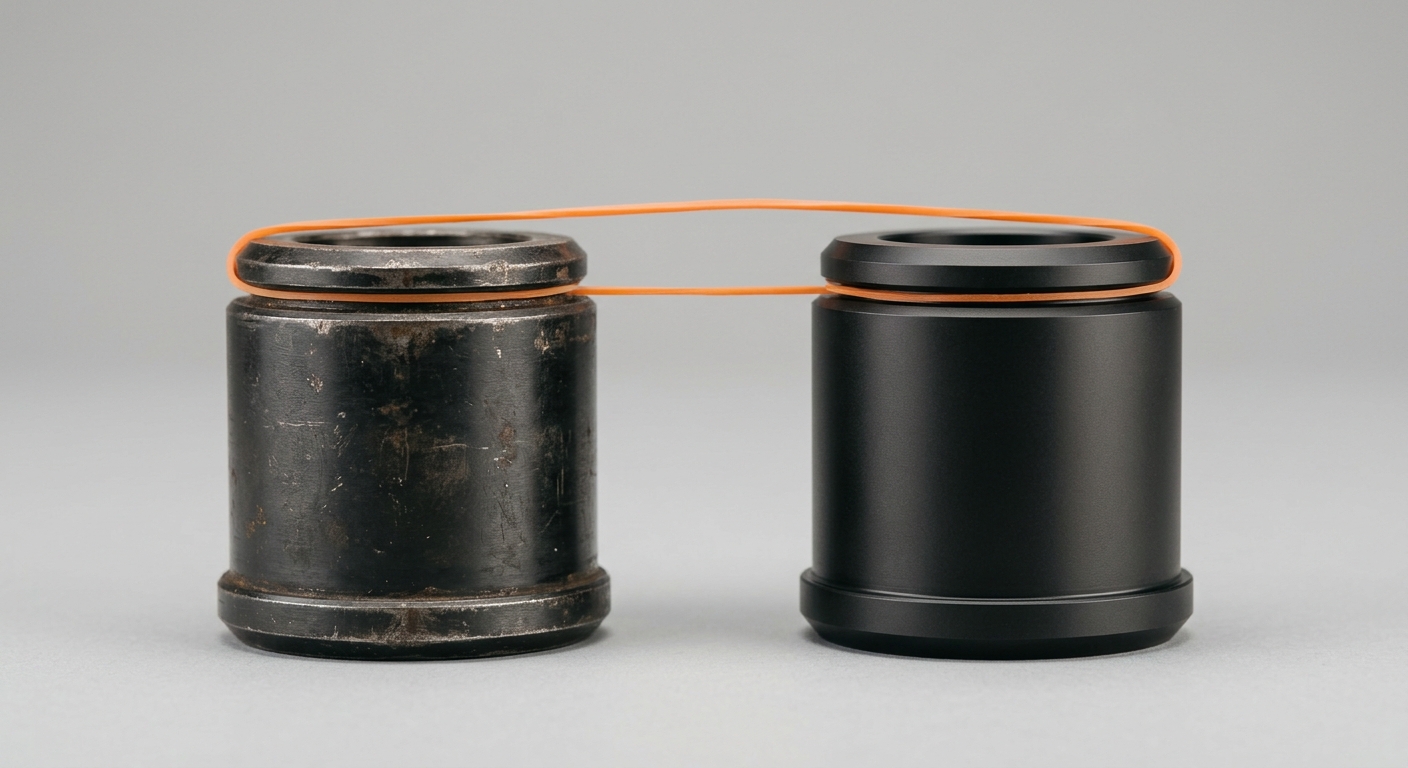
Without capture, a retirement is a vertical drop: on Friday the knowledge is in the building, on Monday it is gone. With a Company Brain and AI employees, the same retirement is a step down: the memory carries the routine, the successor takes the new, and the height of the step is the small residue of knowledge that genuinely could not be captured. The whole strategy is about lowering that step, one captured exception at a time, before the leaving date arrives.
Making the successor team comfortable supervising AI rather than doing everything by hand is a change-management task in itself, covered in our guide to onboarding your team when AI employees join.
Rehire-and-Relearn vs Capture-and-Hand-off
Capture and Hand-off to AI
- ✓ Continuity of output - routine work never stops
- ✓ Smaller successor team - supervise, do not reconstruct
- ✓ Knowledge compounds - each generation adds to the memory
- ✓ Works with a thin talent pool - capacity over headcount
Rehire and Relearn
- ✗ Output drops on departure - the cliff is real
- ✗ 6-12 month ramp per role - and often longer
- ✗ Knowledge resets each time - relearned from zero
- ✗ Depends on hiring - into a shrinking pool
The Capture-Before-the-Cliff Playbook
Turning this into action does not require a company-wide programme. It requires starting with your highest concentration risk and running four phases: identify, capture, validate, hand-off. Each phase is practical and bounded.
Phase 1: Identify the at-risk knowledge (Weeks 1-3)
- Week 1: Map the age and dependency profile - list the roles held by people within five years of retirement, and mark which are held by only one or two people.
- Week 2: Score each role - rate dependence on the individual, difficulty of replacement, and frequency of use, and rank by the product of the three.
- Week 3: Pick the first one or two roles - choose high-dependence, high-frequency roles where the veteran is willing to work alongside the system.
Phase 2: Capture continuously in the work (Weeks 4-12)
- Week 4: Connect the systems - link an AI employee to the email, chat, CRM, ERP, and files the expert uses, so it can observe and assist on real tasks.
- Weeks 5-10: Run alongside the expert - the AI handles routine work while the veteran corrects it, and the Company Brain accrues the current way of working and the exceptions as they occur.
- Weeks 11-12: Capture the relationship and reasoning map - deliberately work through the who-to-call, why-the-rule-exists knowledge that does not surface in routine tasks.
Phase 3: Validate before departure (Weeks 13-16)
- Week 13-14: Run the AI on live cases with the expert reviewing - measure how often it is right and where it still needs the veteran, so the gaps are explicit.
- Week 15: Close the gaps - focus the remaining time with the expert on the specific cases the memory still gets wrong.
- Week 16: Sign off the coverage - agree what share of the role is captured and what genuinely cannot be, so expectations are honest.
Phase 4: Hand off and expand (Ongoing)
- Transfer supervision to the successor - the AI employee carries the routine and the successor supervises, escalating only the novel.
- Keep the feedback loop running - the successor's corrections keep feeding the same memory, so it stays current and compounds.
- Move to the next at-risk role - repeat the cycle down the ranked list, ahead of each retirement date.
Capture-Before-the-Cliff Readiness Checklist
- You have an age and dependency profile of critical roles
- Near-retirement single-point-of-failure roles are identified and ranked
- At least one veteran is willing to work alongside an AI employee
- The systems that hold the current source of truth have API access or export
- A way to capture corrections and exceptions is agreed
- A successor is named to take over supervision
- Coverage expectations are honest about what cannot be captured
- The Betriebsrat is engaged and DSGVO and EU AI Act logging are covered
For the broader question of what AI can and cannot capture from retiring staff, and a use-case and tools view, see our companion guide to AI for knowledge transfer from retiring experts.
Why This Is Not a Wiki and Not an Offboarding Doc
The natural objection is that companies have tried to solve knowledge loss before, with wikis, SharePoint, and mandated handover documents. Those approaches address a different problem and fail the retirement wave for structural reasons, not for lack of effort.
- A wiki captures the explicit, not the tacit - it holds what someone had time to write, which is the happy path, not the judgement and exceptions that retire with the expert.
- A wiki decays from the day it is written - even accurate pages go stale as processes change, so by the time a successor needs them they describe a company that no longer exists.
- An offboarding doc runs too late - it starts at notice, when there is no time to observe the work or catch the exceptions, so it captures the idealised summary.
- Neither acts on the knowledge - both still require a human with time to read and apply the content, and the retirement wave has removed that human.
- Neither scales to a cohort - a documentation sprint per retiring expert is a project you do not have the capacity to run fifteen times at once.
Three Distinct Problems
It helps to separate the failures. The knowledge half-life is why static wikis decay over time. The single-leaver offboarding problem is how to rescue one person's knowledge in a notice period. The retirement cliff is a demographic concentration problem: a whole cohort leaving at once, requiring capture that starts years early and runs continuously. A wiki addresses none of these well; an offboarding interview addresses only the second, and only weakly. The retirement wave needs a living memory that AI employees build during employment and act on afterwards.
The decay dynamics of static documentation are covered in full in our piece on the knowledge half-life and why your wiki is already out of date.
| Approach | What It Solves | Why It Fails the Retirement Wave |
|---|---|---|
| Company wiki / SharePoint | Storing explicit documents | Misses tacit knowledge, decays, needs a reader |
| Offboarding interview | One leaver in a notice period | Too late, idealised, does not scale to a cohort |
| Mandated handover docs | A paper trail for continuity | Written from memory, never validated, decays |
| Company Brain + AI employees | Cohort-scale capture and action | Built to fit this problem specifically |
DSGVO, the Works Council, and Doing This Fairly
Capturing how employees work touches data protection and co-determination, so the compliance path has to be part of the plan from the start, not an afterthought. Done properly it is more defensible than the status quo of undocumented know-how in personal notes and inboxes.
- Engage the Betriebsrat early - a system that observes how people work is co-determination relevant, so involve the works council at the design stage, not at rollout.
- Frame the purpose clearly - the goal is capturing how work is done for continuity, not monitoring individual performance, and the design should make that separation concrete.
- Keep data in your infrastructure - the Company Brain runs on your systems with controlled access, so personal data does not leave your control.
- Log what the system holds - because the memory is a defined system, you can document what it contains and how it is used, supporting DSGVO accountability and EU AI Act record-keeping18.
- Keep humans in the loop for regulated decisions - most knowledge-capture and assistance use cases sit in the limited or minimal-risk tiers, with people deciding anything consequential.
- Make it fair to the expert - position capture as valuing the veteran's contribution and easing the successor's start, which is usually welcomed rather than resisted.
Compliance Favours the Structured Approach
A sprawl of tacit knowledge in people's heads and personal drives is impossible to govern: you cannot audit it, secure it, or prove what it holds. A Company Brain is the opposite. Because it is a defined, observable system in your own infrastructure, it is easier to bring under DSGVO and EU AI Act obligations than the unmanaged status quo. The compliance story for continuous capture is stronger than the compliance story for doing nothing, provided the works council is a partner from day one.
The EU AI Act's obligations phase in through 2026 and 2027, and most back-office capture and assistance use cases are not high-risk18. Our overview of the EU AI Act for the Mittelstand sets out the tiers in plain terms.
How Superkind Fits
Superkind builds AI employees for the Mittelstand that carry routine work and, in doing so, build a Company Brain: a living memory of how your company actually operates. For the retirement wave, that means capturing how your veterans decide and handle exceptions while they are still employed, so the knowledge stays and the work keeps running after they leave.
- Capture during employment - AI employees work alongside your experts on real tasks, so the memory records how the job is actually done, not an exit-interview summary.
- Company Brain, not a document store - the knowledge lives in a memory that is used every day, so it reflects current practice and survives the departure.
- Connects to your existing systems - email, Teams, SharePoint, CRM, and ERP feed one live memory, with no rip-and-replace of your stack.
- Captures tacit exceptions in context - the edge cases and judgement calls are recorded as the veteran handles them, before they walk out the door.
- Hands off to AI employees - after the expert leaves, the AI carries the routine and a smaller successor team supervises, so output does not drop.
- Learns from daily feedback - every correction updates the memory, so knowledge compounds across generations rather than resetting.
- Process-first discovery - we map how your team actually works before building, so the memory fits your workflows, not a template.
- Role by role - we start with your highest concentration risk, prove it, then move down the ranked list ahead of each retirement.
- Compliant by design - data stays in your infrastructure, access is controlled, and the memory is observable for DSGVO and EU AI Act record-keeping, with the works council engaged early.
| Capability | Traditional Handover | Superkind Company Brain |
|---|---|---|
| When capture happens | In the notice period | During active employment |
| What is captured | Recalled summary | How the work is actually done |
| Exceptions | Mostly missed | Captured in context |
| After departure | A document to read | AI employees act on the memory |
| Cohort scale | Overwhelmed | Runs role by role in parallel |
Superkind
Pros
- ✓ Captures tacit knowledge in use - before the expert retires
- ✓ Keeps output running - AI carries the routine after departure
- ✓ Works on your stack - no migration, no new tool to learn
- ✓ Compounds across generations - the memory keeps learning
- ✓ Outcome-based - priced on results, not seats or licences
Cons
- ✗ Needs to start early - begun at notice, it captures far less
- ✗ Needs the expert's cooperation - capture works with them, not around them
- ✗ Not 100 percent capture - some deep intuition never transfers fully
- ✗ Not a self-serve app - it needs engagement with our team
To see how the same memory stays under your control as it grows, read our piece on a Company Brain that stays under your control.
Decision Framework: How Exposed Are You?
Not every company faces the same urgency. Use these signals to judge how exposed you are to the retirement cliff and where to start capturing first.
| Signal | What It Means | Action |
|---|---|---|
| Many critical roles share a birth decade | High concentration risk | Start capture now, ranked by dependence |
| Key knowledge sits with one or two people | Single points of failure | Capture those roles first |
| You are in manufacturing or engineering | Older workforce, deep tacit knowledge6 | Treat the cliff as a near-term risk |
| Replacements are hard to hire | Shrinking talent pool5 | Plan for capacity, not one-for-one rehire |
| Your wiki is out of date and unused | Documentation is not the answer | Build a living memory instead |
| Your experts are years from retiring | Lower urgency, best timing | Start early while capture is cheapest |
Start Now vs Wait for the Notice Period
Start Now
- ✓ Capture the exceptions in time - while the expert still handles them
- ✓ Validate before departure - gaps found while they can be closed
- ✓ Turn the cliff into a step - continuity of output
- ✓ Handle the cohort in parallel - not a queue that overflows
Wait for Notice
- ✗ Only the recalled version - the hard cases are lost
- ✗ No time to validate - gaps surface after they leave
- ✗ Output drops on departure - the cliff is real
- ✗ The queue overflows - too many at once to handle
The earlier you begin relative to the retirement date, the more of the irreplaceable knowledge you keep, which is the entire argument for treating this as a live risk today.
Frequently Asked Questions
The retirement cliff is the concentrated departure of an entire cohort of senior experts in a narrow window, rather than the steady trickle of people changing jobs. It is demographic, not incidental: the baby-boomer generation is reaching pension age at the same time, so a company can lose 20 to 30 percent of its most experienced people inside a few years. Deloitte and eGain put the macro cost at 6.9 to 9.6 trillion dollars of lost output as more than 30 million Americans turn 65 in four years. The difference from normal turnover is scale and timing: you cannot backfill and re-learn one role at a time when many of them leave at once.
Because they run at the wrong time, in the wrong format, at the wrong scale. A retiring expert holds decades of tacit judgement that cannot be dictated into a document in a two-week notice period, and the exit interview captures the happy path while omitting the exceptions that are the real value. At cohort scale the problem compounds: if fifteen experts retire in the same eighteen months, you do not have fifteen calm handovers, you have a queue nobody has time to run. APQC found only 8 percent of organisations consistently capture knowledge from retiring staff while 84 percent of leaders are worried about losing it. The exit interview is a farewell, not a transfer.
More than the recruiter invoice. SHRM and Gallup put the cost of replacing an employee at 50 to 200 percent of annual salary once recruiting, lost productivity, and ramp time are counted, and senior specialist roles sit at the top of that range. A replacement then takes 6 to 12 months or more to reach full productivity in a complex role, and some knowledge never transfers at all. Because an estimated 42 percent of role-specific knowledge lives only in one person's head, each retirement also removes a single point of failure you did not know you had. Multiply that by a whole cohort and the exposure runs into millions for a mid-sized firm.
The tacit kind: how they actually decide, how they handle exceptions, and the relationships they hold. Your systems record what was done, never why. The veteran knows which supplier will bend on a deadline, which machine drifts in humidity, which customer needs a call before a price change, and which written rule to quietly ignore. None of that is in the wiki because nobody thought to write it, and much of it the expert cannot articulate on demand. This is the knowledge that decides whether the work runs smoothly or grinds through avoidable mistakes, and it is precisely what a rushed handover misses.
It captures the real thing instead of an idealised summary. When capture happens while the expert is still doing the job, their judgement is recorded in context: the actual decisions, the actual exceptions, the actual phrasing of a difficult customer email, over months of real work rather than one rushed session. An offboarding interview asks someone to remember and abstract their expertise under time pressure, which produces a thin, tidy version that leaves out the hard cases. Continuous capture during employment turns knowledge retention from a farewell event into a running record that is already validated by use before the person leaves.
A Company Brain is a living company memory built from your people-knowledge, processes, and data, that your AI employees build and use every day. Instead of a folder of documents, it captures how your veterans actually decide and handle exceptions as they work, corrects itself through daily feedback, and connects to the systems you already run. When an expert retires, their way of working does not leave with them because it has already become part of the shared memory. AI employees then act on that memory, so the routine work the expert used to carry keeps running.
Pointing AI at a stale document store does not recover knowledge that was never written down. Retiring experts are dangerous precisely because their value is undocumented, so there is nothing in SharePoint for an AI to read. Worse, if the documents that do exist are outdated or contradictory, the AI answers confidently from the wrong version. Real capture has to observe the work while the expert is still doing it, feed corrections back, and ground answers in live systems. That is the difference between recording expertise and laundering old files.
Start where the concentration risk is highest: roles held by one or two people near retirement, where the knowledge is tacit and the work is high-volume. In manufacturing and engineering that is often the master machinist, the process specialist, the long-serving service technician, or the person who has run a supplier relationship for twenty years. Score each near-retirement role by how much depends on the individual, how hard the replacement is, and how often the knowledge is used. The intersection of high dependence and high frequency is where continuous capture pays back first.
It is a running process, not a one-off project, and that is the point. In the first weeks an AI employee connects to the systems the expert uses and starts handling routine tasks alongside them; over the following months the expert corrects it, and the current way of working accrues in the Company Brain. You are not trying to download thirty years in a fortnight, you are capturing decision-relevant knowledge in context before the person leaves. The earlier you start relative to the retirement date, the more of the hard cases you catch, which is why the strongest advice is to begin well before the notice period.
It can be, and it is easier to govern than a sprawl of personal notes and undocumented know-how. Capturing how work is done, grounded in company systems, is a legitimate business interest, but you involve the Betriebsrat early because the system touches how employees work. Data stays in your infrastructure, access is controlled, and because the memory is a defined system you can log what it holds and how it is used, which supports EU AI Act record-keeping and DSGVO accountability. Most knowledge-capture and assistance use cases fall in the limited or minimal-risk tiers, and you keep humans in the loop for regulated decisions.
The AI employee keeps doing the routine work using the Company Brain the expert helped build, and a smaller successor team supervises it rather than starting from zero. Instead of a cliff, the departure becomes a step: the memory carries the handling of common cases and known exceptions, and the successor focuses on the genuinely new judgement calls. Over time the successor's own corrections feed back into the same memory, so the knowledge compounds rather than resetting with every generation. The goal is continuity of output without one-for-one rehiring.
This piece is about the demographic wave: a whole cohort retiring at once and the concentration risk that creates. Our offboarding guide covers the mechanics of a single leaver in their notice period, the knowledge half-life piece explains why static wikis decay, and our cost breakdown puts a euro figure on the general absence of a Company Brain in a 200-person firm. Here the distinct frame is succession before retirement at cohort scale: identifying which veterans hold irreplaceable knowledge and capturing it continuously while they are still employed, so the wave becomes a managed transition rather than a series of cliffs.
Sources
- Deloitte Insights - The $9 Trillion Knowledge Exodus: How Organizations Can Turn Baby Boomer Retirements Into Competitive Advantage (Siegel & Cahana, 2026)
- eGain - eGain and Deloitte Publish Joint Research on the $9 Trillion Knowledge Crisis Facing Enterprises (June 2026)
- GlobeNewswire - eGain and Deloitte Publish Joint Research and Recommendations on the $9 Trillion Knowledge Crisis (June 2026)
- Statistisches Bundesamt - 13,3 Millionen Erwerbspersonen erreichen in den naechsten 15 Jahren das gesetzliche Rentenalter (June 2026)
- Institut der deutschen Wirtschaft (IW) - Babyboomer in Rente: Bis 2036 fehlen 4,3 Millionen Arbeitskraefte (Deschermeier & Schaefer)
- The Manufacturing Institute - The Aging of the Manufacturing Workforce (quarter of workforce 55 or older)
- APQC - The Great Retirement and Knowledge Loss (8% consistently capture, 84% concerned, 41% rarely or never)
- APQC - Study Warns of Looming Great Retirement Crisis, Highlights Role of AI and Knowledge Management
- SHRM Executive Network - The Myth of Replaceability: Preparing for the Loss of Key Employees (50-200% of salary)
- AMS - Time-to-Productivity: A Hiring Metric That Matters (ramp-up time by role complexity)
- Panopto - Valuing Workplace Knowledge (42% of role-specific knowledge known only to one person)
- CIO.de - Bitkom und Fraunhofer: Wissensverlust bedroht IT-Unternehmen (age-related knowledge loss)
- DIHK - DIHK Presents Skilled Labour Report 2025/2026
- Deloitte - 2025 Manufacturing Trends From a Workday Lens (ageing manufacturing workforce)
- MDPI Societies - Intergenerational Tacit Knowledge Transfer: Leveraging AI (2025)
- Frontiers in Psychology - Operationalising the SECI Model of Tacit and Explicit Knowledge
- McKinsey - Demographic Shifts in the Workforce: A Leader Guide (2025)
- EU Artificial Intelligence Act - Implementation Timeline
- iwd.de - Demografischer Wandel: Die Babyboomer gehen, die Jungen fehlen
- eGain - Capturing Tacit Knowledge From the Great Retirement Cohort Using GenAI
Ready to keep your experts' knowledge before they retire?
Book a 30-minute call with Henri. We will map your retirement exposure and show how to capture what your veterans know while they are still here - no commitment, no sales pitch.
Book a Demo →